There are moments in every great adventure that define the entire journey moments that test your body, challenge your mind, and ultimately reward your soul with something that words can barely contain. On the Annapurna Circuit Trek, that moment is the crossing of Thorong La Pass. Standing at a staggering 5,416 metres (17,769 feet) above sea level, Thorong La Pass is one of the highest mountain passes in the world that can be crossed on foot without technical climbing equipment. It is the crowning achievement of the Annapurna Circuit Trek the moment every trekker has been building toward from the very first step out of Besisahar. Whether you are planning your first Himalayan adventure or adding another great pass to your trekking resume, this comprehensive guide covers everything you need to know before you cross Thorong La Pass with Glacier Nepal Treks.
Thorong La Pass is a high altitude mountain pass located in the Annapurna Conservation Area of northern Nepal. It sits between the villages of Manang on the eastern side and Muktinath on the western side, forming the highest and most challenging section of the legendary Annapurna Circuit Trek. The pass has been used for centuries as a trading and migration route by local Tibetan and Gurung communities, connecting the arid landscapes of Mustang with the greener valleys of the Marsyangdi River. Today it is one of the most iconic high altitude crossings in the entire Himalayan region, attracting thousands of trekkers from around the world every year.
Thorong La Pass sits at 5,416 metres (17,769 feet) above sea level, making it one of the highest trekking passes in the world. To put this in perspective, it is higher than any mountain in both the Alps and the Rocky Mountains higher even than Everest Base Camp at 5,364 metres. At this altitude the air contains roughly 50% less oxygen than at sea level. Every step feels noticeably harder, every breath requires more conscious effort, and the body works significantly harder just to maintain normal function. This is why proper acclimatisation and preparation are absolutely essential before attempting the crossing.
The typical Thorong La Pass crossing begins from Thorong Phedi or High Camp, with most trekkers choosing to start from High Camp at 4,925 metres to shorten the summit day considerably.
The crossing is divided into three main phases:
Phase 1 — High Camp to the Summit (2–3 hours)
The trail climbs steeply from High Camp in the pre-dawn darkness, the path winding upward through loose rocky terrain and occasional patches of snow and ice. This section is the most demanding of the entire crossing steep, relentless, and breathtaking in every sense of the word. The cold is intense in the early hours, with temperatures frequently dropping to –10°C to –20°C before sunrise.
Phase 2 — The Summit (30–45 minutes)
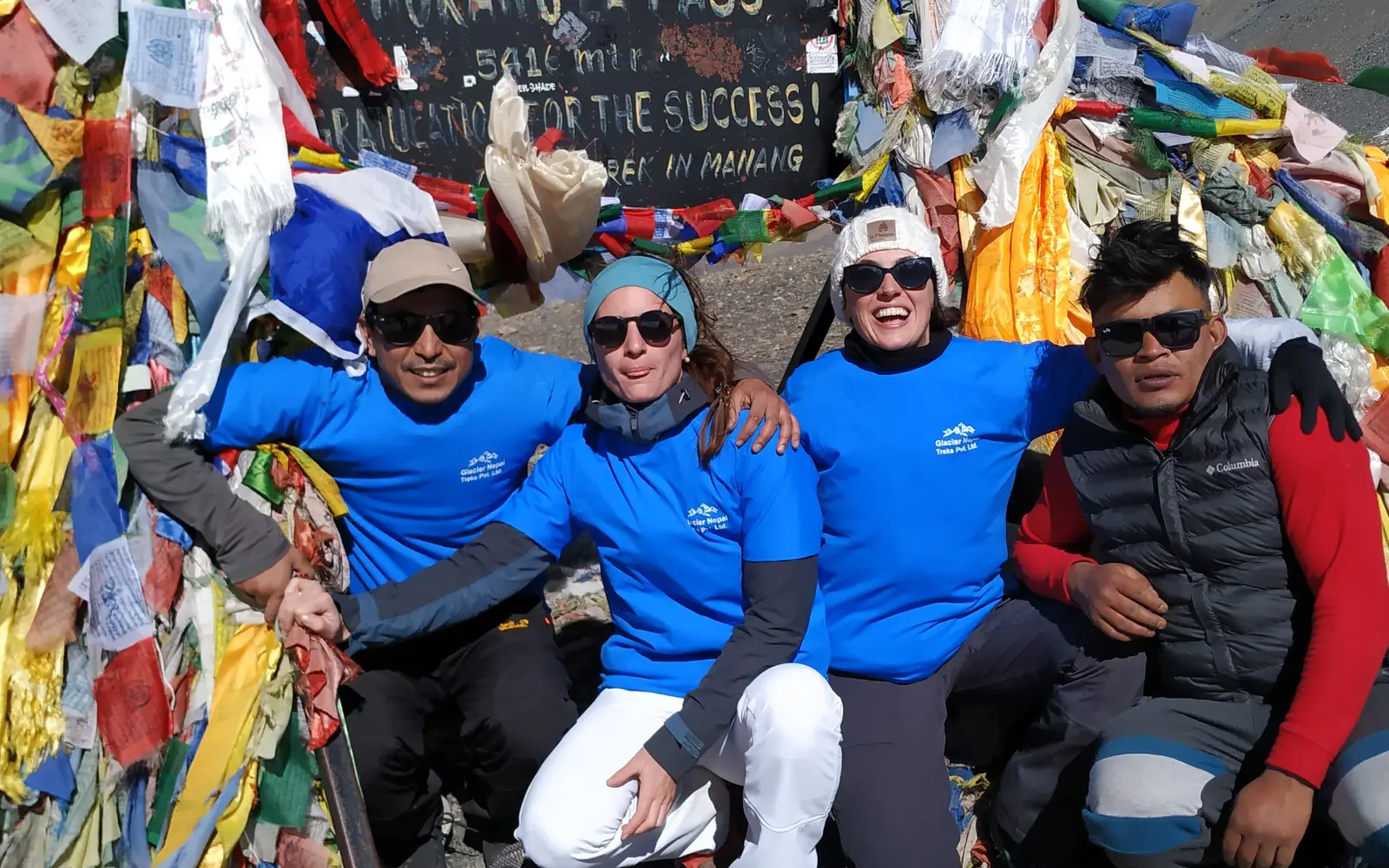
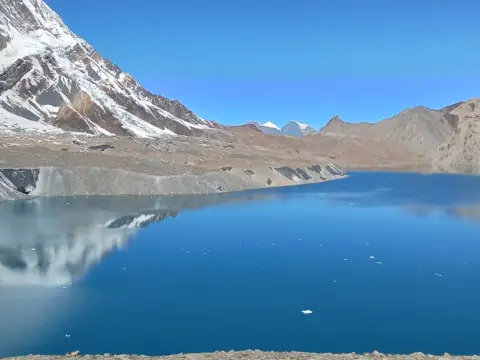
Reaching the summit of Thorong La Pass is an emotional and deeply physical moment. A cluster of colourful prayer flags marks the highest point, fluttering dramatically against a backdrop of extraordinary Himalayan panoramas. The views from the summit stretch endlessly in every direction Mt. Annapurna, Gangapurna, Tilicho Peak, Yakawa Kang and the distant ranges of Tibet creating a panorama of almost incomprehensible beauty.
Phase 3 — Descent to Muktinath (3–4 hours)
The descent from the pass to Muktinath at 3,760 metres is long, steep, and very hard on the knees but the knowledge that you have crossed one of the world's great mountain passes carries you through every difficult step. The landscape changes dramatically as you descend, transitioning from the rocky alpine terrain of the pass into the arid Mustang-influenced landscape surrounding Muktinath.
The total crossing time from High Camp to Muktinath typically takes between 7 and 9 hours, depending on fitness, weather, altitude acclimatisation, and snow conditions.
A typical schedule looks like this:
Starting as early as possible is absolutely essential. Afternoon winds in the Kali Gandaki valley are legendary for their ferocity, and weather conditions on the pass can deteriorate rapidly after midday. Many trekkers who underestimate the importance of an early start find themselves battling dangerous wind speeds on the descent.
The best seasons to cross Thorong La Pass with Glacier Nepal Treks Pvt Ltd are:
Spring -: March to May
Spring is the most popular trekking season for the Annapurna Circuit. The weather is generally settled and clear, daytime temperatures are pleasant at lower elevations, and the rhododendron forests burst into spectacular bloom along the lower trail sections. April is widely considered the single best month for the crossing.
Autumn -: September to November
Autumn offers crystal clear skies, excellent visibility, and comfortable trekking temperatures. October is arguably the finest month of the year for the crossing — stable weather, dry trails, and extraordinary views make it a truly unforgettable experience.
Winter -: December to February
Winter crossings are possible but require significant extra preparation and experience. Heavy snowfall can close the pass entirely, temperatures on the summit can drop to –25°C or below, and the risk of avalanche increases considerably. Winter crossings should only be attempted by experienced trekkers with proper cold weather equipment and in the company of an experienced guide.
Monsoon -: June to August
The monsoon season is generally not recommended for the Thorong La Pass crossing. While Upper Mustang's rain shadow effect keeps the Kali Gandaki valley relatively dry, the approach trails from Manang can be wet, slippery, and affected by landslides. Visibility is often poor and the pass can be dangerous in heavy rainfall.
Thorong La Pass is not simply a physical challenge it is fundamentally an altitude challenge. No matter how fit you are, insufficient acclimatisation will stop you at the pass and potentially put your health at serious risk. Glacier Nepal Treks structures the Annapurna Circuit itinerary with careful and deliberate acclimatisation days to ensure every trekker arrives at Thorong La Pass in the best possible condition.
Key acclimatisation points on the route include:
Manang (3,519m) -: 2 nights minimum
Manang is the most important acclimatisation stop on the entire Annapurna Circuit. Two nights here are the absolute minimum, with many guides recommending three. A rest day hike to Gangapurna Lake or Ice Lake (4,600m) during your acclimatisation day is strongly recommended the principle of climb high, sleep low is critical at this altitude.
Yak Kharka (4,018m) -: 1 night
A gradual one day walk from Manang to Yak Kharka helps the body continue adapting to the increasing altitude before the final push to High Camp.
Thorong Phedi / High Camp (4,450m - 4,925m) - 1 night
The final overnight stop before the crossing. Many trekkers prefer High Camp over Thorong Phedi as it significantly reduces the summit day distance and elevation gain.
Altitude sickness is the single greatest risk on the Thorong La Pass crossing and must be taken seriously. Understanding the warning signs and responding appropriately can save your life.
Mild AMS (Acute Mountain Sickness) symptoms:
Severe AMS / HACE / HAPE symptoms (descend immediately):
Glacier Nepal Treks guides are trained in altitude sickness recognition and management. They carry pulse oximeters to monitor blood oxygen saturation levels throughout the trek and are authorised to make the decision to descend any trekker showing serious symptoms, regardless of how close they are to the summit. The golden rule of altitude sickness management is simple never ascend with symptoms, and always descend if symptoms worsen.
Packing the right gear is absolutely critical for a safe and successful Thorong La Pass crossing. Glacier Nepal Treks recommends the following essential items:
Clothing:
Equipment:
Health and Safety:
After years of guiding trekkers across Thorong La Pass, the team at Glacier Nepal Treks has compiled the following essential tips for a safe and successful crossing:
Start as early as possible. Ideally between 2:00 AM and 4:00 AM from High Camp. Do not delay afternoon winds on this pass are not something to underestimate.
Walk slowly and steadily. The biggest mistake trekkers make is starting too fast. A slow and consistent pace conserves energy, reduces breathlessness, and significantly lowers the risk of altitude sickness.
Stay hydrated. Drink at least 3-4 litres of water per day in the days leading up to the crossing. Dehydration at altitude accelerates the onset of altitude sickness and significantly reduces physical performance.
Eat well the night before. A good carbohydrate rich meal the evening before the crossing provides the fuel your body needs for the demanding summit day ahead.
Listen to your guide. Our guides at Glacier Nepal Treks have crossed Thorong La Pass hundreds of times. Their experience, judgment, and knowledge of mountain weather and altitude are your greatest assets on crossing day.
Do not push through serious symptoms. No summit is worth your life. If you are experiencing serious altitude sickness symptoms, the only correct decision is to descend immediately.
Descending from Thorong La Pass into Muktinath is one of the most emotionally satisfying moments of any trekker's life. This ancient and deeply sacred site revered by both Hindu and Buddhist pilgrims sits at 3,760 metres and marks the completion of the most challenging section of the Annapurna Circuit Trek.
The sacred Muktinath Temple, the 108 holy water spouts, and the eternal flame burning beside the flowing water create an atmosphere of extraordinary spiritual significance that feels like a deeply fitting reward for the extraordinary physical achievement of crossing Thorong La Pass.
Celebrate your crossing. You have earned it completely.
Glacier Nepal Treks is one of Kathmandu's most trusted and highly rated trekking companies, with a TripAdvisor rating of 5.0 and hundreds of satisfied trekkers from around the world. Our experienced and licensed guides have crossed Thorong La Pass hundreds of times and know every step of the trail intimately.
We handle everything permits, accommodation, guides, porters, transfers, and emergency support so you can focus entirely on the extraordinary adventure that awaits you.
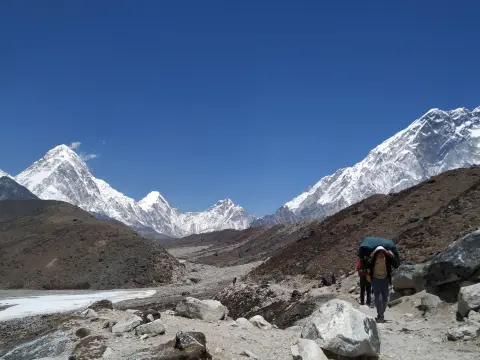
Nepal is one of the most iconic trekking destinations in the world, attracting adventurers of all ages and experience levels. The combination of the majestic Himalayas, rich cultural heritage, and warm local hospitality creates a unique trekking experience that goes beyond just hiking. In 2026, Nepal promises an even more exciting experience
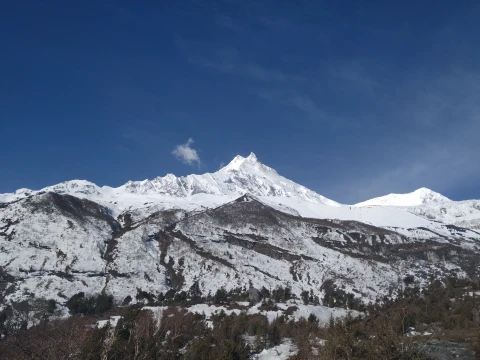
The Manaslu Circuit Trek is one of Nepal’s most spectacular and less-traveled trekking routes. With Glacier Nepal Trek, trekkers can experience the perfect combination of adventure, culture, and nature. Circling Mount Manaslu (8,163 m / 26,781 ft), the trek passes through lush valleys, remote villages, high mountain passes, and serene
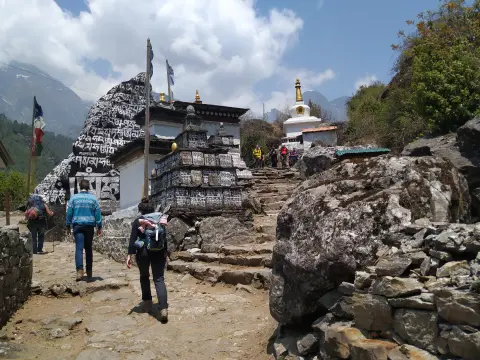
The Everest Base Camp Trek is one of the world’s most famous Himalayan adventures, offering breathtaking views of Mount Everest, Sherpa culture, ancient monasteries, and stunning mountain landscapes. The trek takes travelers through traditional villages, suspension bridges, forests, and high alpine valleys inside Sagarmatha National Park. Best completed during spring or autumn, the journey is moderately challenging and requires good physical fitness and proper acclimatization. For a safe and memorable experience, Glacier Nepal Treks provides experienced guides, personalized service, and professionally organized trekking adventures in Nepal’s Everest region.


 (31)
(31)  94% recommend (244)
 (12)
(12)