Need help with booking? Send us a message.
Discover a spectacular Himalayan journey combining the beauty of Langtang, the sacred lakes of Gosaikunda, and the cultural charm of Helambu. Trek through rhododendron forests, alpine meadows, and traditional mountain villages before reaching the holy waters of Gosaikunda Lake.
The Langtang, Gosainkunda, and Helambu Trek is one of Nepal’s most scenic and culturally rich trekking routes. This journey takes you through the stunning Langtang Valley, the sacred Gosainkunda Lake, and the picturesque Helambu region, combining natural beauty, traditional villages, and Himalayan panoramas. The trek starts with a scenic 7-8 hour drive from Kathmandu to Syabrubesi, situated at the gateway of Langtang National Park. From here, trekkers walk through lush forests, cross wooden suspension bridges, and pass through traditional Tamang villages.
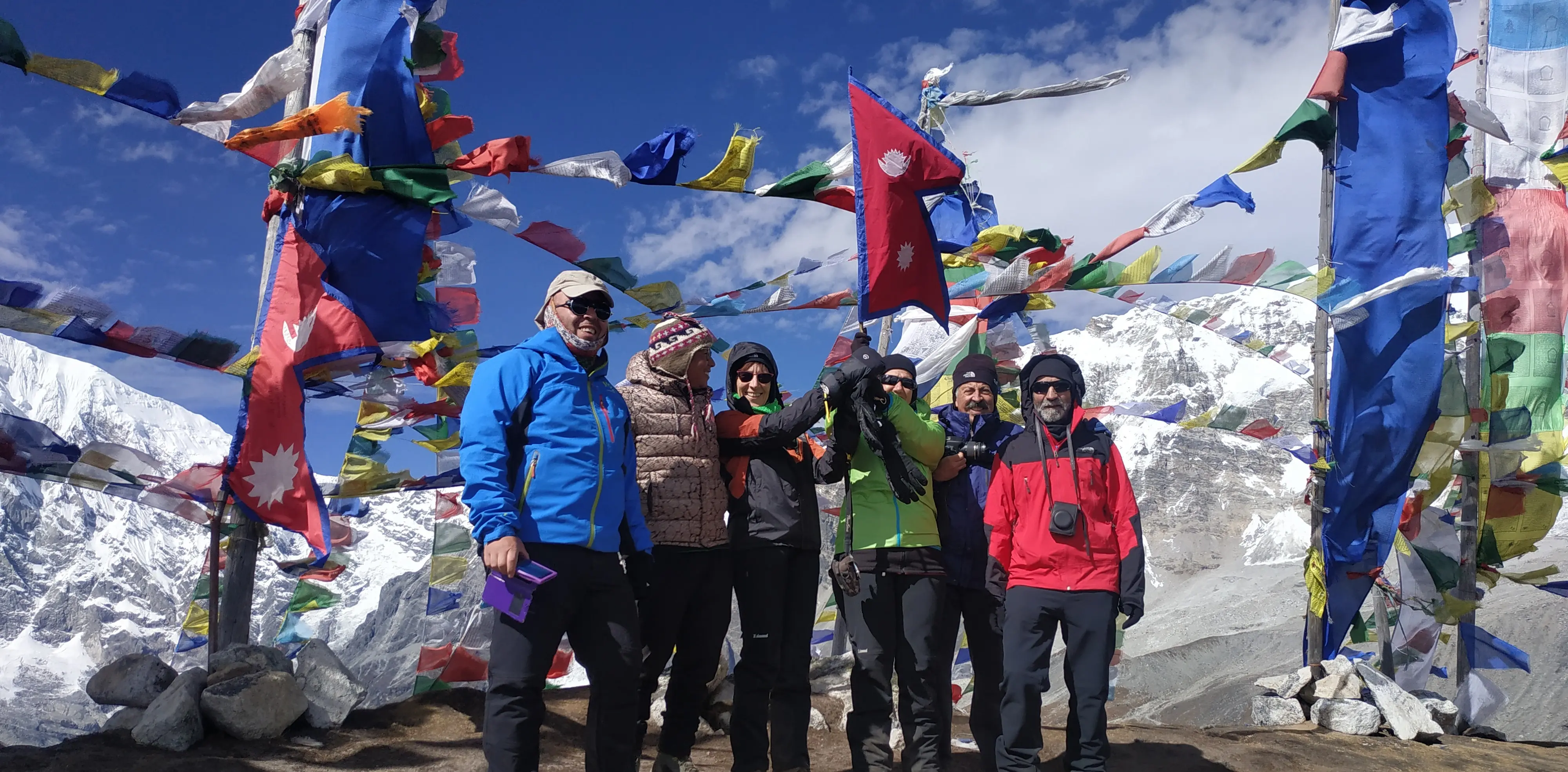
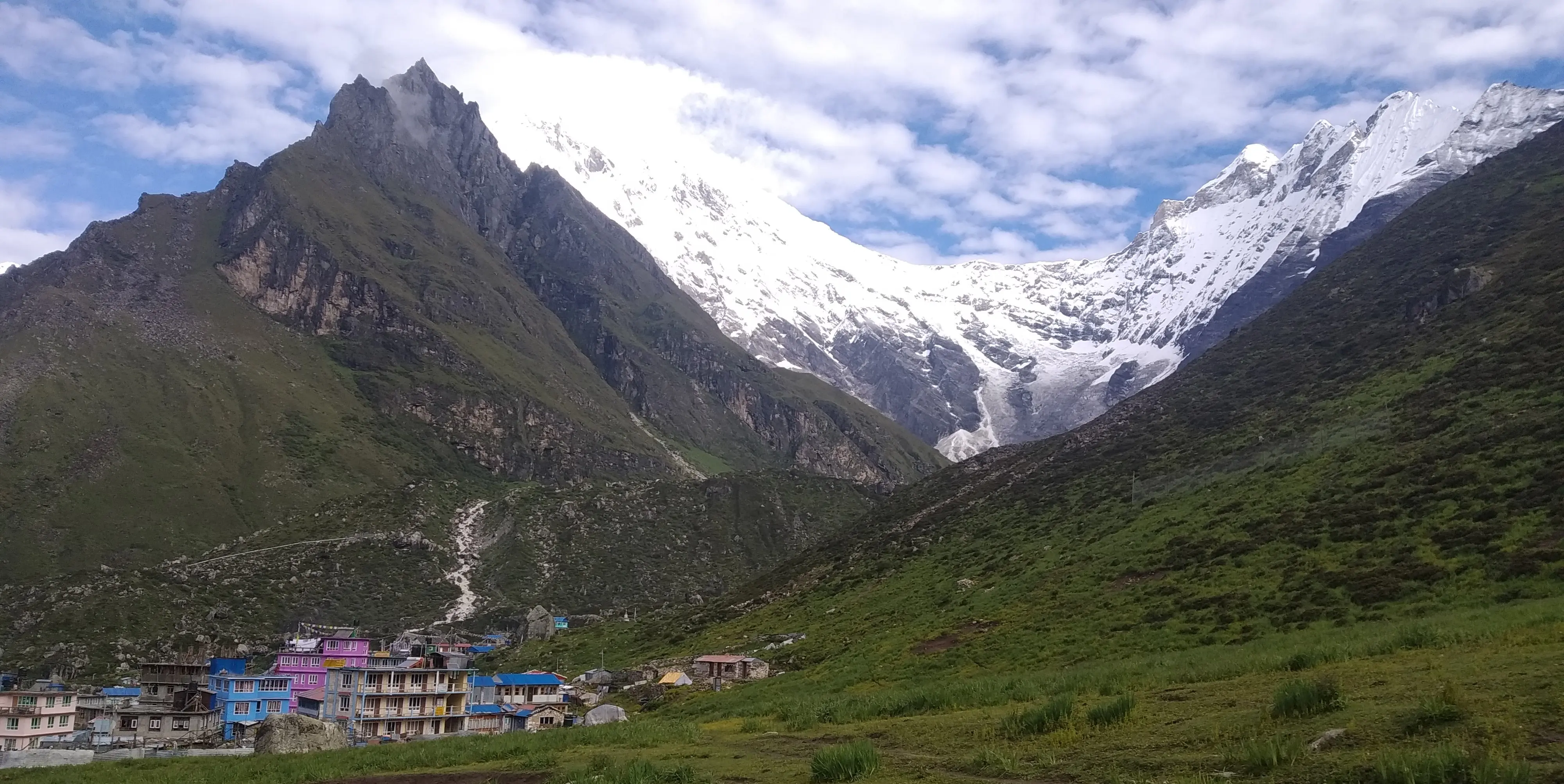
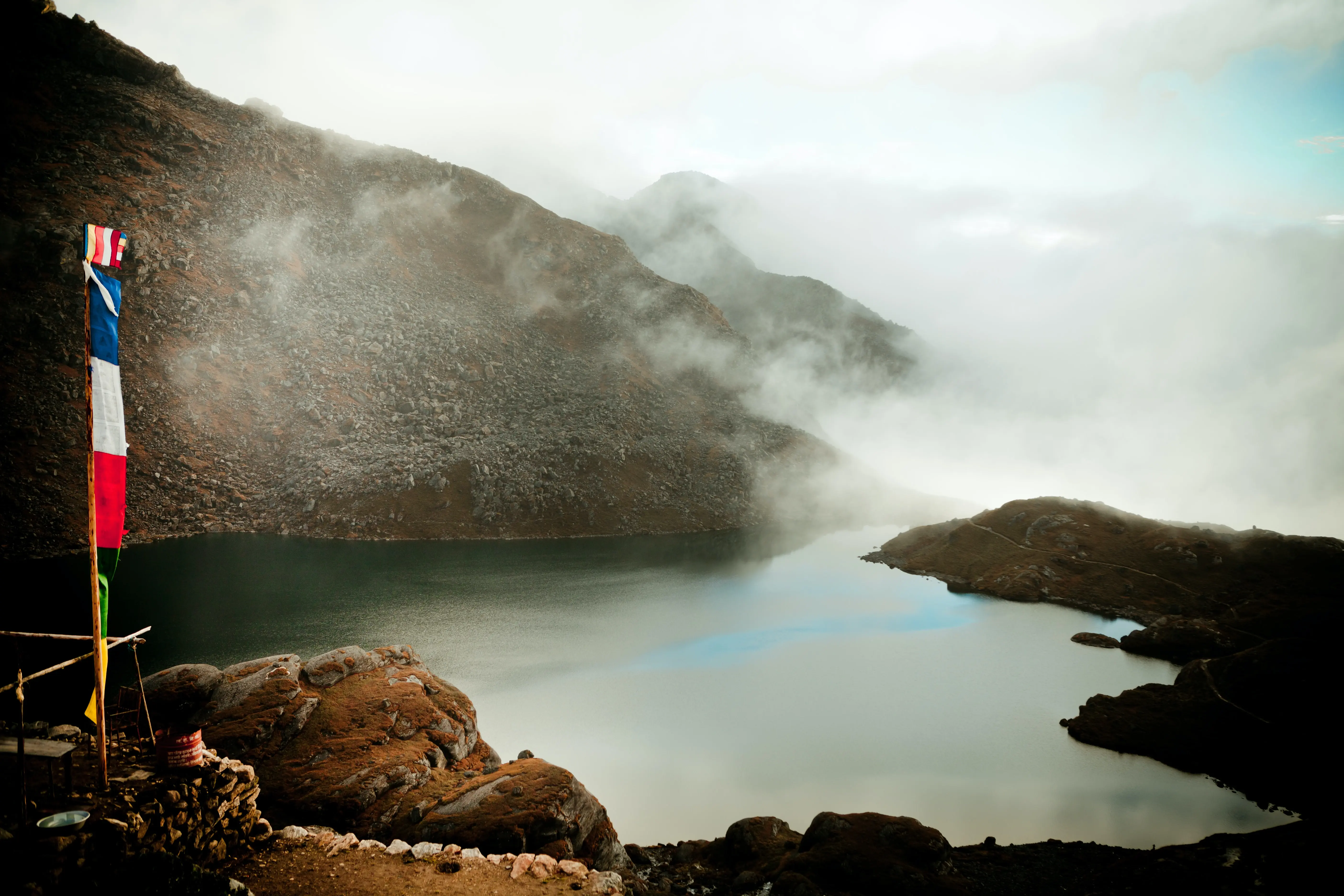
Highlights of the trek include Kyanjin Gompa, nestled at the foot of Langtang Lirung (7,227 m), where you can explore ancient monasteries and try climbing nearby peaks like Tserko Ri (4,985 m) for panoramic mountain views. The trek then continues to the sacred Gosainkunda Lake (4,460 m), a revered pilgrimage site for Hindus and Buddhists, known for its purported healing powers. Trekkers cross Lauribina Pass, encountering a series of smaller glacial lakes, before entering the Helambu region, famous for its rich Hyolmo culture, charming villages, and terraced landscapes.
The trek concludes with a gradual descent through lush forests, rhododendron trails, and traditional settlements, ending with a 4-hour drive back to Kathmandu. The combination of cultural immersion, serene alpine lakes, and stunning Himalayan vistas makes this trek a memorable adventure.
The Langtang, Gosainkunda, and Helambu Trek can be undertaken year-round, but the most favorable and enjoyable seasons are spring (March to May) and autumn (September to November). These months provide the best combination of weather, trail conditions, and visibility for the stunning Himalayan vistas.
Spring (March to May) is particularly magical as the forests and valleys come alive with vibrant rhododendron blooms and other wildflowers. The days are generally mild and sunny, while nights remain cool, creating perfect trekking conditions. The clear skies during spring allow trekkers to enjoy panoramic views of the Langtang and Shishapangma ranges, making it an excellent season for photography and sightseeing.
Autumn (September to November) follows the monsoon, leaving the air crisp, clean, and free of haze. The trails are safe, the forests lush, and the views of snow-capped peaks are uninterrupted. Autumn is also ideal for visiting Gosainkunda Lake, as the area is fully accessible with stable trails. This season is considered the peak trekking period in Nepal due to the combination of stable weather, pleasant temperatures, and spectacular mountain scenery.
Winter (December to February) offers a quieter trekking experience with fewer crowds. While the lower sections remain accessible, snowfall above 4,000 m can make trails slippery and more challenging, especially around Tserko Ri and Gosainkunda.
Summer (June to August) coincides with the monsoon season. Heavy rainfall can make trails muddy and rivers difficult to cross. Landslides are more common, and clouds often obscure mountain views, so this season is generally not recommended for trekking.
Short Tips for Seasons:
The Langtang Gosainkunda and Helambu Trek is classified as moderate to challenging, making it suitable for trekkers with reasonable fitness, prior hiking experience, and proper acclimatization practices. The trek covers varying terrains and altitudes, gradually ascending to some high Himalayan passes while descending through forested valleys.
Key trekking challenges include:
Transportation:
Short Tips:
The Langtang, Gosainkunda, and Helambu Trek offers a blend of tea houses, lodges, and local accommodations. Trekkers will experience both traditional village homestays and basic lodges in higher settlements, providing a genuine Himalayan trekking experience.
Accommodation:
Food:
Tips:
Short List:
Trekking in the Langtang, Gosainkunda, and Helambu region requires official permits to ensure safety and conservation of national parks:
Glacier Nepal Treks assists in arranging all permits before departure, ensuring a smooth and hassle-free start. This avoids delays at checkpoints and allows trekkers to focus entirely on the journey.
Short List:
Choosing the Glacier Nepal Treks for this adventure ensures a safe, enjoyable, and culturally immersive trekking experience. This company specializes in guiding trekkers through Nepal’s most scenic trails while prioritizing safety, comfort, and local community support.
Reasons to choose Glacier Nepal Treks:
The trek offers a perfect mix of adventure, spirituality, culture, and nature. From exploring ancient monasteries in Kyanjin Gompa, taking a holy dip in Gosainkunda Lake, crossing Lauribina Pass, to wandering through the scenic Helambu valleys, trekkers experience Nepal’s rich landscapes and heritage in one unforgettable journey.
Short Highlights:
The Langtang Gosaikunda and Helambu Trek is one of Nepal's most complete and rewarding Himalayan adventures a magnificent journey that combines three of the Langtang region's most extraordinary destinations into one unforgettable trekking experience.
The adventure begins in Kathmandu before a scenic drive to Syabrubesi, gateway to the entire Langtang region. The trail climbs steadily through magnificent rhododendron forests alongside the Langtang Khola River, passing through traditional Tamang villages, the remarkably rebuilt Langtang Village and the iconic Kyanjin Gompa monastery at 3,870m where an exhilarating acclimatisation hike to Tserko Ri (4,984m) rewards trekkers with extraordinary panoramic views of Langtang Lirung, Dorje Lakpa and the distant Shishapangma.
Descending through the valley the route then climbs through Thulo Syabru, Sing Gompa and Chandanbari to the deeply sacred Gosaikunda Lake at 4,380m a breathtaking alpine lake of immense religious significance for both Hindu and Buddhist pilgrims.
From Gosaikunda the trail crosses the dramatic Laurebina Pass (4,610m) before descending into the beautiful and culturally rich Helambu region passing through traditional Sherpa villages of Melamchi Gaon and Tarke Ghyang before concluding at Melamchi Bazaar and returning to Kathmandu.
Your Langtang Gosaikunda and Helambu Trek begins the moment you land at Tribhuvan International Airport, where a friendly Glacier Nepal Treks representative will be waiting to welcome you and transfer you comfortably to your hotel in a private vehicle. Take the rest of the day to unwind, freshen up, and recover from your journey. Later, head to the Glacier Nepal Treks office to meet your trekking guide for a comprehensive pre-trek briefing. Together you will go through the day by day route, daily walking hours, altitude considerations, and all important safety measures. Your guide will happily answer every question you have whether about gear, weather, local culture, or simply what to expect on the trail ahead. Overnight Hotel in Kathmandu.
 Accommodation Three-star Hotel in Thamel, Kathmandu
  Meals Breakfast
  Max. altitude 1,350m / 4,429ft.
 After an early breakfast, we depart Kathmandu and drive northwest toward Syabrubesi, the starting point of the trek. The journey takes about 7-8 hours, passing through bustling towns, terraced fields, and scenic river valleys. Along the way, we are treated to panoramic views of Himalayan peaks including Annapurna, Manaslu, Ganesh Himal, and the Langtang range. Short stops for photos and refreshments make the drive enjoyable. Upon arrival in Syabrubesi, we check into a local lodge, stretch our legs, and enjoy dinner while preparing for the first day of trekking. Overnight at the lodge.
Accommodation Tea House / Lodge Meals Breakfast, Lunch, Dinner Max. altitude 1,510m / 4,954ft. We begin our trek heading northwest from Syabrubesi, crossing a suspension bridge over the Bhote Koshi River. The trail winds through small settlements and a local Gompa, following a stone-paved path to another bridge over the Langtang Khola. Walking through dense forests of pine and rhododendron, the path gradually climbs a rocky ridge. After reaching Rimche, we descend to Chanting, widely known as Lama Hotel. The village offers warm lodges and stunning valley views. This first trekking day provides a gentle introduction to the region, its culture, and local lifestyle. Overnight at Lama Hotel.
Accommodation Tea House / Lodge Meals Breakfast, Lunch, Dinner Max. altitude 2,380m / 7,808ft. The trail today ascends steadily through dense forests of oak, rhododendron, and hemlock along the Langtang Khola. Passing Gumanchok and Ghunama, we climb to Ghoda Tabela at 2,970m. Continuing through Thaugshyap, we descend into a scenic valley, crossing streams and passing water-powered mills. Finally, we arrive at Langtang Village, a charming settlement surrounded by snow-capped peaks and alpine meadows. Here, traditional stone houses, monasteries, and yak pastures showcase the area’s rich cultural heritage. We spend the evening exploring the village, enjoying the crisp mountain air, and relaxing in the lodge. Overnight at Langtang Village.
Accommodation Tea House / Lodge Meals Breakfast, Lunch, Dinner Max. altitude 3,430m / 11,253ft. Leaving Langtang Village, the trail climbs gradually, passing small hamlets such as Mundu and Sindum. We traverse alpine pastures at Yamphu, cross the Laja Khola, and navigate rocky terrains en route to Kyanjin Gompa. The village is famous for its large monastery, cheese production, and panoramic mountain views. Lodges are abundant here, providing a comfortable base. After lunch, we can explore nearby trails or simply relax while enjoying the spectacular vistas of Langtang Lirung and surrounding peaks. This shorter trekking day allows for rest and acclimatization in preparation for higher altitudes. Overnight at Kyanjin Gompa.
Accommodation Tea House / Lodge Meals Breakfast, Lunch, Dinner Max. altitude 3,870m / 12,697ft. Today is an acclimatization day with a challenging hike to Tserko Ri, offering breathtaking views of Langtang Lirung, Yansa Tsenji, and Kinshung peaks. The trail ascends along the moraine north of Kyanjin Gompa, past glaciers and high-altitude terrain. From the summit, you can marvel at the vast Lirung Glacier and surrounding Himalayan panorama. After spending time at the top capturing photographs and enjoying the scenery, we descend to Kyanjin Gompa for rest. This hike helps adjust our bodies to higher elevations while providing a rewarding sense of achievement. Overnight at Kyanjin Gompa.
Accommodation Tea House / Lodge Meals Breakfast, Lunch, Dinner Max. altitude 4,985m / 16,355ft. We begin the descent retracing our steps from Kyanjin Gompa, passing through Langtang Village and Ghoda Tabela. The trail follows the Langtang Khola, winding through forests and villages along the river. This descent provides a different perspective of the landscapes we experienced during the ascent. The trek is moderately challenging but offers plenty of opportunities to observe local flora and fauna. By late afternoon, we reach Lama Hotel, where cozy lodges and warm meals await. The rest of the day can be spent relaxing and reflecting on the journey so far. Overnight at Lama Hotel.
Accommodation Tea House / Lodge Meals Breakfast, Lunch, Dinner Max. altitude 3,870m / 12,697ft. Leaving Lama Hotel, we follow the trail past parts of Syabrubesi, then veer left into a forest path offering views of terraced fields and surrounding hills. The forest is rich with oak, rhododendron, and pine trees, with occasional glimpses of distant peaks. The trail gradually ascends to Thulo Syabru, a small and picturesque settlement known for its peaceful environment and traditional Gurung lifestyle. Overnight at Thulo Syabru allows trekkers to experience authentic village life, enjoy local hospitality, and prepare for the next challenging sections of the trek.
Accommodation Tea House / Lodge Meals Breakfast, Lunch, Dinner Max. altitude 2,380m / 7,808ft. From Thulo Syabru, the trail climbs steeply through forests of hemlock and oak. Along the way, we pass an old Chorten before reaching Foprang Danda ridge, then continue to Chadan Bari. Here, we find Sing Gompa, the main attraction of the area, featuring a traditional monastery with panoramic mountain views. The village provides a serene atmosphere, perfect for experiencing spiritual and cultural traditions of the Helambu region. This relatively shorter trekking day allows trekkers to conserve energy for the ascent to Gosaikunda the following day. Overnight at Sing Gompa.
Accommodation Tea House / Lodge Meals Breakfast, Lunch, Dinner Max. altitude 3,330m / 10,925ft. The trail today is steep and challenging, passing through dense forests and ridges before entering the Langtang National Park protected area. We climb gradually through Chalang Pati and Laurebinayak, witnessing pristine landscapes and alpine flora. The trail then passes Saraswati Kund and Bhairav Kund before a gentle final ascent leads to the sacred Gosainkunda Lake, a revered site for Hindu and Buddhist pilgrims. The lake is framed by snow-capped peaks and offers stunning reflections on calm days. Overnight stay near the lake provides an unforgettable high-altitude experience.
Accommodation Tea House / Lodge Meals Breakfast, Lunch, Dinner Max. altitude 4,380m / 14,370ft. Today brings one of the most thrilling and rewarding days of the entire Langtang Gosaikunda Helambu Trek the dramatic crossing of Laurebina Pass at 4,610m. We rise early and set off from the sacred shores of Gosaikunda Lake, passing the holy waters of Saraswati Kund and Bhairav Kund before making the final push to the magnificent Laurebina Pass the highest point of the entire Helambu section. The panoramic views from the pass are simply breathtaking Langtang Lirung, Ganesh Himal, Manaslu and the Annapurna range stretching endlessly before you. From the pass the trail descends steeply through Gopte and open alpine terrain before arriving at the beautiful ridge top settlement of Tharepati.
Accommodation Tea House / Lodge Meals Breakfast, Lunch, Dinner Max. altitude 4,610m / 15,125ft. The descent from Tharepati is steep and scenic, taking us through fir and oak forests interspersed with rhododendron groves. We cross the Chhyadi Khola on a suspension bridge and pass the stone throne of Guru Rimpoche, a sacred local site. The trail continues gently down to the prosperous Sherpa village of Melamchi Gaon, where terraced fields, traditional homes, and vibrant culture welcome us. Overnight stay at Melamchi Gaon provides an authentic experience of the region’s village life, including local hospitality and home-cooked meals.
Accommodation Tea House / Lodge Meals Breakfast, Lunch, Dinner Max. altitude 3,490m / 11,450ft. From Melamchi Gaon, the trail descends through thick jungle to a bamboo tea shop and continues steeply through cultivated fields. After crossing the Melamchi River via suspension bridge, the trail begins a long ascent through forests and terraces to Tarke Gyang, the largest village in Helambu. The village is known for its rich culture, monasteries, and traditional Sherpa lifestyle. Arriving here, trekkers can explore the village, interact with locals, and enjoy panoramic views of surrounding hills. Overnight at Tarke Gyang.
Accommodation Tea House / Lodge Meals Breakfast, Lunch, Dinner Max. altitude 2,590m / 8,497ft. Leaving Tarke Gyang, the trail follows an electricity line across the hillside to Parachin and then sweeps around the valley to Gangyul. Passing through Chumik village with potato fields and a large gompa, we continue ascending gently through forests to reach Sermathang, a large village surrounded by pristine landscapes. The village is dotted with traditional houses and monasteries. Overnight at Sermathang allows for rest and exploration, giving trekkers insight into the Helambu region’s culture and natural beauty.
Accommodation Tea House / Lodge Meals Breakfast, Lunch, Dinner Max. altitude 2,500m / 8,202ft. The descent from Sermathang follows a ridge path past small settlements such as Nigale and Gyalsha, through chir pine forests and past various Chortens. The trail then drops steeply toward Melamchi Khola and crosses a large suspension bridge over the Indrawati River, finally reaching Melamchi Pul Bazaar. This bustling town is the gateway back to Kathmandu, offering shops, tea houses, and local markets. Overnight stay at Melamchi Pul Bazaar gives trekkers a chance to relax after descending from the high mountains and enjoy the local cuisine.
Accommodation Tea House / Lodge Meals Breakfast, Lunch, Dinner Max. altitude 2,600m / 8,530ft. We depart Melamchi Pul Bazaar and drive back to Kathmandu, enjoying scenic valley views along the way. Upon arrival, there is time for last-minute shopping, sightseeing, or simply relaxing at the hotel. In the evening, we gather for a farewell dinner with the Glacier Nepal Trek team, sharing stories and celebrating the successful completion of the trek. This is a moment to reflect on the journey, friendships, and memories created over the past two weeks. Overnight at the hotel.
Accommodation Three-star Hotel in Thamel, Kathmandu Meals Breakfast, Lunch, Dinner Max. altitude 1,350m / 4,429ft. Final day of your unforgettable journey in Nepal. After breakfast at the hotel, a representative from Glacier Nepal Treks will meet you and arrange your transfer to Tribhuvan International Airport in a private vehicle, ensuring a comfortable and timely departure. As you leave Kathmandu, you take with you wonderful memories of the Langtang Gosaikunda and Helambu Trek, breathtaking Himalayan landscapes, warm hospitality, and cultural encounters. Our team bids you a heartfelt farewell and hopes to welcome you again for another adventure in Nepal. Until then, we wish you a safe journey back home, sweet home.
Meals Breakfast Max. altitude 1,350m / 4,429ft. 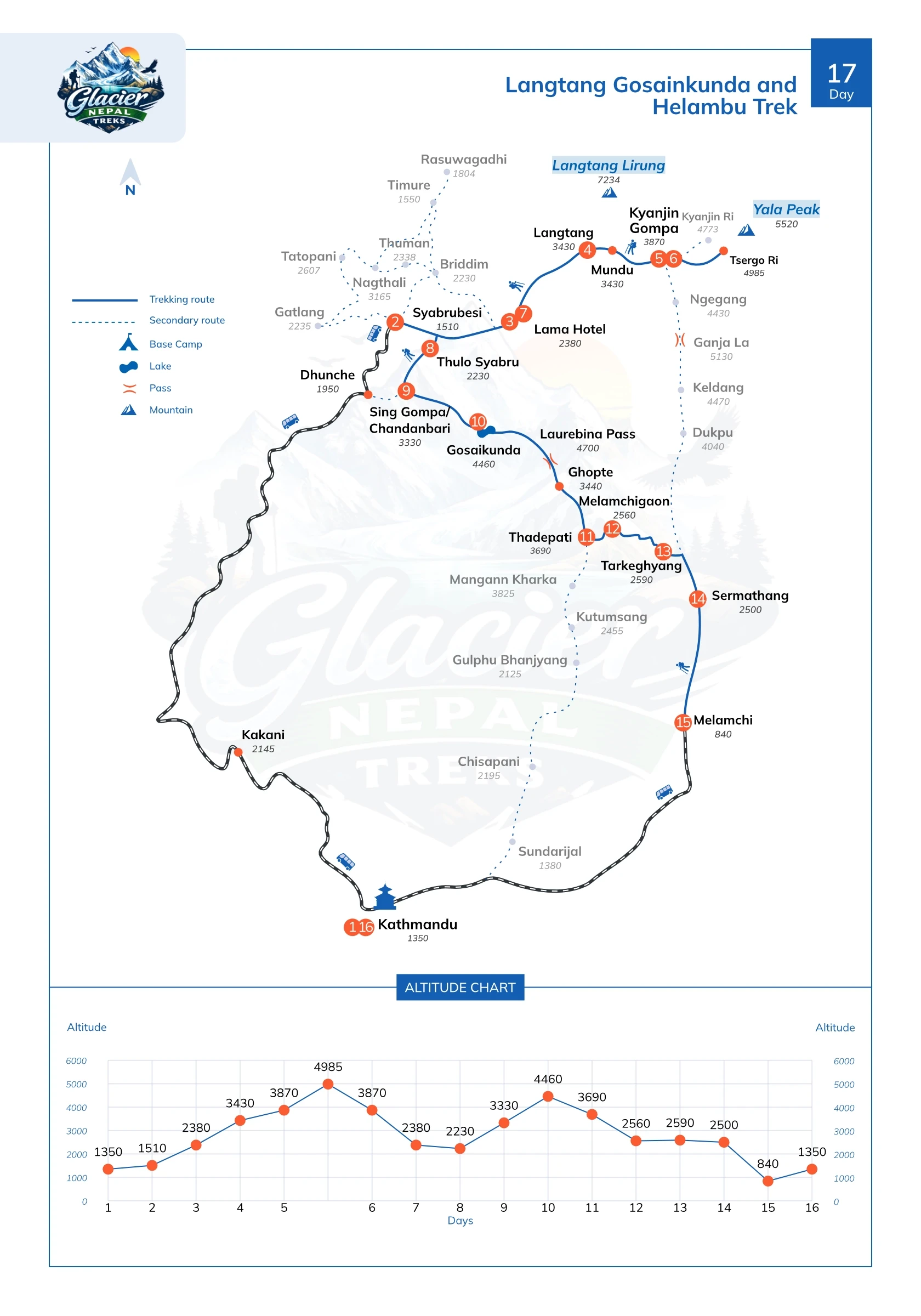
The Langtang, Gosaikunda & Helambu Trek, organized by Glacier Nepal Treks, is a spectacular journey through Nepal’s less-explored Himalayan regions. Starting from the bustling streets of Kathmandu, the trek gradually takes you through lush forests, terraced villages, high-altitude valleys, and sacred lakes. Highlights include Langtang Village, Kyanjin Gompa, the panoramic Tserko Ri viewpoint, the sacred Gosaikunda Lake, and the serene landscapes of Helambu. This 17-day adventure balances trekking challenges with acclimatization, cultural encounters, and breathtaking Himalayan scenery, making it suitable for moderately experienced trekkers seeking both adventure and cultural immersion.
The trek combines scenic trails, traditional lodges, and local cuisine, offering a true experience of Nepali mountain life. Along the route, travelers enjoy interacting with the Tamang and Sherpa communities, visiting ancient monasteries, and soaking in natural hot springs. Each day’s trek is carefully paced, alternating between moderate and more challenging segments, with strategic rest days for acclimatization at key altitudes like Kyanjin Gompa. The final days gradually descend back to Kathmandu, ensuring a smooth return from high-altitude trekking adventures.
Airport & Transportation
Public bus from Kathmandu to Syabrubesi and return as per langtang trekking route.
Accommodation
Attached bathroom facilities are available where available along the trekking route.
Meals
Welcome or farewell dinner in a typical Nepali restaurant
Permits & Documentation
All government taxes, VAT and official paperwork required for trekking
Trekking Staff & Support
Trekking company service charge and field management
Trekking Equipment & Safety
Emergency coordination service (in case of rescue / evacuation)
Additional Services
Your Start Date is the day you land in Nepal, and your End Date is when you fly home.
If the set Langtang Gosaikunda and Helambu Trek group dates don’t suit your schedule, we can offer alternative dates upon request.
Proper layering is important to stay warm and comfortable in changing mountain weather.
Good footwear makes trekking easier and safer.
The right gear keeps you safe, comfortable, and prepared.
Lightweight but important items keep you clean, healthy, and comfortable.
Keep important items safe and easy to reach.
Our Langtang Gosaikunda Helambu Trek with Glacier Nepal Treks was an experience we will treasure for the rest of our lives. From the very first day to the last, everything was organised flawlessly by Rabin KC permits, accommodation, transport and logistics handled with complete professionalism and genuine care. Our guide Ganesh Limbu was simply outstanding deeply knowledgeable, incredibly warm, and genuinely passionate about the mountains, local culture, and the wellbeing of every member of our group. Standing at the sacred Gosaikunda Lake surrounded by snow capped peaks was a moment none of us will ever forget.
We had a fantastic experience on the Langtang, Gosaikunda and Helambu Trek with Glacier Nepal Treks. It was a beautiful and rewarding journey through peaceful villages, forests, mountain landscapes, and local communities. Langtang Valley was stunning, and reaching the sacred Gosaikunda Lake was one of the highlights of the trek. We also really enjoyed walking through the Helambu region and experiencing its unique culture and scenery. Our guide, Hemraj, was excellent throughout the trek. He was friendly, experienced, and always helpful, making sure everything went smoothly and that we were comfortable. We were also lucky to have good weather, which gave us clear mountain views and made the trek even more enjoyable. Thanks to Glacier Nepal Treks for organizing such a memorable adventure. Highly recommended
An incredible experience and one of the most memorable journeys I’ve had in Nepal. I booked the trek through the Glacier Nepal Treks website, and the whole process was simple and well organized from the beginning. Our guide, Rabin KC, made the trek even more enjoyable. He was friendly, knowledgeable, patient, and always made sure we were walking at a comfortable pace. I especially enjoyed learning about the local Tamang and Hyolmo cultures, Buddhist traditions, and the history of the villages along the trail. Kyanjin Gompa and the hike toward Tserko Ri were unforgettable, with spectacular mountain views. Gosainkunda Lake was another highlight, especially because of its peaceful and spiritual atmosphere. Crossing Lauribina Pass and seeing the alpine lakes was challenging but incredibly rewarding.
I’m a solo female traveler and had never done a long trek before, so I was a little nervous about the experience. My Langtang Valley and Gosaikunda trek with Glacier Nepal Treks turned out to be one of the best experiences I’ve ever had. From the beginning, the team was helpful and made the whole process easy and comfortable. My guide, Rabin, was excellent, and my porter, Ram, was absolutely fabulous. They were both professional, friendly, and caring throughout the entire trek, always making sure I was safe, comfortable, and enjoying the journey. Rabin speaks very good English and was always happy to answer my questions about Nepal, the mountains, and Nepali culture. What I appreciated most was how personal the experience felt. Rabin was very perceptive and understood my personality, making small adjustments that made the trek even more enjoyable. Rabin and Ram called me “bahini,” meaning little sister, and we shared so many laughs, conversations, and beautiful moments along the way. I highly recommend Glacier Nepal Treks. Their genuine care and attention to the little things made me feel like I was trekking with friends rather than simply hiring a guide and porter.
Langtang, Gosainkunda and Helambu Trek with Glacier Nepal Treks was an unforgettable experience. From the beginning, everything was well organized, and the communication made me feel confident about the journey. A special thank you to Rabin KC for arranging everything so smoothly and making the booking process easy. Our guide, Narayan, was one of the highlights of the trek. He was friendly, patient, knowledgeable, and always supportive, especially on the more challenging sections. The journey through Langtang Valley was beautiful, with peaceful forests, Tamang villages, suspension bridges, and incredible mountain views. Reaching Kyanjin Gompa and seeing Langtang Lirung up close was unforgettable. Gosainkunda Lake was another emotional highlight, surrounded by dramatic alpine scenery. Crossing Lauribina Pass was challenging but incredibly rewarding, followed by the beautiful Helambu region and its unique culture.
The best time to undertake the Langtang Gosaikunda and Helambu trek with Glacier Nepal Trek is during the pre-monsoon (spring) season from March to May and post-monsoon (autumn) season from September to November. During these months, the weather is generally stable with clear skies, making the Himalayan views spectacular. Spring offers colorful rhododendron blooms, while autumn provides crisp air and unobstructed mountain panoramas. Monsoon season is less ideal due to slippery trails, leeches, and cloud-covered mountains, while winter can be extremely cold with snow blocking higher passes.
While previous trekking experience is helpful, it is not strictly necessary to join the Langtang, Gosaikunda, and Helambu trek organized by Glacier Nepal Trek. The trek is designed to accommodate beginners with reasonable fitness levels, as well as experienced trekkers. Guides carefully pace the journey to allow for acclimatization and rest. Moderate daily hiking durations and comfortable lodges make it accessible to most travelers. That said, good physical fitness, stamina for walking 5-8 hours a day, and a willingness to walk uphill are important for a safe and enjoyable experience.
The trek is moderately challenging, requiring trekkers to have a reasonable level of fitness and stamina. Participants should be able to walk 5-8 hours a day on uneven terrain, including steep ascents and descents. Glacier Nepal Trek recommends preparing with cardio exercises such as jogging, hiking, or stair climbing several weeks before the trek. While the trek is suitable for beginners with determination, a higher fitness level ensures easier acclimatization, less fatigue, and a more enjoyable experience in high-altitude areas like Gosainkunda and Tserko Ri.
Altitude sickness is a possibility at higher elevations, especially above 3,500 meters, such as Gosainkunda or Tserko Ri. Glacier Nepal Trek takes acclimatization seriously and schedules gradual ascents, including rest days at Kyanjin Gompa and other high points to help the body adjust. Guides are trained to recognize symptoms of altitude sickness, and appropriate preventive measures are taken, including proper hydration, pacing, and rest. Trekkers are advised to listen to their guides, avoid rushing, and communicate any discomfort immediately for a safe trekking experience.
Daily trekking durations on the Langtang Gosaikunda and Helambu trek range from 3 to 8 hours, depending on the trail and altitude. Glacier Nepal Trek carefully plans each day to balance walking time, rest, and acclimatization. Shorter days occur during steep ascents or high-altitude areas to reduce fatigue and altitude risks, while longer days are scheduled on lower altitudes with gentle terrain. Breaks for tea, meals, and scenic views are included, allowing trekkers to enjoy the landscapes while managing energy levels for the multi-day trek.
Glacier Nepal Trek provides comfortable and safe lodging throughout the trek in carefully selected teahouses and lodges. Most lodges are basic but well-maintained, offering warm beds, blankets, and meals. In remote areas like Kyanjin Gompa or Gosainkunda, lodges may have shared bathrooms and limited hot water, but hygiene is generally good. The company ensures trekkers are accommodated in lodges that provide local hospitality, meals, and a cozy place to rest after a long day of trekking, while supporting local communities along the route.
The trek offers a wide variety of local and international foods. Trekkers can enjoy traditional Nepali meals such as dal bhat (lentil soup with rice), momos (dumplings), and noodles, as well as continental options like pasta and pancakes. Lodges along the trail provide freshly cooked meals, and Glacier Nepal Trek ensures that all dietary preferences, including vegetarian and vegan options, are accommodated with prior notice. Drinking water is available and can be purified with filters or tablets provided by guides to ensure safety during the trek.
Trekkers should bring layered clothing suitable for changing weather, including thermal base layers, a warm jacket, waterproof outer layers, hiking pants, and sturdy trekking boots. Accessories like gloves, hats, sunglasses, and a sleeping bag are essential for higher elevations. Glacier Nepal Trek provides a comprehensive equipment checklist to help participants pack efficiently. While trekking poles and duffel bags are recommended, the company can also assist with renting gear in Kathmandu if needed. Proper preparation ensures comfort, safety, and enjoyment throughout the trek.
The Langtang Gosaikunda and Helambu trails are generally safe, and Glacier Nepal Trek welcomes solo travelers, couples, and small groups. Guides provide expert navigation, local knowledge, and support at all times. Families with older children or teenagers who are physically fit can comfortably join the trek. While the trails are well-marked, unforeseen weather or trail conditions require caution, and solo travelers benefit from traveling with a guide for safety and assistance, especially in remote or high-altitude regions.
Yes, Glacier Nepal Trek prioritizes trekker safety and provides comprehensive emergency support. Guides are trained in first aid and carry essential medical kits. In case of illness, injury, or altitude sickness, evacuation plans are in place, including coordination with helicopters or road transport to lower altitudes if necessary. The company maintains communication with local authorities and hospitals throughout the trek. This ensures that trekkers can enjoy their journey with peace of mind, knowing that professional support is readily available in any emergency.
| No of people | Price per person |
|---|---|
| 1 - 1 | $1,900 |
| 2 - 4 | $1,800 |
| 5 - 7 | $1,750 |
| 8 - 15 | $1,700 |
| No of people | Price per person |
|---|---|
| 1 - 1 | $1,150 |
| 2 - 4 | $1,000 |
| 5 - 7 | $950 |
| 8 - 15 | $899 |
| No of people | Price per person |
|---|---|
| 1 - 1 | $1,900 |
| 2 - 4 | $1,699 |
| 5 - 7 | $1,650 |
| 8 - 15 | $1,600 |


 (31)
(31)  94% recommend (244)
 (12)
(12)