Need help with booking? Send us a message.
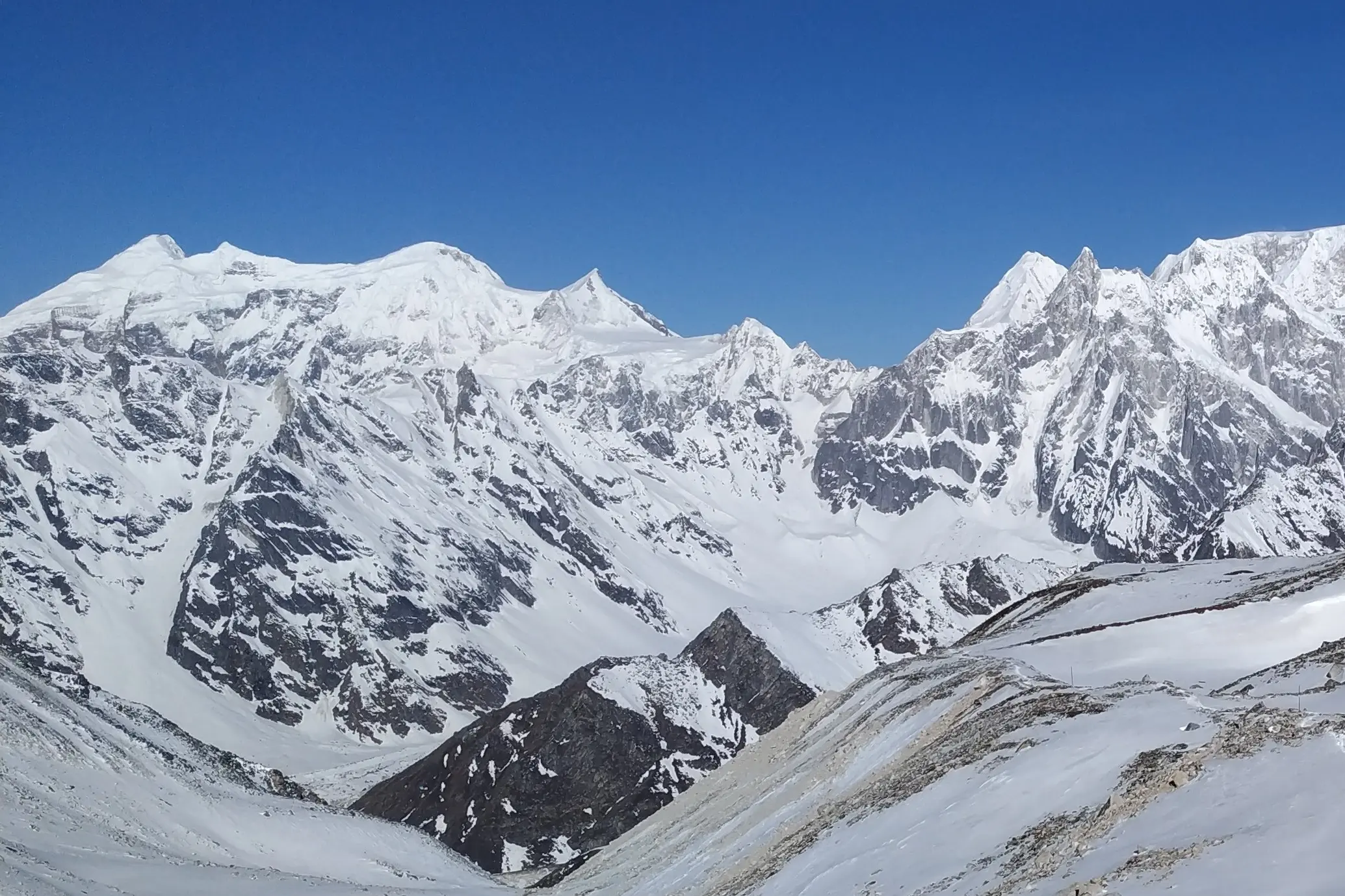
Experience an unforgettable climb to Pisang Peak (6,091m) in the heart of the Annapurna region. Journey through scenic trails and traditional villages beneath towering Himalayan giants. From the summit, admire spectacular views of Annapurna II, Annapurna IV, and Gangapurna.
Pisang Peak is a prominent trekking peak located in the Manang region of the Annapurna range in Nepal. Standing at 6,091 meters (19,985 ft), it offers an exciting mix of trekking and mountaineering, making it an ideal peak for both beginners and experienced climbers who want to experience high-altitude mountaineering in the Himalayas. The climb provides breathtaking views of the Annapurna II, Annapurna III, Lamjung Himal, and Pisang Himal peaks, along with a chance to explore the rich culture and lifestyle of the local Gurung and Manangi communities. Glacier Nepal Treks ensures a well-organized expedition, providing professional guides, porters, and logistical support to make the climb safe and enjoyable.
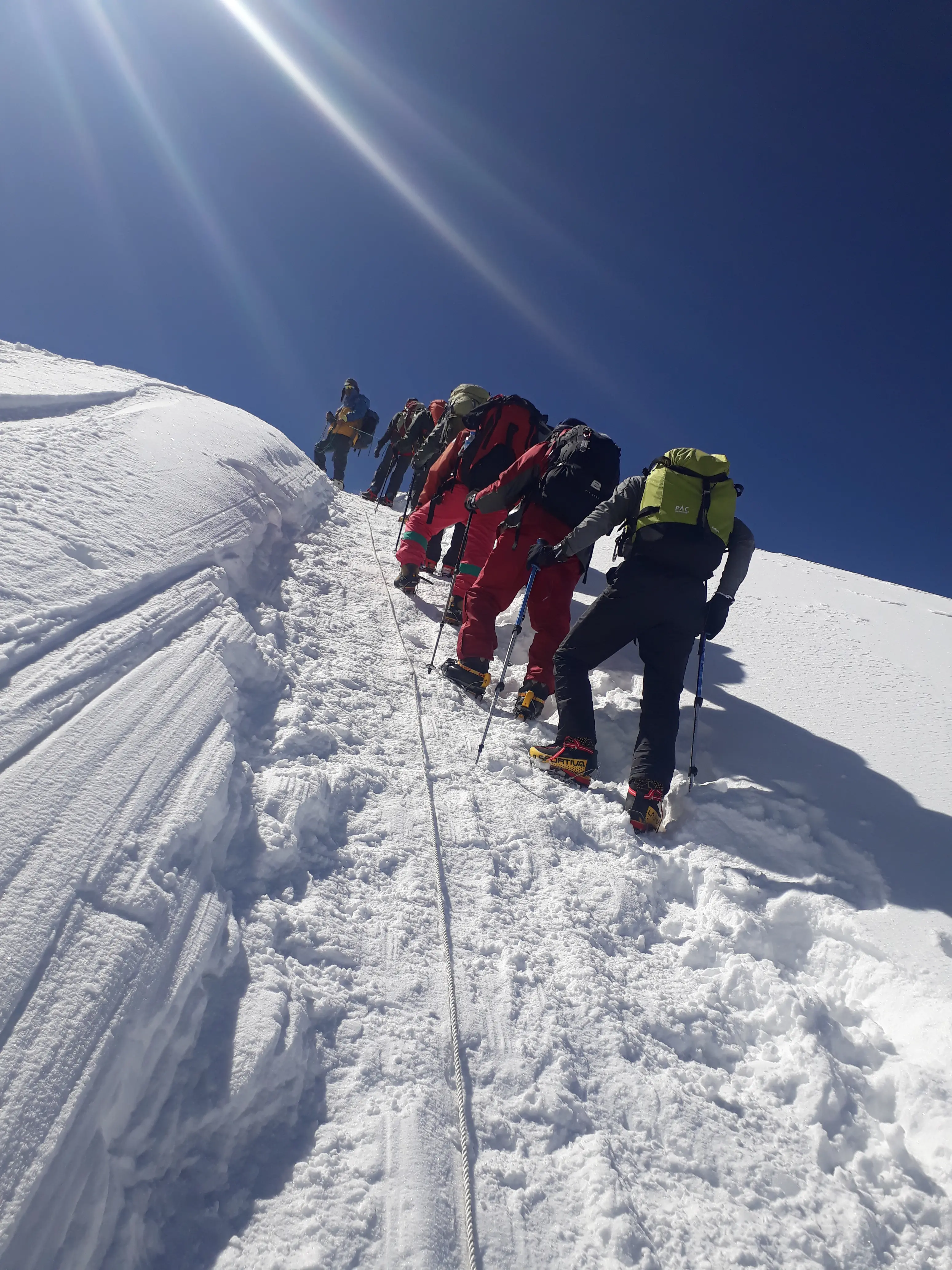
The Pisang Peak climbing itinerary typically starts from Kathmandu and takes trekkers through beautiful villages, lush forests, and dramatic landscapes. Along the way, climbers experience acclimatization days, high mountain passes, and base camp setups that prepare them for the summit. The climb itself is a combination of snow and ice climbing, with the final ascent requiring proper technical equipment and guidance. Overall, it is a perfect opportunity for adventurers who want a mix of trekking, culture, and mountaineering in one expedition.
The optimal season for climbing Pisang Peak is either pre-monsoon (March to May) or post-monsoon (September to November). During these periods, the weather is relatively stable, skies are clear, and temperatures are more manageable for high-altitude trekking and climbing. In the pre-monsoon season, the snow conditions are usually ideal for climbing, and the flora in the lower regions of Manang and Upper Pisang is at its peak bloom, offering vibrant scenery. Post-monsoon offers crisp air, clear skies, and outstanding panoramic views of the Annapurna and Dhaulagiri ranges.
Climbing during the winter months (December to February) is challenging due to heavy snow and extreme cold, while the monsoon season (June to August) is generally avoided because of slippery trails, risk of landslides, and unpredictable weather. Glacier Nepal Treks customizes itineraries depending on the season to ensure maximum safety and enjoyment. Climbers are also advised to plan acclimatization days during these windows to reduce the risk of altitude sickness.
Season Highlights:
Pisang Peak is considered a moderately challenging trekking peak. While it is suitable for beginners with prior trekking experience, the climb involves glacier travel, snow, and ice slopes, which require proper guidance, technical climbing equipment, and a trained team. The ascent is gradual, allowing trekkers to acclimatize properly at villages like Chame, Upper Pisang, and Manang. Glacier Nepal Treks provides expert climbing guides, safety briefings, and ensures all climbers are well-prepared for the technical sections. The high camp and summit push require stamina, mental focus, and adherence to safety protocols.
Transportation to the starting point of the climb is convenient. Most expeditions begin in Kathmandu, from where climbers take a scenic drive to Jagat. The journey passes through winding roads, river valleys, and terraced fields, giving travelers a glimpse of rural Nepal. After reaching the trailhead, all trekking and climbing are done on foot, with porters carrying heavy loads and support staff assisting at camps. Glacier Nepal Treks manages all logistics, including transportation, porters, and permits, ensuring a smooth experience.
Key Points:
During the Pisang Peak expedition, trekkers enjoy a mix of local and international cuisine at teahouses, lodges, and base camps. Lower-altitude villages like Jagat, Dharapani, and Chame have cozy lodges offering traditional Nepali food such as dal bhat (lentil soup with rice), momo (dumplings), noodles, and soups. As you ascend to Upper Pisang and Manang, meals are slightly more limited but still sufficient to provide energy for trekking and acclimatization. Glacier Nepal Treks ensures climbers have access to hot meals and sufficient nutrition to sustain high-altitude energy requirements.
Accommodation is simple but comfortable, with shared rooms, blankets, and heating options at lodges. At higher altitudes, especially at Pisang Peak Base Camp and High Camp, tents are provided. These are sturdy, weatherproof, and equipped with sleeping bags. The combination of teahouse stays and high-altitude camps allows climbers to rest adequately before summit attempts. Guides and porters also help with setup, meal preparation, and safety monitoring, ensuring a smooth experience even in remote areas.
Food & Accommodation Highlights:
Climbing Pisang Peak requires a combination of trekking and climbing permits. Trekkers must obtain the Annapurna Conservation Area Permit (ACAP) and the Trekking Peak Permit issued by the Nepal Mountaineering Association (NMA). ACAP ensures the preservation of the Annapurna region’s natural and cultural heritage, while the climbing permit regulates safe mountaineering practices. Glacier Nepal Treks assists in obtaining all necessary permits before the trek, saving time and ensuring full compliance with local regulations.
Permits also provide emergency support in case of altitude sickness, accidents, or rescue operations. The cost of permits varies depending on nationality, peak, and duration. It is crucial to carry original permits during the trek, as authorities frequently check them at checkpoints along the route. Glacier Nepal Treks ensures that permits are issued in advance, allowing climbers to focus on trekking and acclimatization without administrative stress.
Permit Highlights:
Choosing Glacier Nepal Treks for your Pisang Peak expedition guarantees a professional and memorable experience. The company has years of expertise in high-altitude treks and climbing, ensuring safety, comfort, and cultural immersion. Their team includes certified guides, experienced mountaineers, and trained porters who manage all logistics, from transportation to high camp arrangements. The personalized service helps climbers focus on the adventure without worrying about equipment, route planning, or meals.
Beyond logistics, Glacier Nepal Treks emphasizes acclimatization, safety protocols, and sustainable tourism practices. Their guides educate trekkers about local culture, environment, and mountain safety. Choosing this company also provides a structured itinerary with contingency days for weather delays or acclimatization, maximizing the chances of a successful summit. In essence, climbers benefit from professional support, local knowledge, and an organized approach to a challenging yet rewarding Himalayan adventure.
Why Glacier Nepal Treks:
The Pisang Peak Climbing adventure is a 17-day journey that combines trekking through the beautiful Annapurna region with an exciting Himalayan summit experience. The trip begins in Kathmandu and follows the Annapurna trail through Besisahar, Dharapani, Chame, and Pisang. Along the way, trekkers pass through forests, rivers, traditional villages, and dramatic mountain landscapes. From Pisang, the route continues toward Pisang Peak Base Camp, where climbers prepare for the summit. Proper acclimatization and climbing preparation are important before the ascent. The climb involves snow, ice, and glacier sections, making professional climbing guidance essential. Reaching the 6,091-meter summit offers outstanding views of Annapurna II, Annapurna III, Lamjung Himal, Pisang Himal, and surrounding Himalayan peaks. After the summit, the journey continues through Manang and crosses the famous Thorong La Pass before descending to Muktinath and Jomsom. The trip then concludes with travel to Pokhara and Kathmandu. Pisang Peak Climbing offers an excellent combination of trekking, local culture, high-altitude adventure, and mountaineering experience.
Upon arrival at Tribhuvan International Airport in Kathmandu, you will be warmly welcomed by the team from Glacier Nepal Treks. After completing immigration and baggage formalities, you will be transferred to your hotel in the bustling heart of Kathmandu. This day allows you to rest and recover from your flight, while also beginning to immerse yourself in the vibrant culture of Nepal. In the evening, the team will brief you about the Pisang Peak expedition, discuss logistics, safety measures, and provide a chance to check your trekking gear to ensure everything is ready for the adventure ahead.
 Accommodation Three-star Hotel in Thamel, Kathmandu
  Meals Breakfast
  Max. altitude 1,350m / 4,429ft.
 After an early breakfast, you will embark on a scenic drive from Kathmandu to Jagat. The journey takes you through the picturesque Trishuli Valley, alongside winding rivers and terraced hills. Jagat is a small, tranquil village that serves as the starting point for the Manang region trek. Upon arrival, you will have the opportunity to explore the village, interact with locals, and enjoy views of the surrounding hills. The evening will be spent preparing for the trek, reviewing the route, and enjoying a traditional Nepali dinner while staying overnight in a cozy teahouse or lodge.
Accommodation Tea House / Lodge Meals Breakfast, Lunch, Dinner Max. altitude 1,290m / 4,232ft. Your trek begins in earnest today as you leave Jagat behind and follow the trail along the Bhudi Gandaki River. The route passes through lush forests, suspension bridges, and terraced farmland, gradually gaining altitude. The path offers glimpses of local villages where traditional Nepali life continues unchanged, allowing you to connect with the culture and landscape. Arriving in Dharapani, you will be greeted by stunning views of the surrounding peaks. This evening is perfect for acclimatization and resting your muscles, while enjoying a warm meal and sharing stories with fellow trekkers at the lodge.
Accommodation Tea House / Lodge Meals Breakfast, Lunch, Dinner Max. altitude 1,860m / 6,102ft. From Dharapani, the trail climbs steadily, weaving through rhododendron forests and occasional waterfalls. The trek is moderately challenging, with breathtaking views of the Annapurna and Lamjung ranges. Upon reaching Chame, the district headquarters of Manang, you will find a lively village known for its stone houses and traditional culture. This day is excellent for acclimatization due to the gradual ascent. In Chame, you can explore the village, visit local shops, and interact with residents, while your team from Glacier Nepal Treks ensures your lodge is comfortable and your gear is ready for the higher altitudes ahead.
Accommodation Tea House / Lodge Meals Breakfast, Lunch, Dinner Max. altitude 2,710m / 8,891ft. Today’s trek takes you through increasingly dramatic landscapes, where the vegetation becomes sparse and the mountain scenery dominates. Passing through the lower Pisang village, you ascend towards Upper Pisang, famous for its panoramic views of Annapurna II and Pisang Peak. The trail can be steep in places, but the vistas of snow-capped peaks and deep river valleys make the effort worthwhile. Upon arrival at Upper Pisang, the village’s traditional architecture and terraced fields create a serene setting for acclimatization. This evening offers a quiet time to prepare mentally and physically for the climb to Pisang Peak Base Camp.
Accommodation Tea House / Lodge Meals Breakfast, Lunch, Dinner Max. altitude 3,300m / 10,827ft. An essential day for your body to adjust to the higher altitude, today is dedicated to acclimatization. You may take short hikes around Upper Pisang to nearby ridges or viewpoints, which helps improve oxygen adaptation and reduces the risk of altitude sickness. The village itself provides a peaceful environment to rest, enjoy local food, and interact with villagers who share stories of mountaineering and daily life in the Himalayas. Your guides from Glacier Nepal Treks will conduct briefings on climbing techniques, safety, and equipment usage, ensuring you are fully prepared for the challenging days ahead on Pisang Peak.
Accommodation Tea House / Lodge Meals Breakfast, Lunch, Dinner Max. altitude 3,700m / 12,139ft. Leaving Upper Pisang, the trail becomes steeper and more rugged, traversing moraine and rocky paths. You are now entering high-altitude terrain, with stunning views of Annapurna and Manaslu ranges providing motivation. The Base Camp is a strategic location where climbers prepare for the summit attempt. Here, you will set up your gear, review safety protocols, and begin acclimatization for the upcoming climb. The night at Base Camp is an unforgettable experience, with clear skies allowing for star gazing and a close connection with the majesty of the Himalayas.
Accommodation Camping Meals Breakfast, Lunch, Dinner Max. altitude 4,380m / 14,370ft. The climb from Base Camp to High Camp is challenging, requiring careful navigation over rocky and icy terrain. The trail involves steep ascents and glacial paths, demanding physical endurance and mental focus. As you gain altitude, the panoramic views become increasingly breathtaking, offering a sense of accomplishment with every step. High Camp provides an ideal location for final preparations before the summit attempt. Overnight at High Camp is cold and demanding, but it is a critical step for acclimatization and ensuring you are ready for the early morning summit push.
Accommodation Camping Meals Breakfast, Lunch, Dinner Max. altitude 5,400m / 17,717ft. The summit day begins in the early hours before sunrise, as climbers ascend under the guidance of experienced mountaineers from Glacier Nepal Treks. The climb is technical, involving crampons and ice axes, with sections of steep snow and rock. Reaching the summit of Pisang Peak is a triumphant moment, rewarding you with panoramic views of the Annapurna and Manaslu ranges. After celebrating the achievement and taking photographs, the descent to Base Camp begins. This is a long day, but the sense of accomplishment and stunning scenery make it one of the most memorable experiences of your trek.
Accommodation Camping Meals Breakfast, Lunch, Dinner Max. altitude 6,091m / 19,984ft. This day is reserved as a buffer for any unexpected delays due to weather or health concerns. It can also be used to rest and acclimatize further if needed. The flexibility ensures that all climbers have the best chance to safely summit Pisang Peak and enjoy the surrounding Himalayan landscapes. You may use this time for short hikes, photography, or simply relaxing at Base Camp while taking in the serenity of the high mountains, preparing for the next stage of your trek into the Manang Valley.
Accommodation Camping Meals Breakfast, Lunch, Dinner Max. altitude 4,380m / 14,370ft. After the climb, the trek resumes towards Manang Valley, following descending trails lined with alpine flora and occasional glacial streams. The valley is known for its scenic beauty and cultural significance, with Mani walls, Buddhist monasteries, and traditional Tibetan-style houses. The descent allows your body to recover gradually from the high-altitude exertion. Upon arrival in Manang, you will find comfortable lodges and the opportunity to enjoy local cuisine. Your team ensures that you have time to relax, explore the village, and soak in the Himalayan environment before continuing the journey.
Accommodation Tea House / Lodge Meals Breakfast, Lunch, Dinner Max. altitude 3,519m / 11,545ft. Today’s trek climbs gently towards Yak Kharka, passing through high-altitude meadows and yak grazing areas. The scenery is marked by snow-capped peaks, glacial rivers, and rugged terrain. Yak Kharka serves as a resting point before the Thorong La Pass, providing basic lodging and local hospitality. The short trekking duration allows for acclimatization and rest, giving trekkers a chance to enjoy the peaceful alpine environment. The team from Glacier Nepal Treks ensures that all logistical arrangements are handled smoothly, allowing you to focus on enjoying the beauty and tranquility of the Himalayas.
Accommodation Tea House / Lodge Meals Breakfast, Lunch, Dinner Max. altitude 4,110m / 13,484ft. From Yak Kharka, the trail ascends gradually to Thorong Phedi, the base camp for Thorong La Pass. The path passes through rocky terrain, moraine, and glacial streams, with breathtaking views of surrounding peaks. This section is crucial for final acclimatization, preparing your body for the early morning crossing of the high pass. Thorong Phedi offers modest accommodations and warm hospitality, giving trekkers a chance to rest, eat, and mentally prepare for one of the highlights of the journey. Your guides provide detailed briefings on safety and pacing strategies for the pass.
Accommodation Tea House / Lodge Meals Breakfast, Lunch, Dinner Max. altitude 4,420m / 14,501ft. This is one of the most challenging yet rewarding days of the trek. You start early from Thorong Phedi and ascend towards Thorong La Pass (5,416 m), the highest point of the Annapurna Circuit. The steep climb is demanding, but reaching the pass at sunrise rewards you with spectacular views of the Annapurna and Dhaulagiri ranges. After celebrating the successful crossing of Thorong La, you begin the long descent to Muktinath, a sacred pilgrimage site known for its religious and cultural significance. From Muktinath, you take a local bus to Jomsom, following the Kali Gandaki Valley. After this unforgettable day of crossing Thorong La, you arrive in Jomsom for an overnight stay
Accommodation Tea House / Lodge Meals Breakfast, Lunch, Dinner Max. altitude 5,416m / 17,769ft. A short scenic flight from Jomsom to Pokhara provides stunning aerial views of the Annapurna range, deep gorges, and the Kali Gandaki Valley. Upon arrival in Pokhara, you will be transferred to a comfortable hotel. Pokhara is a serene city by Phewa Lake, offering opportunities for relaxation, sightseeing, and enjoying lakeside cafes. This day allows trekkers to rest after the strenuous journey, celebrate the successful climb, and soak in the beauty of one of Nepal’s most picturesque cities, with mountains reflected on the calm lake waters.
Accommodation Three-star Hotel in Pokhara Meals Breakfast Max. altitude 2,700m / 8,858ft. After breakfast, you will embark on a scenic drive back to Kathmandu. The route passes through lush hills, traditional villages, and rivers, offering a final chance to appreciate Nepal’s diverse landscapes. Upon arrival, you will check into your hotel and have the rest of the day free for shopping, sightseeing, or exploring cultural landmarks like Durbar Square and Thamel. The evening may be spent sharing memories and photographs of the trek with fellow travelers, celebrating your adventure with a traditional Nepali dinner.
Accommodation Three-star Hotel in Thamel, Kathmandu Meals Breakfast, Dinner Max. altitude 1,350m / 4,429ft. On your final day, you will be transferred to Tribhuvan International Airport for your onward flight. This marks the conclusion of your Pisang Peak Climbing adventure with Glacier Nepal Treks. You leave with memories of breathtaking mountains, cultural encounters, and personal triumphs. The team ensures that your departure is smooth, providing assistance with luggage, airport check-in, and last-minute guidance. You carry with you a sense of accomplishment, new friendships, and the unforgettable experiences of Nepal’s majestic Himalayas.
Accommodation NA Meals Breakfast Max. altitude 1,350m / 4,429ft. 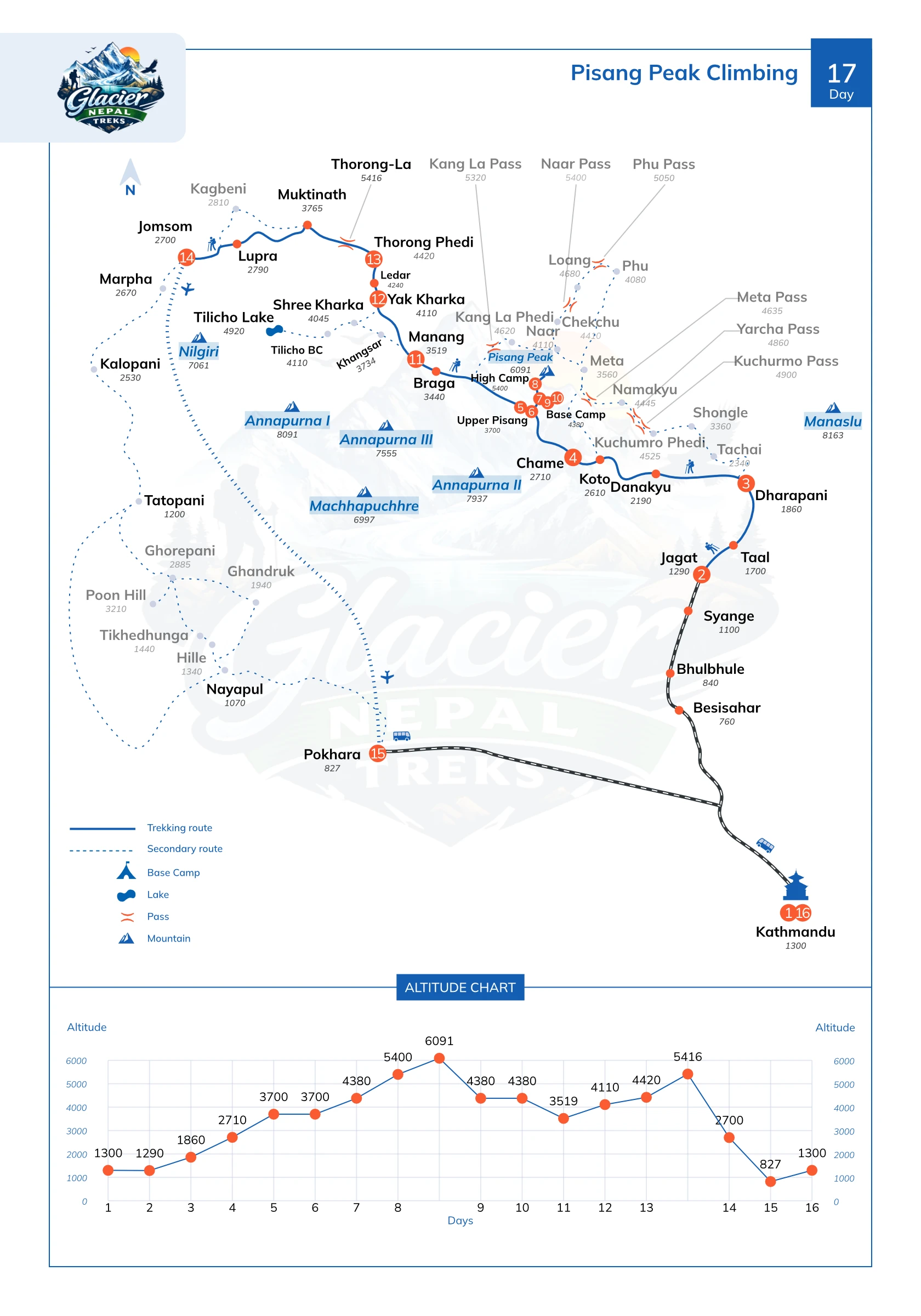
Explore on an unforgettable adventure to Pisang Peak (6,091 m) with Glacier Nepal Treks, combining scenic trekking through the Annapurna region with a thrilling high-altitude climb. The journey includes Kathmandu sightseeing, challenging treks through Manang and Thorong La, acclimatization days, and spectacular mountain views. This trek is ideal for climbers seeking both adventure and cultural immersion.
This plan blends adventure, culture, and safety, ensuring a memorable Pisang Peak climb with Glacier Nepal Treks.
Domestic flight ticket (Jomsom to Pokhara) 25 minutes
Attached bathroom facilities are available where available along the trekking route.
Welcome or farewell dinner in a typical Nepali restaurant
All government taxes, VAT and official paperwork required for trekking
Trekking company service charge and field management
Emergency coordination service (in case of rescue / evacuation)
Your Start Date is the day you land in Nepal, and your End Date is when you fly home.
If the set Pisang Peak Climbing group dates don’t suit your schedule, we can offer alternative dates upon request.
Proper layering is important to stay warm and comfortable in changing mountain weather.
Good footwear makes trekking easier and safer.
The right gear keeps you safe, comfortable, and prepared.
Lightweight but important items keep you clean, healthy, and comfortable.
Keep important items safe and easy to reach.
I had an amazing experience climbing Pisang Peak with Glacier Nepal Treks. The entire trip was well organized, and the journey through the Annapurna region was beautiful. Our climbing guide, Pasang, was professional, experienced, and very supportive throughout the adventure. He explained the climbing techniques clearly and made sure everyone felt confident and safe before the summit attempt. The climb was challenging, especially near the summit, but the incredible mountain views made every effort worthwhile. Reaching the top of Pisang Peak was an unforgettable moment. The support, accommodation, and overall organization from Glacier Nepal Treks were excellent. I truly appreciated Pasang's patience and encouragement during the difficult parts of the climb. I highly recommend Glacier Nepal Treks to anyone planning a Pisang Peak climbing adventure in Nepal
Pisang Peak is considered a non-technical to moderately technical trekking peak, suitable for climbers with basic mountaineering experience. While it does involve using crampons, ice axes, and rope techniques, Glacier Nepal Trek ensures that all climbers receive proper guidance and training before the ascent. Physical fitness and previous trekking experience above 4,000 meters are highly recommended. The climb requires stamina, acclimatization, and determination, but with professional support, it is achievable for most adventure enthusiasts willing to commit to the challenge.
Previous mountaineering experience is not mandatory, but basic trekking experience and good physical fitness are essential. Glacier Nepal Trek provides training on the use of climbing equipment such as crampons, harnesses, and ice axes, along with techniques for navigating snow and ice. The guides also offer step-by-step instructions, ensuring that even first-time climbers can safely reach the summit. Those with prior trekking experience at high altitudes will find the ascent easier, but beginners with proper preparation can successfully complete the climb with support.
The trek to Pisang Peak Base Camp involves moderate to strenuous hiking over several days, with gradual altitude gain from 1,300 meters in Kathmandu to 4,380 meters at Base Camp. Daily treks range from 3 to 6 hours, often on rocky and uneven terrain. Glacier Nepal Trek recommends regular cardiovascular and strength training before the trip. Proper acclimatization is built into the itinerary to reduce the risk of altitude sickness, and the team monitors climbers closely, ensuring a safe and manageable pace for everyone on the trail.
Altitude sickness is a potential risk on any high-altitude trek, including Pisang Peak, as climbers ascend above 4,000 meters. Symptoms can include headache, nausea, dizziness, and fatigue. Glacier Nepal Trek incorporates acclimatization days, gradual ascent profiles, and proper hydration to minimize these risks. Guides are trained to recognize symptoms early and take appropriate measures, such as rest, descent, or medical attention. Following the guidance of the trekking team, pacing oneself, and listening to one’s body are critical steps in preventing severe altitude-related complications.
Yes, Glacier Nepal Trek offers flexibility to customize the Pisang Peak climb according to fitness levels, interests, and schedule constraints. Shorter trekking days, additional rest or acclimatization days, and alternative routes can be arranged without compromising safety. Customized itineraries may include extra sightseeing in Manang or Pokhara, cultural interactions with local communities, or photography-focused trekking. The company works closely with clients to balance adventure, safety, and personal goals, ensuring that each trekker enjoys a memorable and tailored high-altitude experience.
The trek begins with a drive from Kathmandu to Jagat, which takes approximately 6 to 8 hours. The road passes through the scenic Trishuli Valley, with terraced fields, rivers, and traditional villages along the way. Glacier Nepal Trek provides comfortable transportation and ensures that all travelers are briefed about the journey before departure. From Jagat, the trekking route begins along the Bhudi Gandaki River, gradually ascending through villages and forests. The company handles all logistics, making the journey to the trailhead smooth and stress-free.
Yes, climbers often combine the Pisang Peak expedition with popular treks such as Annapurna Circuit or Manang Valley explorations. Glacier Nepal Trek can design itineraries that merge peak climbing with trekking, sightseeing, and cultural experiences. This allows trekkers to enjoy high-altitude climbing while also experiencing Nepal’s rich landscapes, monasteries, and local communities. Combining trips requires careful planning for acclimatization, fitness, and logistics, but the company ensures a seamless adventure that maximizes both adventure and cultural immersion in one journey.
The ideal time to climb Pisang Peak is during the pre-monsoon (March to May) and post-monsoon (September to November) seasons. During these months, the weather is generally stable, skies are clear, and visibility of the Annapurna and Manaslu ranges is spectacular. Glacier Nepal Trek advises avoiding the monsoon season (June to August) due to heavy rainfall, slippery trails, and increased risk of landslides. Winter months are extremely cold and snowy, making the climb more technical and challenging for beginners.
Climbing Pisang Peak requires specialized high-altitude gear, including insulated trekking boots, crampons, harness, helmet, ice axe, gloves, and layered clothing for cold weather. Glacier Nepal Trek provides a detailed equipment list before the trek and can arrange rental gear if needed. Proper sleeping bags, trekking poles, and sun protection are also essential. The company emphasizes that high-quality gear is crucial for safety, comfort, and performance during the climb, particularly at high altitudes where weather conditions can change rapidly.
Pisang Peak is considered a relatively safe trekking peak when proper precautions are followed. Glacier Nepal Trek prioritizes climber safety by providing experienced guides, quality climbing equipment, and detailed briefings on mountaineering techniques. The itinerary includes acclimatization days to reduce the risk of altitude sickness. Emergency plans, including helicopter evacuation if necessary, are in place. Weather conditions are closely monitored, and summit attempts are only made when conditions are safe, ensuring that every climber can focus on achieving their goals without unnecessary risk.
During the trek to Pisang Peak, accommodation is primarily in local teahouses and lodges. These lodges are basic but comfortable, offering warm meals, tea, and shared or private rooms. Glacier Nepal Trek ensures that accommodation is pre-arranged and suitable for rest and recovery, even at higher altitudes. At Base Camp and High Camp, tents or simple huts may be used depending on weather and availability. While facilities are modest compared to city hotels, the focus is on comfort, cleanliness, and safety, allowing climbers to focus on acclimatization and the summit climb.
| No of people | Price per person |
|---|---|
| 1 - 1 | $2,850 |
| 2 - 4 | $2,600 |
| 5 - 8 | $2,550 |
| 9 - 15 | $2,450 |
| No of people | Price per person |
|---|---|
| 1 - 1 | $2,500 |
| 2 - 4 | $2,350 |
| 5 - 8 | $2,320 |
| 9 - 15 | $2,299 |
| No of people | Price per person |
|---|---|
| 1 - 1 | $2,500 |
| 2 - 4 | $2,350 |
| 5 - 8 | $2,320 |
| 9 - 16 | $2,299 |


 (31)
(31)  94% recommend (244)
 (12)
(12)