Need help with booking? Send us a message.
Challenge yourself with an exciting climb to Island Peak (6,189m) in Nepal’s Everest region. Trek through scenic Sherpa villages and high alpine landscapes on your way to the summit. From the top, enjoy spectacular views of Mount Everest, Lhotse, and Ama Dablam.
Island Peak Climbing, also known as Imja Tse (6,189 m / 20,305 ft), is one of Nepal’s most popular trekking peaks and a perfect introduction to Himalayan mountaineering. Located in the heart of the Everest region, Island Peak rises dramatically above the Imja Valley and offers climbers an unforgettable blend of high-altitude trekking, technical climbing, and breathtaking alpine scenery. The journey combines the classic Everest Base Camp trail with an adventurous summit push, making it ideal for trekkers who want to step into the world of mountaineering.
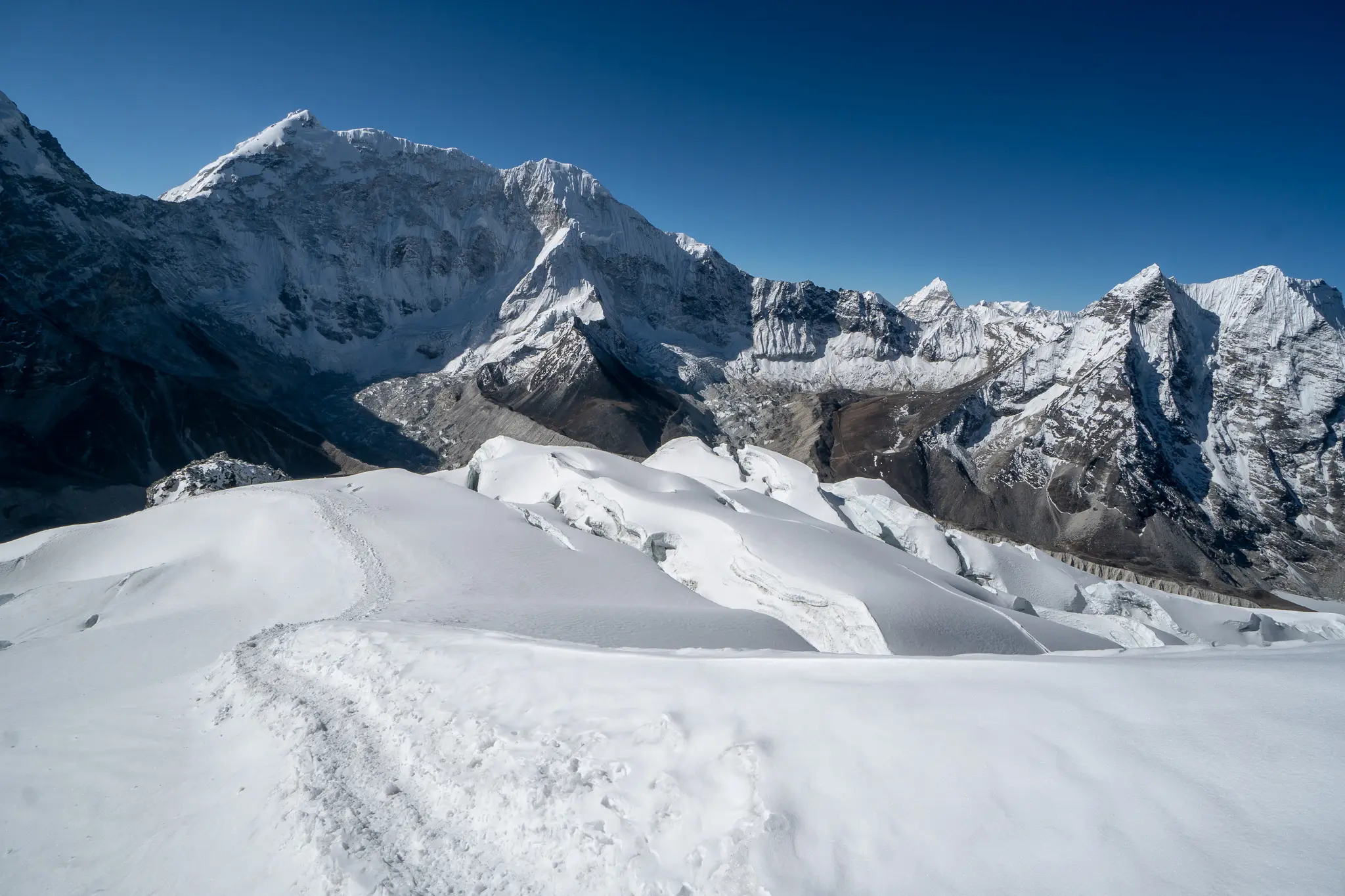
The carefully designed itinerary allows for proper acclimatization through stops at Namche Bazaar and Dingboche, ensuring safety and comfort at altitude. Along the way, climbers pass through traditional Sherpa villages, ancient monasteries like Tengboche, and glacial valleys surrounded by towering peaks such as Ama Dablam, Lhotse, Nuptse, and Mount Everest. Reaching Island Peak Base Camp itself is a major achievement, offering stunning views of icefalls and surrounding summits.
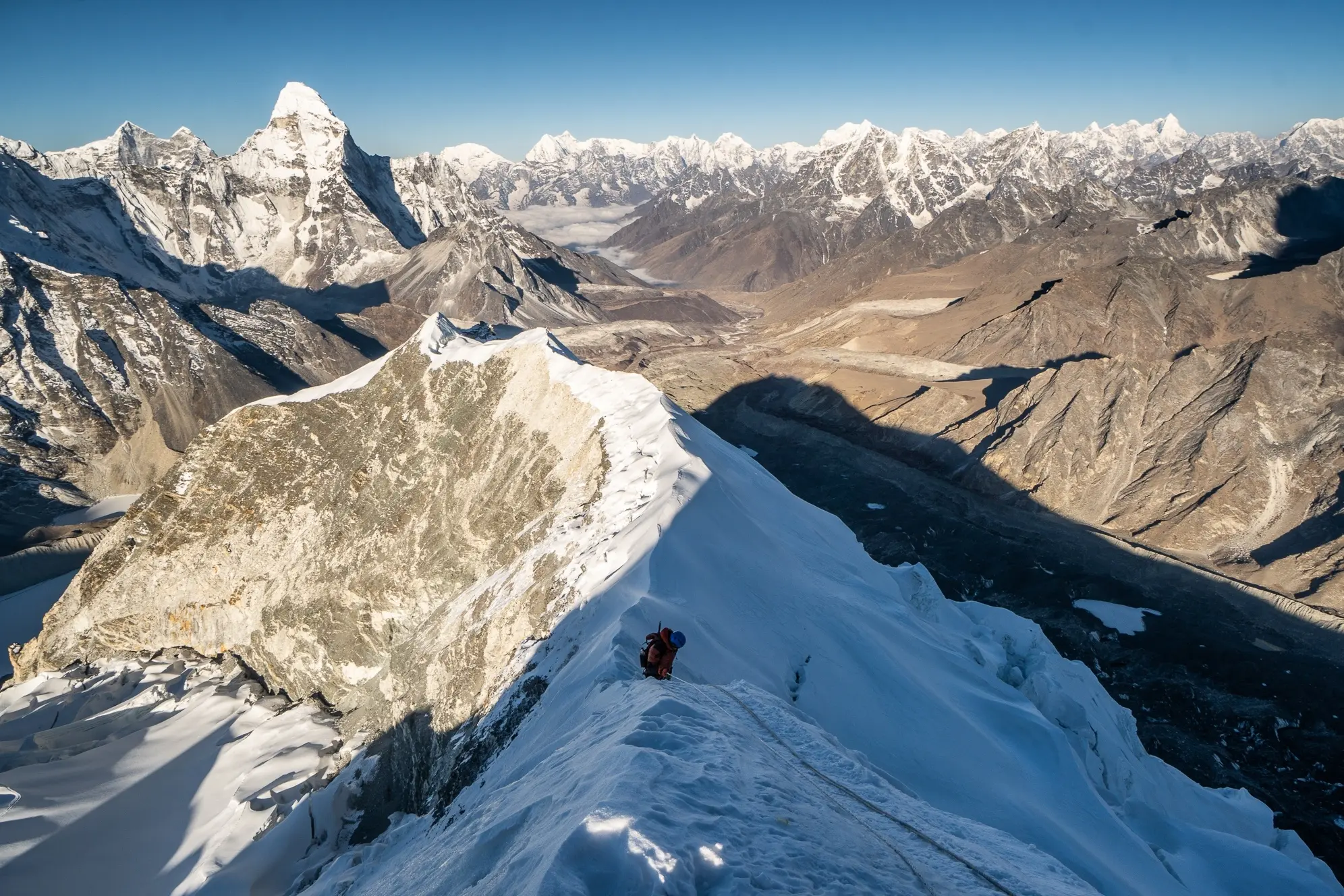
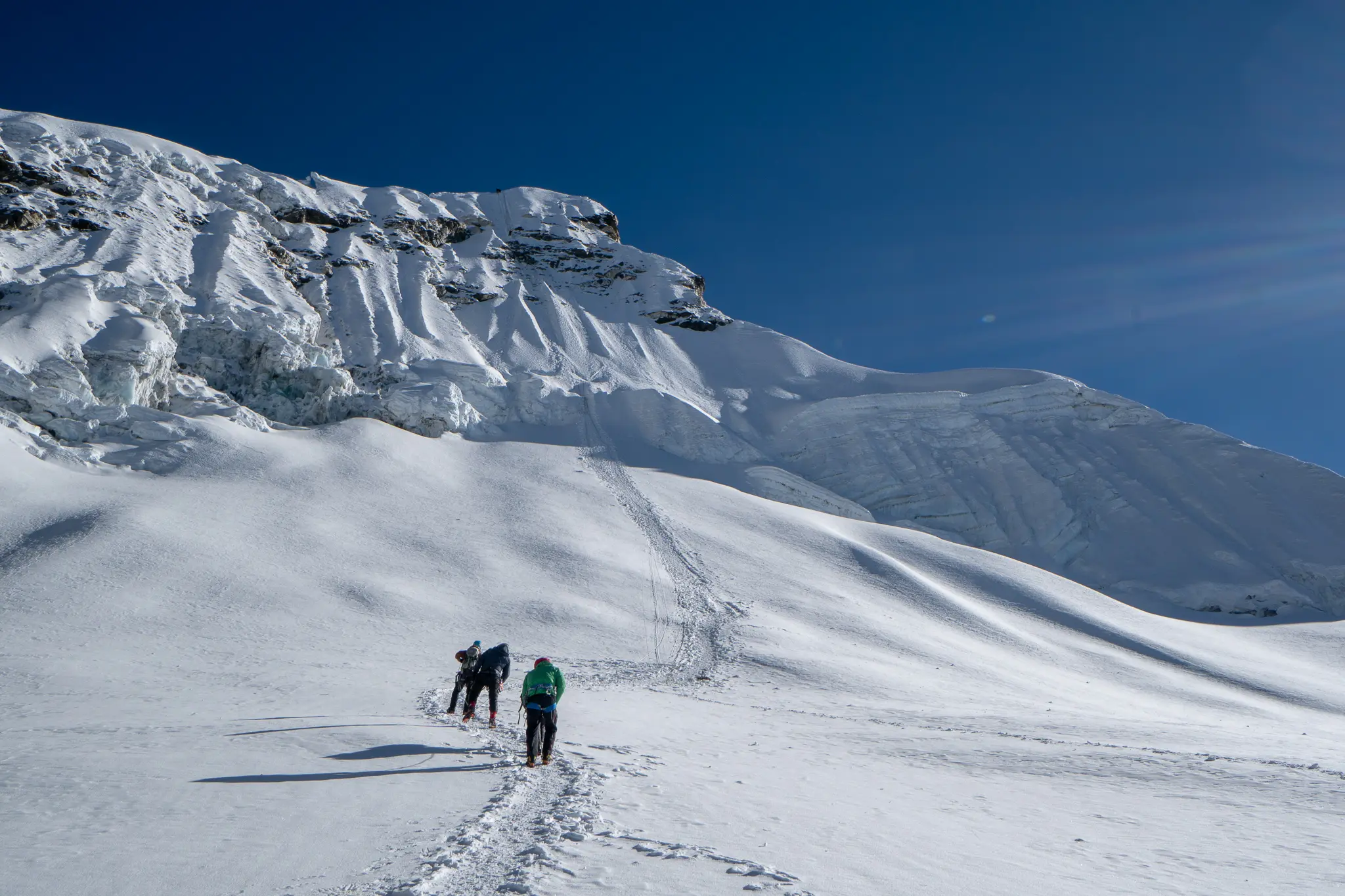
The summit day is the highlight of the expedition, involving glacier travel, fixed ropes, and a thrilling ridge climb to the top. Standing on the summit delivers an immense sense of accomplishment and panoramic views of the eastern Himalayas. With Glacier Nepal Treks, the climb is conducted with experienced guides, quality equipment, and a strong emphasis on safety and success, making the adventure both challenging and deeply rewarding.
Choosing the right season is crucial for a successful and enjoyable Island Peak Climbing experience. The best seasons are spring (March–May) and autumn (September–November), when weather conditions are stable, and mountain views are at their best. During these months, climbers benefit from clearer skies, moderate temperatures, and safer climbing conditions on the glacier and summit ridge.
Spring is particularly popular as the weather gradually warms and the Himalayas come alive with blooming rhododendrons at lower elevations. Snow conditions during spring are often ideal for climbing, providing good grip on the glacier and headwall. This season also attracts climbers preparing for higher expeditions, creating a vibrant mountaineering atmosphere along the trail.
Autumn, on the other hand, offers crisp air, minimal rainfall, and excellent visibility after the monsoon season. The landscapes appear fresh and clean, and the trekking trails are lively with fellow adventurers. Autumn is especially favored for its stable weather window, making summit success rates high. While winter and monsoon climbs are possible, they are generally recommended only for highly experienced climbers due to extreme cold or heavy snowfall.
Best season summary:
Island Peak Climbing is classified as a moderately challenging trekking peak, suitable for physically fit trekkers with basic mountaineering skills. While it does not require extreme technical expertise, climbers must be comfortable with long trekking days, high altitude, and using equipment such as crampons, ice axes, and fixed ropes. The most demanding part is the summit day, which involves glacier travel, ascending a steep ice headwall, and navigating a narrow ridge near the summit.
Altitude is the main challenge rather than technical difficulty. Proper acclimatization days at Namche Bazaar and Dingboche significantly reduce the risk of altitude sickness. Training before the climb such as cardio workouts, hiking, and strength training greatly enhances the experience. Glacier Nepal Treks provides pre-climb briefings and on-site training at base camp to ensure climbers are confident and well-prepared.
Transportation plays a key role in the adventure. The journey begins with a scenic flight from Kathmandu to Lukla, one of the world’s most thrilling mountain airstrips. From Lukla, the trek continues on foot through the Khumbu region. All logistics, including flights, porter support, and ground transfers, are professionally handled by Glacier Nepal Treks, allowing climbers to focus solely on the experience.
Difficulty & transport highlights:
Food and accommodation during Island Peak Climbing are designed to keep climbers well-nourished, comfortable, and energized throughout the journey. Along the trekking route, accommodation is primarily in well-maintained teahouses that offer basic yet cozy rooms with twin beds, warm blankets, and shared dining areas. In popular villages like Namche Bazaar and Dingboche, teahouses are more developed, often providing hot showers, Wi-Fi, and charging facilities.
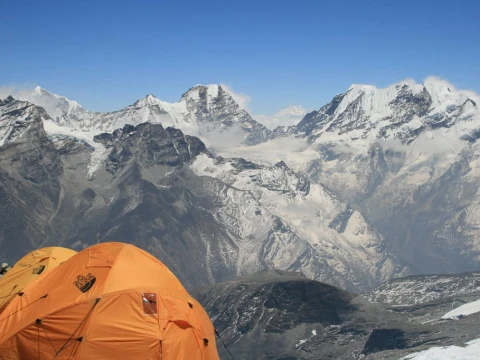
As the climb progresses higher, accommodation becomes more basic, especially at Island Peak Base Camp, where climbers stay in fully serviced camping tents. Glacier Nepal Treks provides high-quality tents, sleeping mats, and dining tents to ensure safety and comfort at high altitude. The camping experience adds an authentic expedition feel to the climb.
Meals are carefully planned to provide sufficient calories and nutrition. Trekkers can enjoy a variety of local and international dishes such as dal bhat, noodles, soups, pasta, rice, potatoes, eggs, and seasonal vegetables. At base camp, meals are freshly prepared by experienced cooks, focusing on hygiene and energy-rich foods. Special dietary requirements can also be arranged in advance.
Food & accommodation summary:
Island Peak Climbing requires several official permits to ensure legal access and environmental conservation in the Everest region. These permits are mandatory and must be arranged before starting the climb. One of the key permits is the Island Peak Climbing Permit, issued by the Nepal Mountaineering Association (NMA). The cost of this permit varies by season, with spring being the most expensive due to high demand.
In addition to the climbing permit, trekkers need the Sagarmatha National Park Entry Permit, which supports conservation efforts in the Everest region. Another essential document is the Khumbu Pasang Lhamu Rural Municipality Permit, which replaces the former TIMS card requirement for this area. These permits are checked at various points along the trail.
Handling permits can be confusing for first-time visitors, but Glacier Nepal Treks manages all paperwork efficiently on behalf of clients. This ensures a smooth, hassle-free experience and allows climbers to focus on preparation and enjoyment. Having permits arranged in advance also prevents delays during the trek.
Required permits:
Choosing the right company is vital for a safe and successful Island Peak Climbing experience, and Glacier Nepal Treks stands out for its professionalism, local expertise, and commitment to client satisfaction. With years of experience in the Everest region, the company offers well-planned itineraries that prioritize acclimatization, safety, and summit success. Their climbing guides are certified, highly experienced, and deeply familiar with the terrain and conditions.
Glacier Nepal Treks provides a personalized approach, whether you are a first-time climber or an experienced trekker looking to expand your skills. Small group sizes, quality equipment, and thorough pre-climb training ensure that every climber feels confident and supported. Safety protocols, emergency response plans, and ethical trekking practices are strictly followed throughout the expedition.
Beyond logistics, the company emphasizes cultural connection and environmental responsibility. By working closely with local Sherpa communities and using eco-friendly practices, Glacier Nepal Treks ensures that your adventure contributes positively to the region. Their transparent pricing, responsive communication, and excellent client reviews make them a trusted choice for Himalayan adventures.
Why Glacier Nepal Treks:
During the peak trekking seasons of Spring (March–May) and Autumn (September–November), Lukla flights are in extremely high demand. With thousands of trekkers and climbers simultaneously heading to the Everest region, the pressure on Kathmandu's Tribhuvan International Airport (TIA) becomes overwhelming.
To ease this congestion, the Civil Aviation Authority of Nepal (CAAN) limits the number of direct Kathmandu–Lukla flights and operates a significant number of departures from Ramechhap (Manthali Airport) instead, a smaller regional airport located approximately 4 –5 hours east of Kathmandu.
The Island Peak (6,189 m) climbing itinerary usually combines the classic Everest Base Camp trekking route with a peak climbing experience in the Khumbu region.The journey begins in Kathmandu with preparation and a scenic flight to Lukla. The trek starts through beautiful Sherpa villages like Phakding and Namche Bazaar, where trekkers spend a day acclimatizing. From Namche, the trail continues through Tengboche, famous for its monastery and views of Mount Everest, Ama Dablam, and other Himalayan peaks.
The trek then passes through Dingboche and Lobuche before reaching Everest Base Camp and hiking to Kala Patthar for stunning panoramic views. After acclimatization, the route heads to Chhukung and then to Island Peak Base Camp.
Climbers receive basic mountaineering training before the summit attempt. The climb involves glacier travel, fixed ropes, and a steep snow headwall leading to the summit. From the top, climbers enjoy breathtaking views of Lhotse, Makalu, and surrounding Himalayan peaks. After the successful summit, the trek descends back through the Khumbu Valley to Lukla and returns to Kathmandu.
Upon your arrival at Tribhuvan International Airport in Kathmandu, a friendly representative from Glacier Nepal Treks will warmly welcome you and assist with your transfer to your hotel. As you drive through the bustling streets of Kathmandu, you will immediately sense the city’s vibrant culture, colorful markets, and rich history. After hotel check-in, you will have time to rest and recover from your journey. Later in the day, a detailed briefing will be conducted by your climbing guide to discuss the Island Peak expedition, review equipment, and finalize permits. You may explore nearby streets or enjoy traditional Nepali cuisine in the evening. Overnight stay at a comfortable hotel in Kathmandu.
 Accommodation Three-star Hotel in Thamel, Kathmandu
  Meals Breakfast
  Max. altitude 1,350m / 4,429ft.
 Early in the morning, Glacier Nepal Treks will escort you to the domestic airport for an exhilarating scenic flight to Lukla, one of the world’s most thrilling mountain airstrips. The flight offers spectacular aerial views of the Himalayan range before landing in the Everest region. After meeting the trekking crew and porters, the trek officially begins. The trail gently descends through charming Sherpa villages, mani walls, and lush pine forests alongside the Dudh Koshi River. This first trekking day is relatively short and designed to ease your body into the altitude. You will arrive at Phakding in the afternoon, where you can relax and enjoy the peaceful mountain environment. Overnight at a teahouse.
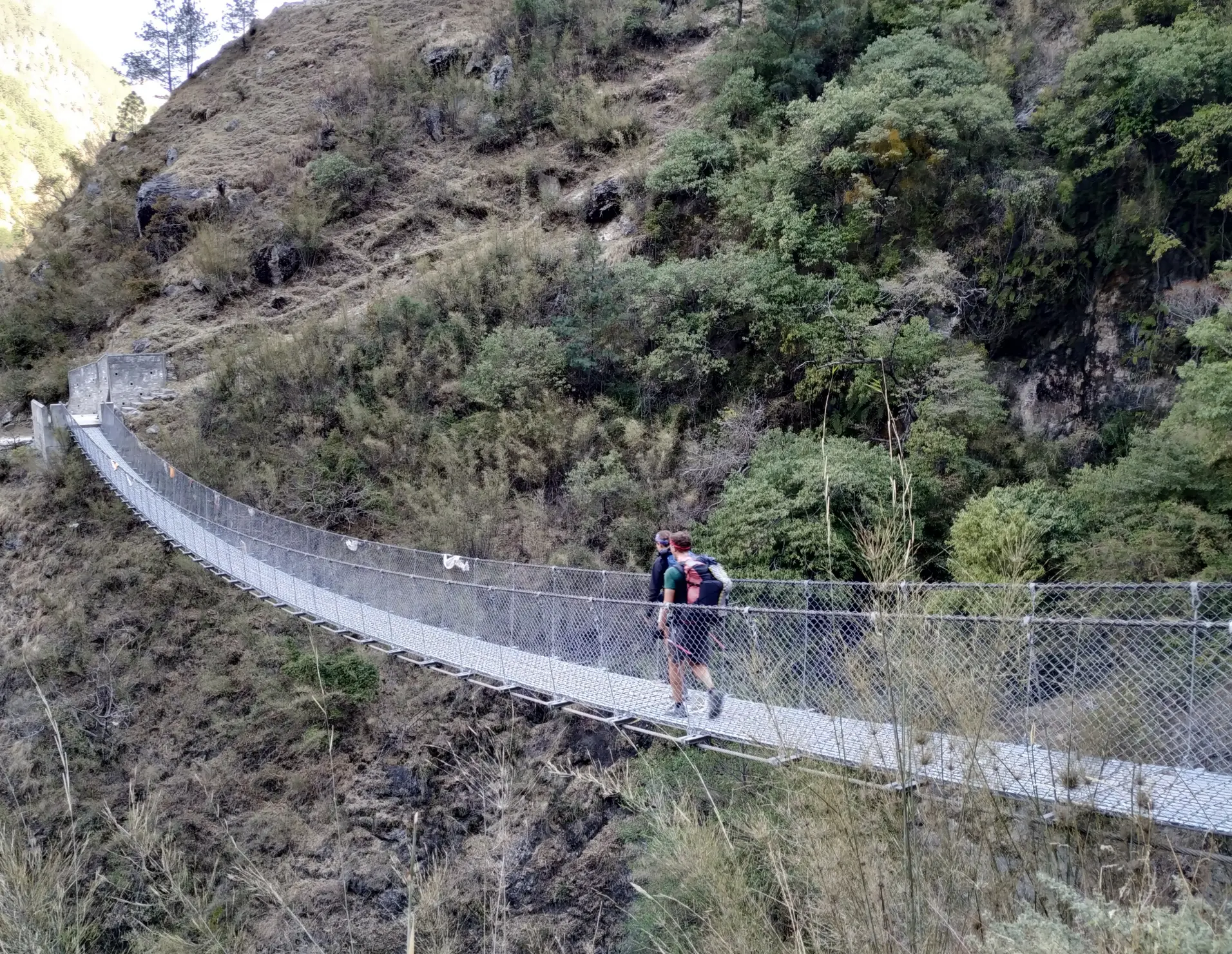
Accommodation Tea House / Lodge Meals Breakfast, Lunch, Dinner Max. altitude 2,651m / 8,698ft. Today’s trek gradually becomes more adventurous as you move deeper into the Everest region. After breakfast, the trail follows the Dudh Koshi River, crossing several suspension bridges adorned with prayer flags. You will pass through small settlements and reach the entrance of Sagarmatha National Park, where permits are checked. From here, the trail ascends steeply through dense forests, and on a clear day, you may catch your first glimpse of Mount Everest. The final climb to Namche Bazaar is challenging but rewarding. Namche, the vibrant Sherpa capital, is a bustling hub with shops, bakeries, and stunning mountain views. Glacier Nepal Treks ensures a comfortable lodge stay and proper rest for acclimatization.
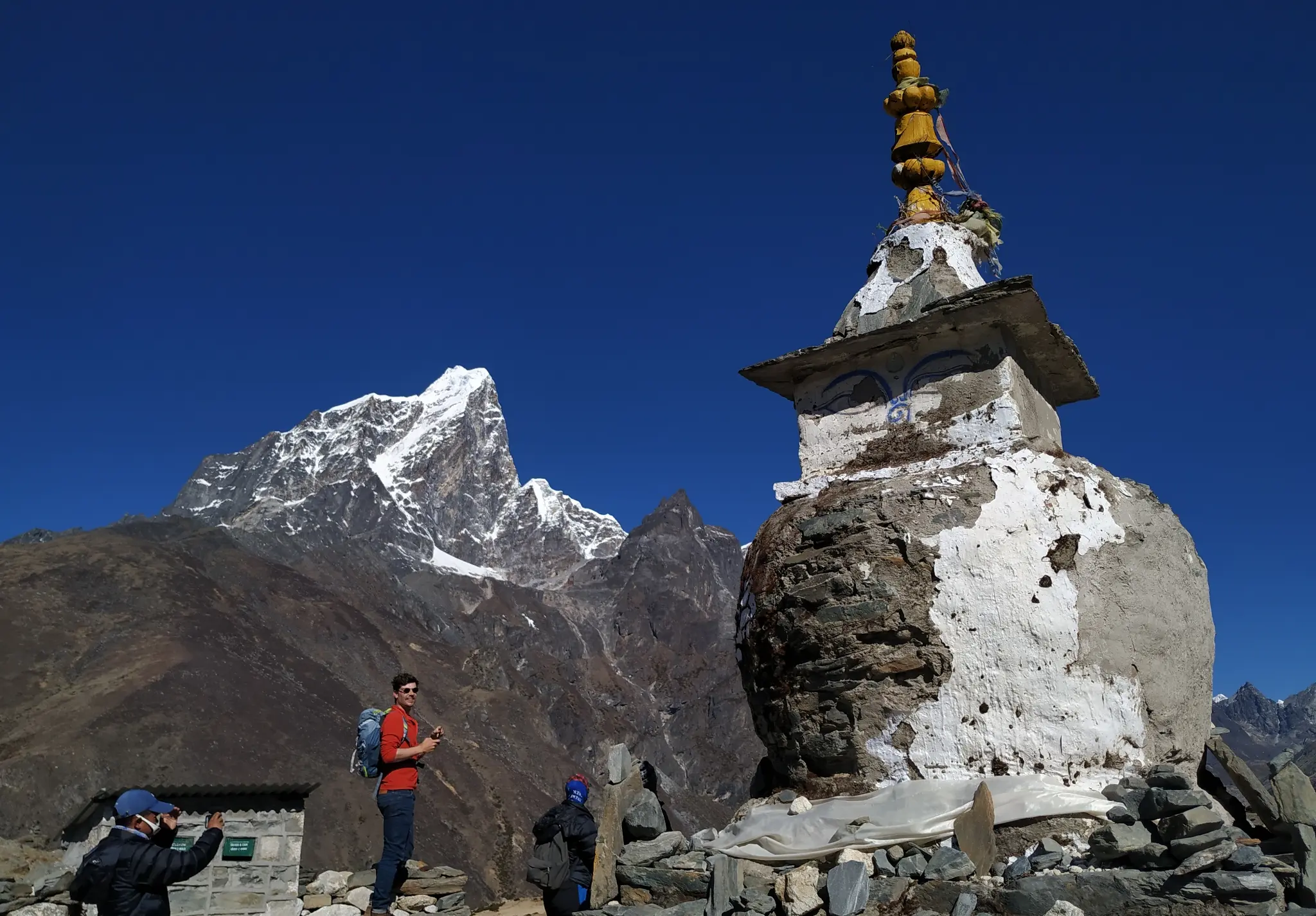
Accommodation Tea House / Lodge Meals Breakfast, Lunch, Dinner Max. altitude 3,440m / 11,286ft. This important acclimatization day is designed to help your body adapt to the increasing altitude. Rather than resting completely, Glacier Nepal Treks organizes a short hike to higher elevations, following the principle of “climb high, sleep low.” You may hike to the Everest View Hotel or nearby viewpoints that offer panoramic views of Everest, Lhotse, Ama Dablam, and Thamserku. Along the way, you will visit traditional Sherpa villages and learn about local culture and lifestyle. After returning to Namche, the afternoon is free to explore the local market, visit the Sherpa museum, or relax at a café. Proper acclimatization here greatly increases your chances of a successful Island Peak summit.
Accommodation Tea House / Lodge Meals Breakfast, Lunch, Dinner Max. altitude 3,440m / 11,286ft. Leaving Namche Bazaar, the trail contours along scenic ridges with breathtaking views of Everest, Nuptse, and Ama Dablam. The path descends through forests to the river before climbing steadily toward Tengboche. This section is rich in wildlife and rhododendron forests, especially vibrant during spring. Upon reaching Tengboche, you will visit the famous Tengboche Monastery, the spiritual heart of the Khumbu region. The peaceful atmosphere, combined with dramatic mountain backdrops, makes this one of the most memorable stops of the trek. Glacier Nepal Treks arranges comfortable lodging nearby, allowing you to enjoy sunset and sunrise views over the Himalayas while resting for the journey ahead.
Accommodation Tea House / Lodge Meals Breakfast, Lunch, Dinner Max. altitude 3,956m / 12,979ft. Today’s trek begins with a descent through alpine forests before crossing the Imja Khola River. As you gain altitude, the landscape gradually transforms into a rugged, high-altitude environment with fewer trees and expansive valleys. Passing through Pangboche village, one of the oldest settlements in the region, you will see traditional stone houses and ancient monasteries. The trail then climbs steadily toward Dingboche, surrounded by towering peaks and glacial landscapes. Dingboche is a popular acclimatization stop and offers stunning views of Ama Dablam and Island Peak itself. Glacier Nepal Treks ensures a relaxed pace and proper hydration, helping you adjust comfortably to the thinner air. Overnight at a teahouse.
Accommodation Tea House / Lodge Meals Breakfast, Lunch, Dinner Max. altitude 4,380m / 14,370ft. Another vital acclimatization day is spent in Dingboche to prepare your body for higher elevations. Glacier Nepal Treks organizes a short hike to nearby ridges or viewpoints, such as Nagarjun Hill, which offers spectacular views of Makalu, Lhotse, and the surrounding glaciers. These hikes help stimulate red blood cell production while minimizing altitude risks. After returning to Dingboche, the rest of the day is dedicated to rest, stretching, and enjoying the peaceful mountain setting. Your guide will monitor your health and provide guidance on breathing techniques and hydration. This day plays a crucial role in ensuring a safe and successful Island Peak climbing experience.
Accommodation Tea House / Lodge Meals Breakfast, Lunch, Dinner Max. altitude 4,380m / 14,370ft. The trail from Dingboche to Lobuche gradually ascends through a stark yet beautiful alpine landscape. You will walk alongside the Khumbu Glacier, passing memorials dedicated to climbers who lost their lives in the Himalayas. These monuments serve as a powerful reminder of the mountains’ beauty and challenges. The air becomes noticeably thinner, and Glacier Nepal Treks maintains a slow, steady pace to ensure safety and comfort. As you approach Lobuche, the terrain becomes rocky, surrounded by towering peaks like Nuptse and Pumori. Upon arrival, you can rest and enjoy a warm meal while mentally preparing for the higher sections of the journey. Overnight at a lodge in Lobuche.
Accommodation Tea House / Lodge Meals Breakfast, Lunch, Dinner Max. altitude 4,938m / 16,201ft. Today is one of the most exciting days of the trek. After breakfast, you trek to Gorakshep, the last settlement before Everest Base Camp. The trail follows the glacier moraine, offering dramatic views of the surrounding peaks. After lunch at Gorakshep, Glacier Nepal Treks leads an afternoon hike to Kala Patthar, one of the best viewpoints in the Everest region. From the summit, you are rewarded with breathtaking close-up views of Mount Everest, Nuptse, and the Khumbu Icefall. After enjoying the unforgettable scenery, you descend back to Gorakshep for overnight stay, carrying memories that will last a lifetime.
Accommodation Tea House / Lodge Meals Breakfast, Lunch, Dinner Max. altitude 5,545m / 18,192ft. After experiencing the high point at Kala Patthar, today’s trek focuses on recovery and preparation for Island Peak. You retrace your steps from Gorakshep back to Lobuche, allowing your body to adjust after the extreme altitude. Although the distance is short, the walk is still demanding due to the thin air. Glacier Nepal Treks ensures a relaxed pace and frequent breaks. Once in Lobuche, the rest of the day is spent resting, hydrating, and preparing mentally and physically for the transition toward Island Peak. Your guide may discuss upcoming technical sections and ensure that all climbers are feeling confident and healthy.
Accommodation Tea House / Lodge Meals Breakfast, Lunch, Dinner Max. altitude 4,938m / 16,201ft. This challenging and adventurous day takes you over the spectacular Khongma La Pass. The ascent is steep and demanding, but the reward is stunning panoramic views of the surrounding Himalayan giants and glacial lakes. Glacier Nepal Treks provides experienced guides to ensure safety while crossing this high pass. After reaching the top, you descend carefully toward Chhukung, a beautiful village nestled beneath Island Peak. The trail offers dramatic views of glaciers and ice-covered peaks. Upon arrival in Chhukung, you can relax and enjoy the sense of accomplishment from completing one of the toughest trekking sections of the journey. Overnight at a lodge.
Accommodation Tea House / Lodge Meals Breakfast, Lunch, Dinner Max. altitude 4,730m / 15,518ft. Today marks the transition from trekking to mountaineering. Leaving Chhukung, the trail ascends gradually along rocky paths toward Island Peak Base Camp. The surroundings become increasingly rugged, with glacial moraines and icy terrain. Upon reaching base camp, Glacier Nepal Treks sets up a well-organized camp, ensuring comfort and safety at high altitude. In the afternoon, your climbing guide conducts a pre-climb training session, covering the use of crampons, ice axes, harnesses, and fixed ropes. This preparation boosts confidence and ensures everyone is ready for summit day. Early dinner and rest are essential, as the summit attempt begins before dawn.
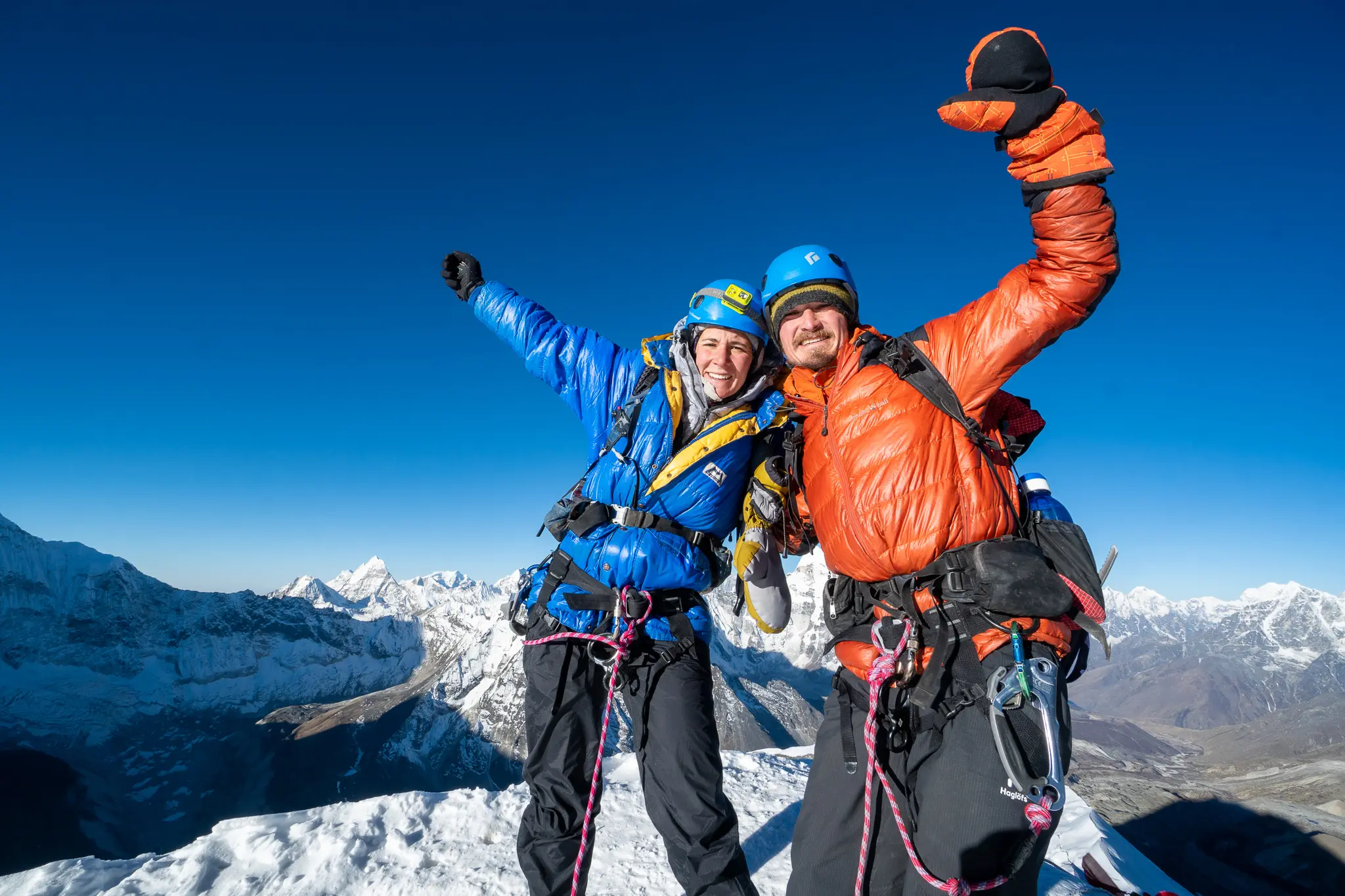
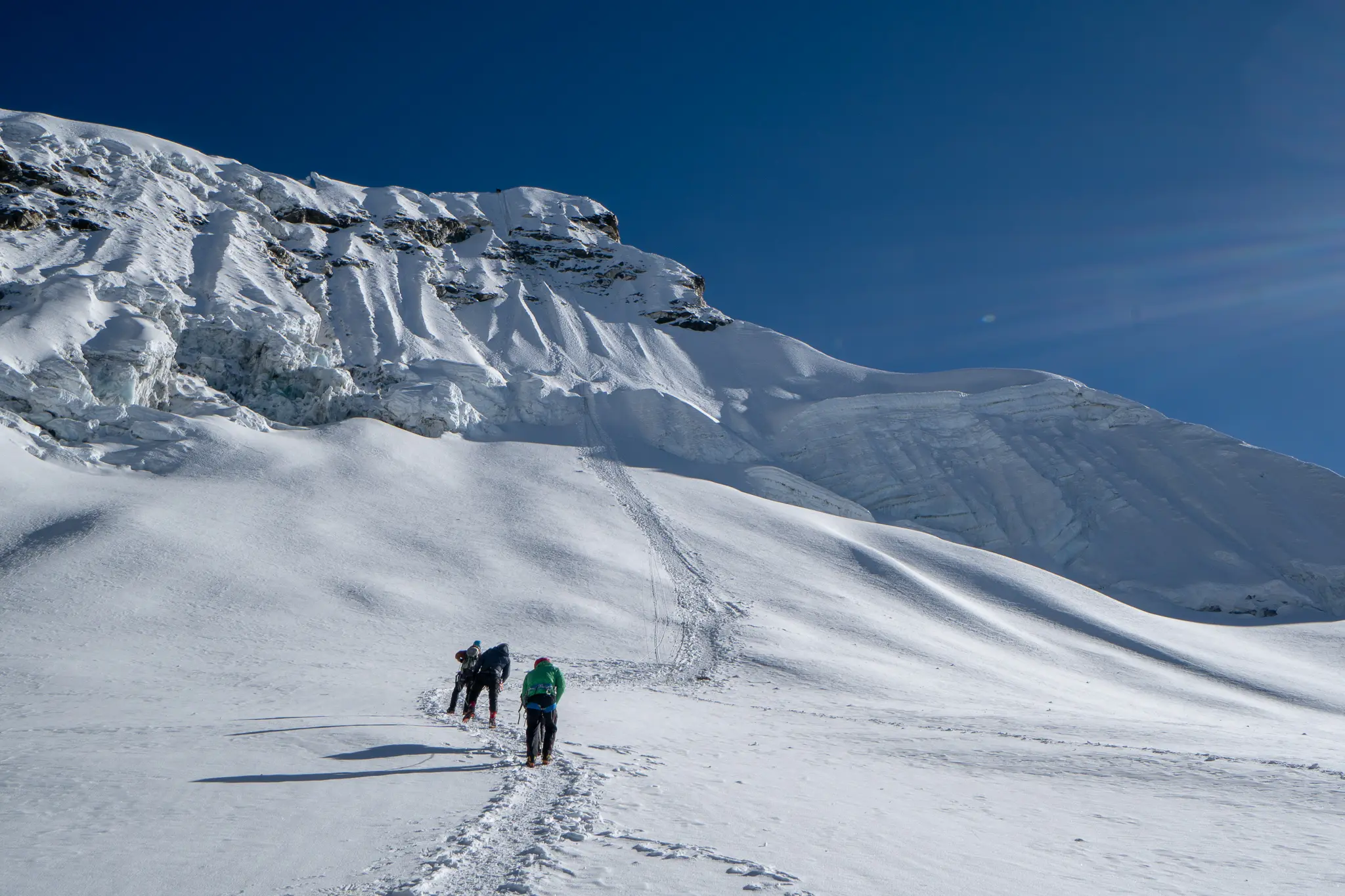
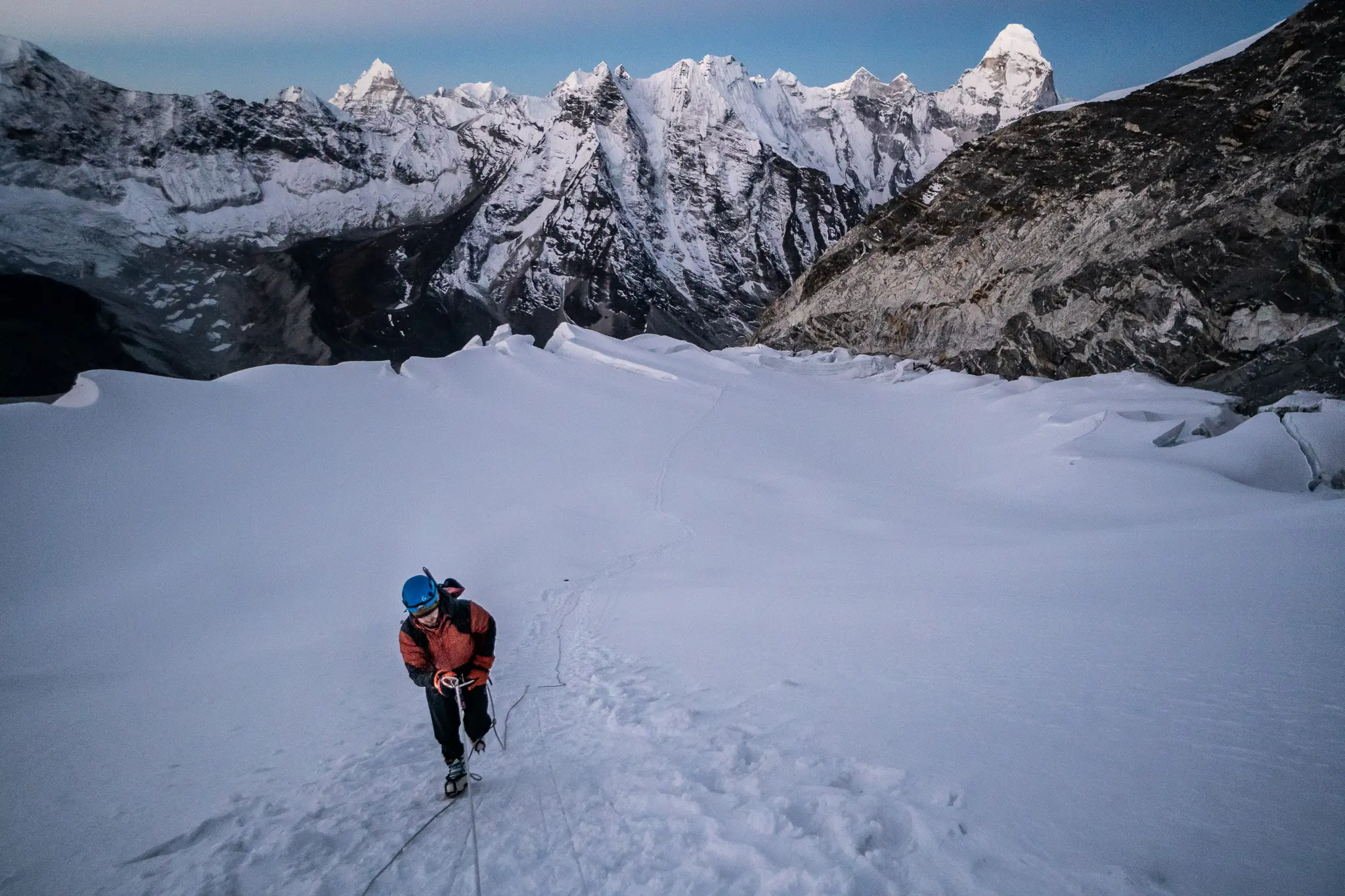
Accommodation camping Meals Breakfast, Lunch, Dinner Max. altitude 5,087m / 16,690ft. Summit day is the most demanding and rewarding part of the expedition. Starting very early in the morning, Glacier Nepal Treks leads you carefully up snow slopes, glaciers, and fixed ropes. The final ascent to the summit involves steep climbing, requiring focus and determination. Upon reaching the summit of Island Peak, you are rewarded with breathtaking views of Everest, Lhotse, Makalu, and the surrounding Himalayan range. After celebrating this incredible achievement, you descend carefully back to base camp and continue down to Chhukung. The long day ends with well-earned rest, pride, and unforgettable memories of standing atop a Himalayan peak.
Accommodation Camping Meals Breakfast, Lunch, Dinner Max. altitude 6,189m / 20,305ft. After the successful summit, the journey continues downhill toward Pangboche. Descending to lower altitudes brings relief as breathing becomes easier and temperatures warmer. The trail retraces scenic valleys and passes through familiar landscapes, offering a chance to reflect on the climb. Pangboche is a culturally rich village with an ancient monastery and stunning views of Ama Dablam. Glacier Nepal Treks arranges comfortable accommodation, allowing you to relax and recover after the intense summit push. This day is more relaxed, focusing on recovery while still enjoying the beauty and culture of the Everest region.
Accommodation Tea House / Lodge Meals Breakfast, Lunch, Dinner Max. altitude 3,985m / 13,074ft. The trek from Pangboche to Namche Bazaar is filled with descending trails through forests and Sherpa villages. As you lose altitude, energy levels improve, and the walk feels more comfortable. You pass through Tengboche once again, enjoying familiar views and perhaps revisiting the monastery. Continuing along the river and ridge trails, you arrive back in the lively atmosphere of Namche Bazaar. Glacier Nepal Treks ensures a pleasant final night in the Everest region, where you can enjoy hot showers, delicious food, and celebrate the success of your Island Peak climb with your team.
Accommodation Tea House / Lodge Meals Breakfast, Lunch, Dinner Max. altitude 3,440m / 11,286ft. This is the final trekking day of the adventure. The trail descends steeply from Namche to the Dudh Koshi River and continues through forests and villages toward Lukla. While the downhill walk is physically easier, it still requires care on rocky paths. Along the way, you can reflect on the incredible journey and the achievement of summiting Island Peak. Upon reaching Lukla, Glacier Nepal Treks hosts a farewell dinner with the trekking staff, celebrating teamwork and success. This evening is often filled with laughter, stories, and gratitude toward the guides and porters who made the expedition possible.
Accommodation Tea House / Lodge Meals Breakfast, Lunch, Dinner Max. altitude 2,860m / 9,383ft. After breakfast, you board an early morning flight from Lukla back to Kathmandu. Weather permitting, the short flight offers final views of the Himalayan landscape. Upon arrival in Kathmandu, Glacier Nepal Treks transfers you to your hotel. The rest of the day is free for rest, shopping for souvenirs, or exploring cultural sites such as Thamel, Durbar Square, or local markets. In the evening, a farewell dinner may be arranged to celebrate the successful completion of the Island Peak expedition and to share final memories of this once-in-a-lifetime adventure.
Accommodation Three-star Hotel in Thamel, Kathmandu Meals Breakfast Max. altitude 1,350m / 4,429ft. On your final day in Nepal, Glacier Nepal Treks assists with your transfer to Tribhuvan International Airport for your onward journey. As you depart, you carry unforgettable memories of the Himalayas, the warmth of Sherpa hospitality, and the incredible achievement of climbing Island Peak. This journey is not just a trek or a climb but a life-changing adventure filled with natural beauty, cultural encounters, and personal accomplishment. We hope to welcome you again in Nepal for another unforgettable Himalayan experience.
Accommodation Three-star Hotel in Thamel, Kathmandu Meals Breakfast 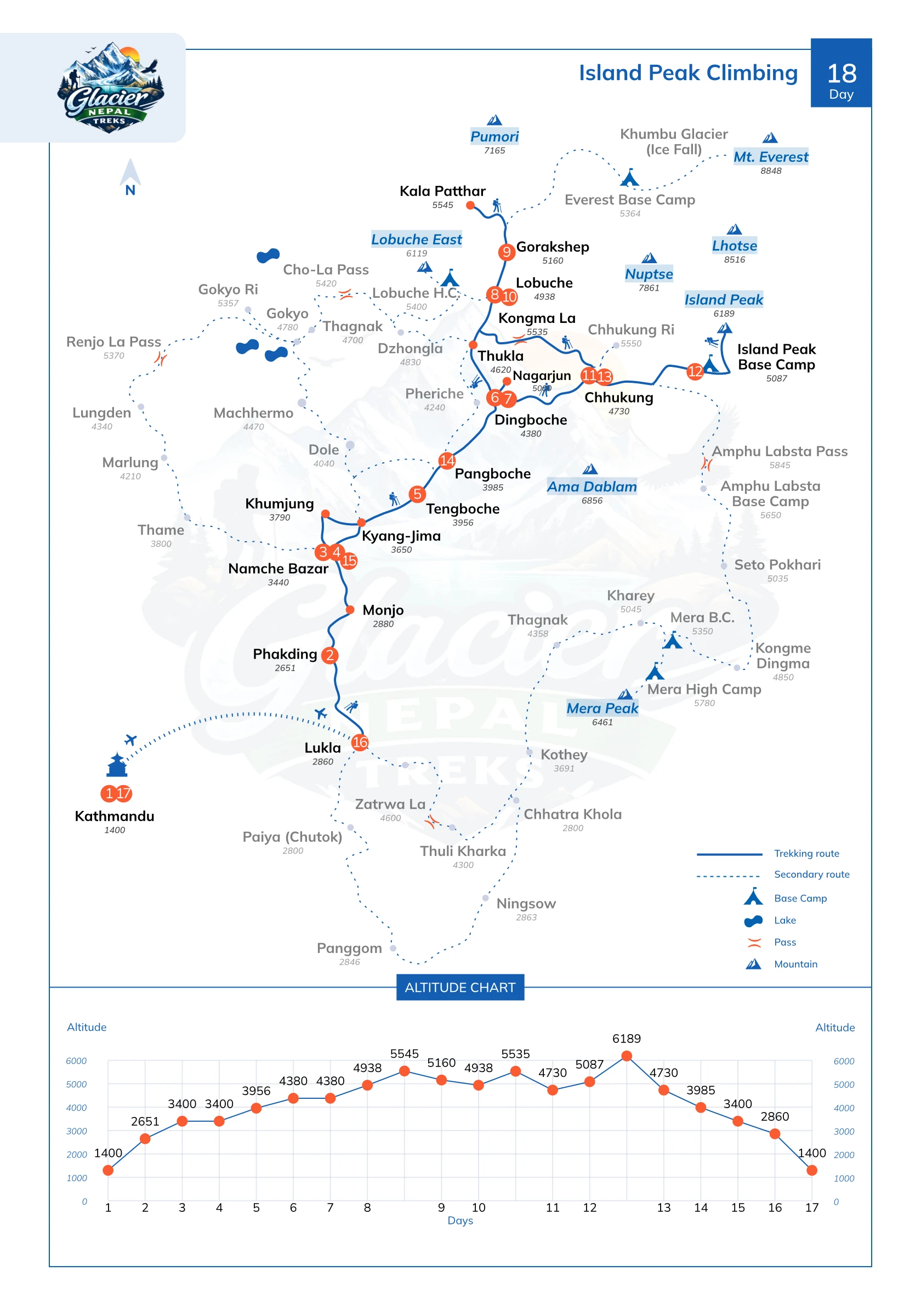
Explore the ultimate Himalayan adventure with Glacier Nepal Treks, combining scenic trekking, cultural immersion, and the thrill of climbing Island Peak (6,189 m / 20,305 ft). Your journey starts in Kathmandu, continues through the Sherpa heartland of Namche Bazaar, Tengboche, Dingboche, and culminates with the Island Peak summit. Along the way, enjoy acclimatization days, local cuisine, and breathtaking Himalayan panoramas.
Glacier Nepal Treks ensures professional guides, porter support, quality meals, and well-organized logistics to make your Island Peak climb safe and unforgettable.

Airport & Transportation
Accommodation
Meals
Permits & Documentation
Trekking Staff & Support
Trekking Equipment & Safety
Additional Services
Your Start Date is the day you land in Nepal, and your End Date is when you fly home.
If the set Island Peak Climbing group dates don’t suit your schedule, we can offer alternative dates upon request.
Proper layering is important to stay warm and comfortable in changing mountain weather.
Good footwear makes trekking easier and safer.
The right gear keeps you safe, comfortable, and prepared.
Lightweight but important items keep you clean, healthy, and comfortable.
Keep important items safe and easy to reach.
My wife and I climbed Island Peak in 2018 with the support of Glacier Nepal Treks, and it was an incredible experience. From the beginning, the team organized everything perfectly, including permits, accommodation, and logistics in the Everest region. Our guide was very professional, friendly, and always focused on our safety and comfort. He patiently helped us during the trekking days and gave us great training before the summit push. The climb itself was challenging but extremely rewarding, especially when we finally reached the summit and saw the stunning views of the Himalayas. Thanks to the excellent support from Glacier Nepal Treks, my wife and I successfully completed this adventure. We highly recommend them to anyone planning a trekking or climbing trip in Nepal.
My journey with Glacier Nepal Treks was an unforgettable experience. The team was very helpful from the beginning, answering all my questions and handling last-minute changes with great flexibility. Although I traveled solo, my guide Rabin made the trip enjoyable and safe with his knowledge and friendly support. Trekking along the Everest Base Camp trail was beautiful and full of cultural experiences. Because we moved ahead of schedule, I also had the chance to climb Island Peak, which was truly a dream come true. I highly recommend Glacier Nepal Treks for anyone planning an adventure in Nepal.
My experience with Glacier Nepal Treks was far more than a simple climb—it became a meaningful journey of self-discovery. Climbing Island Peak brought both emotional highs and demanding physical challenges. There were moments of doubt and fatigue, but the encouragement and guidance from the team helped us keep moving forward. The stunning Himalayan scenery made every step worthwhile and reminded us of the beauty of the journey. Thanks to the supportive and professional environment created by Glacier Nepal Treks, the experience was truly empowering. It was an unforgettable adventure that strengthened our confidence and left us with memories we will treasure forever. I highly recommend Glacier Nepal Treks to anyone planning an adventure in Nepal. Their team is professional, friendly, and always focused on safety and customer satisfaction. From planning the trip to completing the climb, everything was well organized. Thanks to their excellent support
Our first mountain climbing experience with Glacier Nepal Treks was truly unforgettable. Our expedition to Island Peak was very well organized, and the guides showed great professionalism throughout the journey. Safety was always the top priority, which gave us confidence during the climb. Reaching the summit was an incredible moment, and the panoramic views of the Himalayas were absolutely breathtaking. We are very grateful for the support and encouragement from our guide Rabin, who made the entire adventure smooth, enjoyable, and memorable for us. I highly recommend Glacier Nepal Treks

We had an incredible adventure in Nepal, and Glacier Nepal Treks made the entire journey smooth and memorable. Our trip combined the trek to Everest Base Camp with a climb of Island Peak. we attempted the summit. From the moment we arrived in Kathmandu, everything was well organized. The team welcomed us at the airport and transferred us to a comfortable hotel. We also enjoyed a great sightseeing tour of the city with a knowledgeable guide who shared fascinating insights about Nepal’s culture and history. Our flight to Lukla Airport was arranged perfectly, and the trek began smoothly. Throughout the journey, all accommodations and meals were well organized, allowing us to fully enjoy the experience without worrying about logistics. Our guide Ganesh was exceptional—always attentive to our health and safety, carrying oxygen and sharing his deep knowledge of the region. The assistant guides and porters were also fantastic, always friendly and efficient. At Island Peak Base Camp, the camping setup was comfortable, the food was excellent, and the climbing support was outstanding. Reaching higher on the mountain with my climbing guide beside me was truly an unforgettable experience.

Our trekking and climbing adventure with Glacier Nepal Treks was perfectly organized, ensuring both safety and a successful summit. From start to finish, everything went smoothly, allowing us to fully enjoy the journey without stress. Our climbing guide, Mingma Sherpa, was exceptional—highly skilled, technical, and extremely knowledgeable about the region. He provided guidance and support every step of the way, giving us confidence during challenging moments. Reaching the summit of Island Peak was an unforgettable experience, and the panoramic views of the surrounding Himalayas were absolutely breathtaking. The organization, support, and expertise provided by Glacier Nepal Treks made this trip seamless and enjoyable. We left with a sense of accomplishment, gratitude, and countless memories. I highly recommend Glacier Nepal Treks to anyone planning trekking or climbing adventures in Nepal—it’s an experience you’ll never forget.
Island Peak, also known as Imja Tse, is a 6,189-meter (20,305 feet) mountain located in the Khumbu region of Nepal, near Everest. It is considered a trekking peak by the Nepal Mountaineering Association, making it one of the most popular climbs for both novice and experienced mountaineers. Glacier Nepal Trek specializes in guiding climbers on Island Peak because it offers a perfect combination of adventure, breathtaking Himalayan scenery, and manageable technical challenges. Its popularity is also due to the stunning views of Everest, Lhotse, and Ama Dablam from the summit.
Island Peak climbing is suitable for climbers with good physical fitness and basic trekking experience, but previous mountaineering experience is not mandatory. Glacier Nepal Trek recommends participants engage in regular cardiovascular and strength training prior to the expedition. While the trek to base camp is demanding, the summit climb involves glacier walking, use of crampons, and ascending fixed ropes. Guides from Glacier Nepal Trek provide technical training and safety instruction at base camp, ensuring climbers are well-prepared and confident for the ascent.
A standard Island Peak expedition organized by Glacier Nepal Trek lasts approximately 17–18 days. The itinerary includes flights, trekking to base camp, acclimatization days, summit preparation, and descent. Extra time is included for acclimatization to reduce the risk of altitude sickness. This timeline ensures climbers progress safely and steadily while enjoying the scenic trekking route, Sherpa villages, monasteries, and breathtaking mountain landscapes. Glacier Nepal Trek customizes itineraries based on group fitness, weather conditions, and individual acclimatization needs.
The summit of Island Peak presents a moderate technical challenge, classified as a trekking peak, but it is still demanding. Climbers face steep snow and ice slopes, crevasses, and the thin air at high altitude. Glacier Nepal Trek emphasizes acclimatization, proper pacing, and technical instruction, making the climb achievable for physically fit and motivated participants. Although the summit is physically and mentally challenging, the reward of panoramic Himalayan views and the accomplishment of standing atop a 6,000-meter peak makes it an unforgettable experience.
Yes, Island Peak climbing can be combined with popular trekking routes such as the Everest Base Camp trek or a trek to Gokyo Lakes. Glacier Nepal Trek offers customized itineraries that include additional trekking days, cultural stops, and scenic viewpoints to enhance the experience. Combining trekking with the summit climb allows participants to gradually acclimatize while exploring Sherpa villages, monasteries, and breathtaking Himalayan landscapes. This approach maximizes the adventure and ensures a safer, more rewarding experience for climbers of varying fitness and trekking experience levels.
The ideal seasons for climbing Island Peak are pre-monsoon (spring: late March to May) and post-monsoon (autumn: late September to early November). During these periods, the weather is relatively stable, with clear skies and moderate temperatures, offering spectacular views of the Himalayas. Glacier Nepal Trek schedules trips during these optimal windows to maximize safety, comfort, and the likelihood of a successful summit. Monsoon season (June to August) and winter (December to February) are less recommended due to heavy snow, slippery trails, and unpredictable weather conditions.
Weather in the Himalayas can be unpredictable, and Glacier Nepal Trek prioritizes climber safety above all. If flights are canceled or conditions make climbing dangerous, itineraries may be adjusted, delayed, or canceled. Refunds are provided according to company policies, which are discussed in advance. Health issues, including altitude sickness, may also require changes in the plan. Glacier Nepal Trek works closely with climbers to provide alternate arrangements, ensure accommodation and care, and minimize financial loss while keeping safety and well-being the top priority.
Yes, a climbing permit is mandatory for Island Peak, issued by the Nepal Mountaineering Association (NMA). Glacier Nepal Trek handles all permit arrangements, including fees and paperwork, on behalf of climbers to simplify the process. In addition to the NMA permit, trekkers require a Sagarmatha National Park entry permit and a TIMS card (Trekkers’ Information Management System) to enter the Everest region. By organizing permits in advance, Glacier Nepal Trek ensures climbers can focus on training, acclimatization, and enjoying the journey without administrative worries.
While climbing Island Peak independently is technically possible, Glacier Nepal Trek strongly recommends hiring experienced guides, Sherpas, and support staff. The guides provide crucial safety instructions, technical training, route navigation, and rescue assistance in case of emergencies. Sherpas assist with carrying loads, setting up camps, and providing emotional and logistical support, ensuring climbers can focus on reaching the summit. Glacier Nepal Trek prides itself on providing professional, highly trained staff who prioritize safety and make the expedition as smooth and rewarding as possible.
Safety is Glacier Nepal Trek’s top priority. All climbers undergo pre-climb briefings and technical training, and guides continuously monitor for altitude sickness or fatigue. The team carries first aid kits, oxygen cylinders, and satellite communication devices for emergencies. Crews are experienced in high-altitude rescue, route assessment, and weather monitoring. Daily health checks, acclimatization hikes, and proper pacing are built into the itinerary. The company strictly enforces safety protocols, including turning back if conditions become dangerous, ensuring climbers have a secure and well-managed expedition.
Climbing Island Peak requires both trekking and mountaineering gear. Essential items include insulated clothing layers, a waterproof jacket, trekking boots, crampons, harness, ice axe, helmet, gloves, and headlamp. Glacier Nepal Trek provides a detailed equipment list and offers guidance for renting or purchasing high-quality gear in Kathmandu. Technical climbing equipment is supplied and fitted by experienced guides during pre-climb training at base camp, ensuring climbers are safe and confident when ascending glaciers and fixed ropes to reach the summit.
During the trekking portion of the expedition, Glacier Nepal Trek arranges stays in teahouses and lodges, which provide basic but comfortable rooms with blankets and shared or private bathrooms where available. At base camp and during summit climbs, high-quality tents and dining facilities are provided. Meals include nutritious local and international cuisine designed to maintain energy and stamina, with vegetarian and special dietary options available upon request. Hot beverages and hydration are emphasized to prevent altitude-related issues and maintain climbers’ overall well-being.
| No of people | Price per person |
|---|---|
| 1 - 1 | $2,850 |
| 2 - 4 | $2,600 |
| 5 - 8 | $2,550 |
| 9 - 15 | $2,450 |
| No of people | Price per person |
|---|---|
| 1 - 1 | $2,550 |
| 2 - 4 | $2,400 |
| 5 - 8 | $2,350 |
| 9 - 16 | $2,300 |
| No of people | Price per person |
|---|---|
| 1 - 1 | $2,500 |
| 2 - 4 | $2,350 |
| 5 - 8 | $2,320 |
| 9 - 16 | $2,299 |


 (31)
(31)  94% recommend (244)
 (12)
(12)