Need help with booking? Send us a message.
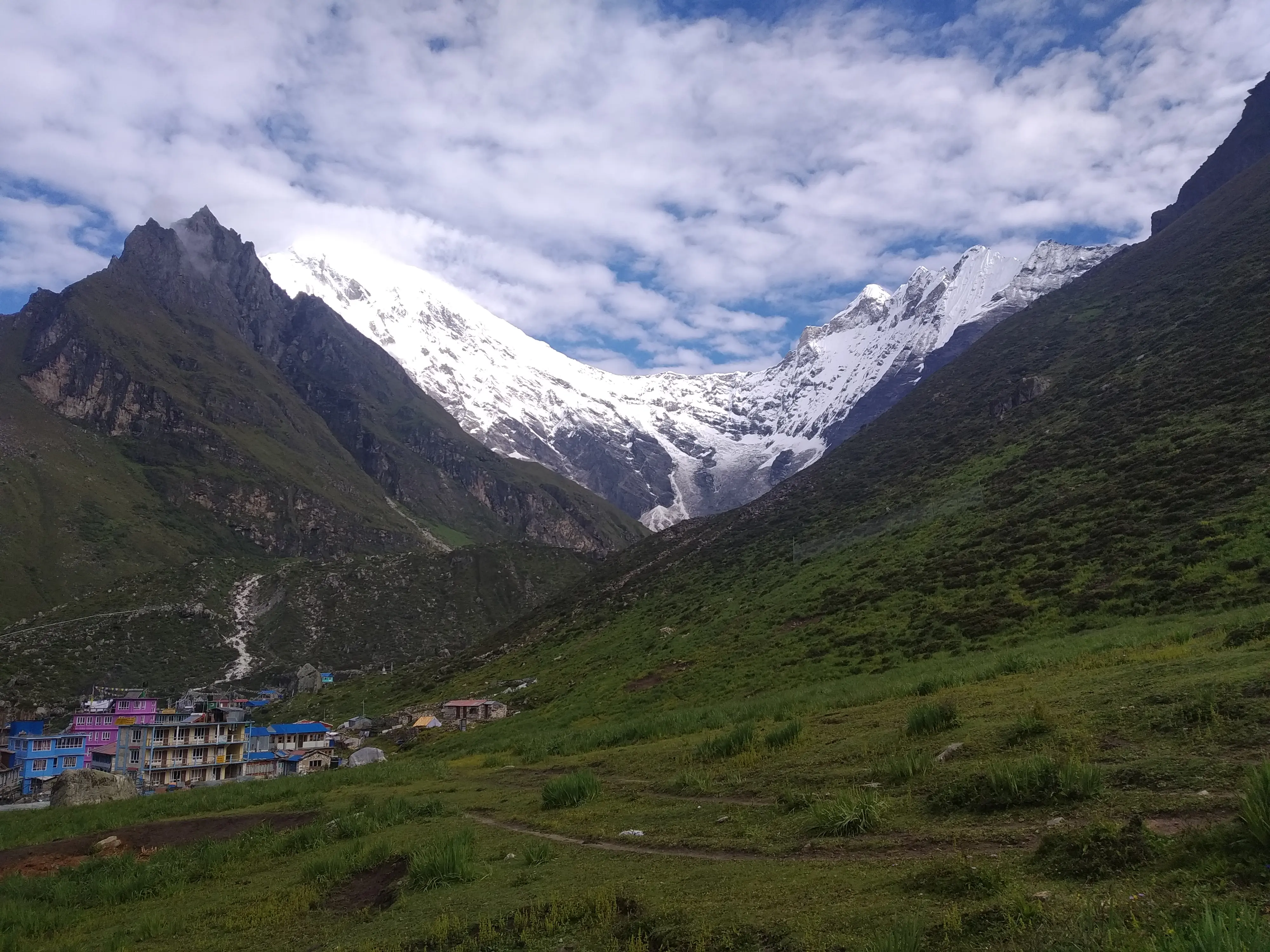
Reconnect body and mind on the Langtang Yoga Trek in the Langtang region. Practice daily yoga and meditation while trekking through forests, meadows, and Tamang villages. Enjoy panoramic Himalayan views of Langtang Lirung and surrounding peaks.
The Langtang Valley Yoga Trek, organized by Glacier Nepal Trek, is a unique Himalayan adventure that combines the physical challenge of trekking with the mental and spiritual benefits of yoga. Nestled in the Langtang region of Nepal, this trek takes you through pristine valleys, dense forests, and traditional Tamang and Sherpa villages, offering both natural beauty and cultural immersion. Unlike many high-altitude treks, this journey is accessible yet rewarding, making it suitable for beginners and experienced trekkers alike. Daily yoga sessions amidst breathtaking landscapes provide a chance to reconnect with your body, mind, and the serene surroundings of the Himalayas.
The trek begins in Kathmandu, followed by a scenic drive to Syabrubesi, the trailhead of the Langtang Valley. From here, you ascend gradually through forested valleys and traditional villages like Lama Hotel, Langtang Village, and Kyangjin Gompa. Highlights include panoramic views from Tserko Ri, encounters with glaciers, and the chance to explore local monasteries (Gompas). Each day is designed to balance trekking and yoga, allowing your body to acclimatize and your mind to rejuvenate. Key features include:
This trek is not just about walking; it is a journey of self-discovery. With the guidance of Glacier Nepal Trek, trekkers receive support in planning, acclimatization, and cultural understanding, ensuring both safety and enjoyment. Whether you are seeking adventure, wellness, or a blend of both, the Langtang Valley Yoga Trek offers a holistic Himalayan experience.
Timing is crucial for trekking in the Langtang Valley, as the region experiences distinct seasonal variations. The best seasons for the Langtang Valley Yoga Trek are spring (March to May) and autumn (September to November).
In spring, the valley comes alive with blooming rhododendrons and vibrant alpine flowers, creating a colorful landscape ideal for photography and meditation. Weather conditions are mild, with clear skies that offer panoramic mountain views. Temperatures are moderate, making trekking comfortable while practicing yoga outdoors. Spring is also a season of festivals in Nepal, allowing trekkers to experience local culture and traditions along the route.
In autumn, the weather is stable, and visibility is excellent, providing clear views of towering Himalayan peaks. The post-monsoon environment ensures lush green landscapes, flowing rivers, and vibrant wildlife sightings. Days are warm, but nights can be chilly, especially at higher altitudes like Kyangjin Gompa and Tserko Ri. Trekking in winter (December–February) is possible but comes with challenges such as snow, cold temperatures, and occasional trail closures, while summer (June–August) is best avoided due to heavy monsoon rains and landslide risks.
Season highlights at a glance:
Choosing the right season ensures safety, better acclimatization, and a more enjoyable yoga trekking experience.
The Langtang Valley Yoga Trek is classified as moderate difficulty, making it suitable for trekkers with basic fitness levels. While the trek does involve ascending to high altitudes, it allows for gradual acclimatization. Daily trekking distances range from 4 to 8 hours, with well-marked trails passing through forests, rivers, and alpine meadows. The highest point, Tserko Ri (4,985m/16,350ft), offers a panoramic view but requires moderate climbing and stamina.
The trek is designed to balance physical activity with rest and yoga practice. Acclimatization days, such as the hike to Tserko Ri from Kyangjin Gompa, help prevent altitude sickness and enhance endurance. Trekkers can expect some steep ascents, suspension bridges over rivers, and rocky paths, but no technical climbing equipment is needed. Daily yoga sessions are adapted to the altitude and physical conditions, ensuring safety and relaxation.
Transportation to the trailhead is convenient, with a scenic drive from Kathmandu to Syabrubesi (7–8 hours). Private vehicles arranged by Glacier Nepal Trek ensure comfort and flexibility. Upon completion, the trek concludes with a return drive to Kathmandu. Key points about difficulty and transport include:
This combination of manageable trekking distances, proper acclimatization, and guided transport makes the Langtang Valley Yoga Trek accessible without compromising adventure.
During the Langtang Valley Yoga Trek, Glacier Nepal Trek ensures that trekkers enjoy both comfort and traditional local experiences. Accommodation is primarily in tea houses and lodges, which provide cozy rooms with basic amenities. While facilities may be simple, the focus is on clean and warm accommodations that allow trekkers to rest and rejuvenate after a day on the trail. Higher altitude stops like Kyangjin Gompa offer more limited options, but lodges still provide hot meals, warm bedding, and communal spaces to meet fellow trekkers.
Food along the trek is a mix of local and familiar dishes, catering to both Nepali flavors and international tastes. Traditional meals include dal bhat (lentil soup with rice), momo (dumplings), noodles, and vegetable curries. Breakfasts are usually light and energizing, while dinners are hearty to replenish calories lost during trekking. Tea, coffee, and other beverages are readily available. Vegetarian options are widely accessible, and special dietary needs can be accommodated with prior notice.
Highlights of food and accommodation:
The combination of simple yet comfortable lodges and nourishing meals ensures trekkers remain energized and relaxed throughout the journey.
Trekking in the Langtang region requires specific permits to ensure safety, conservation, and legal compliance. Glacier Nepal Trek facilitates all necessary paperwork, making the process smooth for trekkers. The key permits include the Langtang National Park Entry Permit (TIMS) and, in some cases, special trekking permits for restricted areas.
The Trekkers’ Information Management System (TIMS) card is essential for all Nepalese treks. It helps monitor trekkers and ensures safety in case of emergencies. Langtang National Park, established to protect the unique biodiversity of the region, requires an entry fee, which contributes to conservation efforts and the welfare of local communities. Permits are typically verified at the park entrance and checkpoints along the trek. Carrying permits at all times is mandatory, as park officials and local authorities may request them.
Permit highlights:
By organizing permits beforehand, Glacier Nepal Trek ensures a hassle-free trekking experience, allowing you to focus on the journey, yoga, and Himalayan exploration.
Choosing Glacier Nepal Trek for your Langtang Valley Yoga Trek guarantees a combination of expertise, safety, and personalized service. As a reputable trekking company, Glacier Nepal Trek has extensive experience in guiding treks in the Langtang region and other Himalayan destinations. Their trained guides provide cultural insights, altitude acclimatization strategies, and yoga instructions, ensuring a holistic trekking experience.
The company emphasizes safety, well-being, and environmental responsibility. Trekkers benefit from carefully planned itineraries, comfortable accommodations, nutritious meals, and logistical support throughout the journey. Additionally, Glacier Nepal Trek promotes responsible tourism by supporting local communities and preserving the natural beauty of the Langtang Valley. Choosing them ensures peace of mind, whether you are an experienced trekker or new to Himalayan adventures.
Reasons to choose Glacier Nepal Trek:
By trekking with Glacier Nepal Trek, you embark on a journey that nourishes body, mind, and soul, leaving you with unforgettable memories of the Himalayas.
Upon arrival at Tribhuwan International Airport, you will be warmly welcomed by a representative from Glacier Nepal Trek, who will escort you to your hotel in Kathmandu by private vehicle. After settling in and refreshing yourself from your journey, you will meet your guide at our office for a briefing about the trek ahead. This is a perfect opportunity to clarify any questions you may have regarding the trek, equipment, or schedule. The evening is free to relax, acclimatize, and prepare mentally for your journey. Overnight stay is at the hotel in Kathmandu.
After an early breakfast, we begin the scenic drive from Kathmandu to Syabrubesi, which serves as the starting point of our Langtang Valley Yoga Trek. The journey takes approximately 7 to 8 hours and offers spectacular views of the Himalayan ranges, including Annapurna, Manaslu, Ganesh Himal, and peaks of the Langtang region. You will also observe terraced farmlands, rivers, and charming villages along the route. Upon arrival in Syabrubesi, we check into a local lodge. The rest of the evening can be spent relaxing and enjoying the peaceful mountain ambiance.
Our trek begins from the northwest of Syabrubesi, taking us over a suspension bridge above the Bhote Koshi River. We then turn east to explore a small settlement and visit a local Gompa before walking along a stone-paved trail over the Langtang Khola. The route winds through dense forests, steep rocky ridges, and scenic valleys, passing through Rimche and Chantang. Our destination for the day is Lama Hotel, a serene village surrounded by lush pine and rhododendron forests. Overnight stay will be at a cozy lodge at Lama Hotel.
We start the day trekking through a dense forest of hemlock, oak, and rhododendron trees along the Langtang Khola. Along the way, we pass Gumanchok and Ghunama before reaching Ghora Tabela at 2,970 meters. The trail then moves through Chamki and Thaugshyap, descending into a valley where we cross streams and pass water-driven mills, showcasing the traditional way of life. The trek culminates in Langtang Village, a charming settlement surrounded by towering peaks and pristine nature. Here, you can enjoy the tranquility and cultural richness of the village before overnighting at a local lodge.
Today's trek takes us past Langtang Village, gradually ascending through lush alpine pastures and small settlements. We pass the quaint village of Mundu and reach Sindum, continuing to the high meadows of Yamphu. Crossing the Laja Khola, the trail leads us through rocky terrains toward Kyangjin Gompa. This village is a hub for trekkers and offers comfortable lodges. After arriving, the rest of the day is free to rest, explore, or prepare for the acclimatization hike to Tserko Ri. Overnight stay is at a lodge in Kyangjin Gompa.
Today is dedicated to acclimatization and exploring the majestic surroundings of Kyangjin Gompa. We hike up the northern moraine toward Tserko Ri, a viewpoint offering panoramic vistas of Langtang Lirung, Yansa Tsenji, and Kinshung peaks, as well as the immense Lirung Glacier. This moderate yet rewarding hike allows trekkers to adapt to higher altitudes while soaking in breathtaking Himalayan landscapes. After returning to Kyangjin, there is time to relax, enjoy a hot meal, and connect with fellow trekkers before another overnight stay at the lodge.
We begin our descent, retracing our steps along the Langtang Khola. The trail offers opportunities to revisit Langtang Village and enjoy the serene forests and flowing rivers. Passing through Chantang and Rimche, we reach Lama Hotel, where the peaceful atmosphere and scenic surroundings provide a perfect place to unwind. This day is less strenuous, allowing your body to adjust after higher altitude trekking while still enjoying the beauty of the valley. Overnight stay is at a lodge in Lama Hotel.
Today we descend further along the Langtang River, returning to Syabrubesi. The trail is scenic, passing traditional villages, forests, and terraced fields. This section is easier and allows you to reflect on the trek’s experiences while enjoying the natural surroundings. Upon arrival, we check into a lodge and spend the evening relaxing. This is a great opportunity to interact with local people, explore the village, or simply rest before the drive back to Kathmandu the next day.
After breakfast, we drive back to Kathmandu, a journey of around six hours with picturesque views of the mountains and rural landscapes. Upon arrival, you have free time for last-minute shopping, sightseeing, or exploring the vibrant city streets. In the evening, Glacier Nepal Trek hosts a farewell dinner to celebrate the successful completion of your trek. Overnight stay is at a hotel in Kathmandu, allowing you to rest and reflect on the journey.
Your Langtang Valley Yoga Trek concludes today. A representative from Glacier Nepal Trek will escort you to Tribhuwan International Airport in a private vehicle for your onward journey. You leave Nepal with unforgettable memories, stunning landscapes, and a deep sense of accomplishment from your Himalayan adventure.
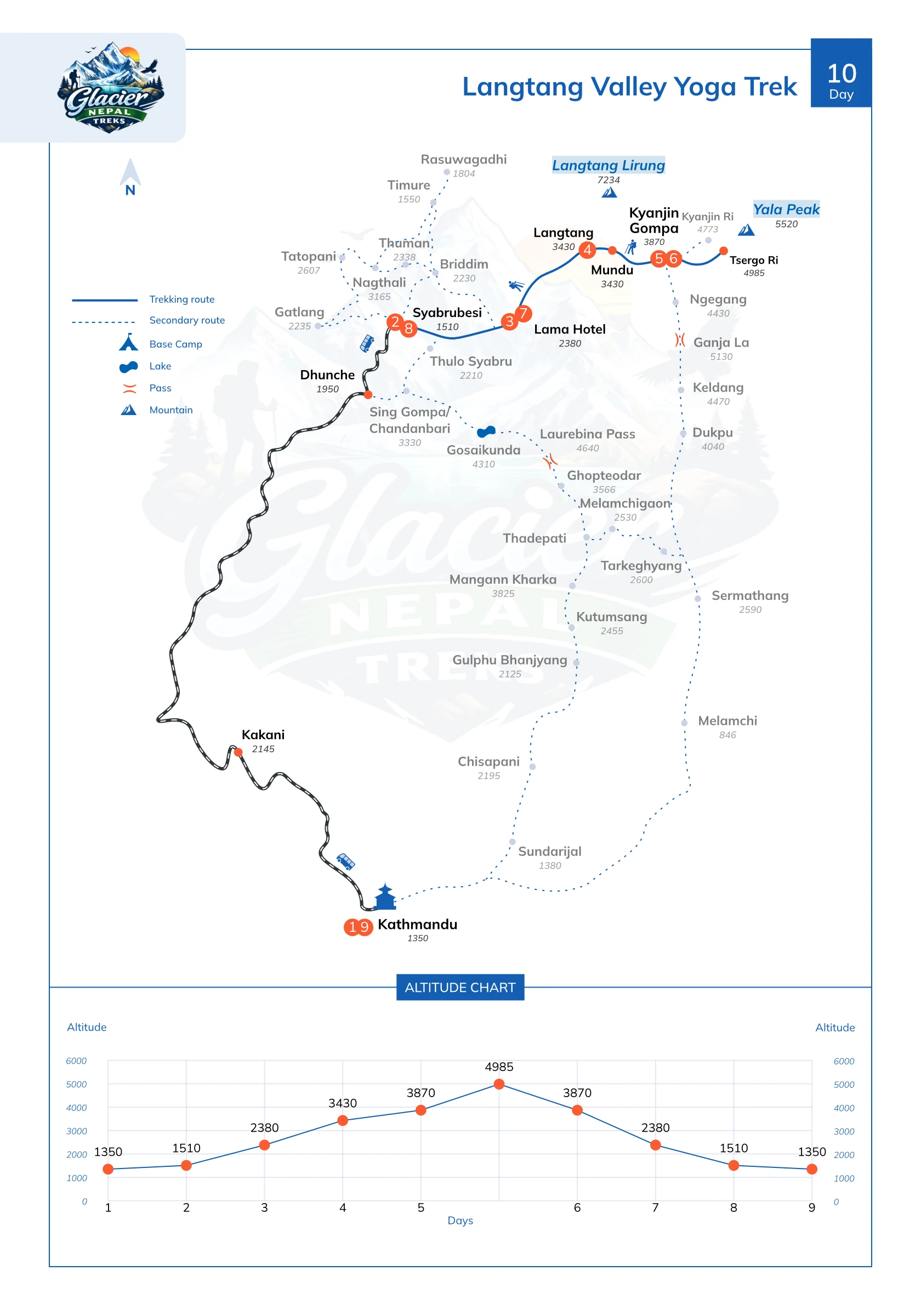
Explore a rejuvenating journey with Glacier Nepal Trek through the serene landscapes of the Langtang Valley, blending trekking and yoga amidst the majestic Himalayan scenery. Starting from Kathmandu and winding through traditional villages like Syabrubesi, Lama Hotel, Langtang Village, and Kyangjin Gompa, this trek offers both physical challenge and spiritual renewal. Hike through lush forests, terraced fields, and alpine meadows, acclimate with scenic hikes like Tserko Ri, and practice yoga in peaceful Himalayan surroundings. The trek concludes with a return to Kathmandu for a final day of reflection and relaxation.
This trek combines adventure, culture, and yoga in a safe, well-supported experience with Glacier Nepal Trek, perfect for rejuvenation and Himalayan exploration.
Your Start Date is the day you land in Nepal, and your End Date is when you fly home.
If the set Langtang Valley Yoga Trek group dates don’t suit your schedule, we can offer alternative dates upon request.
Proper layering is important to stay warm and comfortable in changing mountain weather.
Good footwear makes trekking easier and safer.
The right gear keeps you safe, comfortable, and prepared.
Lightweight but important items keep you clean, healthy, and comfortable.
Keep important items safe and easy to reach.
I came to Nepal looking for mountains. I left having found something much deeper than that. The Langtang Valley Yoga Trek gave me both breathtaking Himalayan scenery that stopped me in my tracks every single morning and yoga sessions with Guru Dependra Bhatta that left me genuinely transformed in ways I am still processing weeks later. Our guide Sagar was wonderful throughout calm, knowledgeable, and perfectly attuned to the pace and spirit of this very special journey.
The trek is considered moderate in difficulty. It involves trekking at high altitudes, steep ascents, and long walking hours, usually 4–8 hours per day. However, the trail is well-established, and lodges are available along the route. This trek is suitable for people who are reasonably fit, have prior trekking or hiking experience, or are willing to build stamina beforehand. Glacier Nepal Trek ensures that guides and porters provide support to make the journey manageable and safe for all participants.
No prior yoga experience is necessary to join the Langtang Valley Yoga Trek. The trek is designed to accommodate all levels, from beginners to advanced practitioners. Daily yoga and meditation sessions are included in the schedule, often in the mornings or evenings, and guided by experienced instructors. The practice complements the trekking experience, helping with flexibility, breathing, and mental clarity. Glacier Nepal Trek ensures that yoga activities are optional, so participants can adjust sessions based on their energy levels and interest.
Yes, Glacier Nepal Trek offers flexibility for customization based on your interests and schedule. You can add extra days for longer yoga sessions, more acclimatization, side hikes, or exploring nearby villages. Some travelers also choose to extend their stay in Kathmandu for sightseeing or cultural experiences before or after the trek. Our team works closely with participants to design an itinerary that matches their fitness level, preferences, and time availability while ensuring a safe and enjoyable trekking experience.
The ideal time for the Langtang Valley Yoga Trek is during the spring (March to May) and autumn (September to November) seasons. During these months, the weather is stable, skies are mostly clear, and you can enjoy spectacular views of the Himalayan peaks. Spring is particularly beautiful with blooming rhododendrons, while autumn offers crisp air and colorful landscapes. Glacier Nepal Trek recommends avoiding the monsoon season due to slippery trails and the winter months above 3,000 meters if you’re not accustomed to snow trekking.
Weather in the Langtang Valley can vary greatly depending on the season and altitude. During spring and autumn, temperatures are generally moderate, with chilly mornings and evenings, especially at higher elevations. Summer brings occasional rains and slippery trails, while winter can bring snow and freezing temperatures above 3,000 meters. Glacier Nepal Trek guides monitor weather forecasts closely and can adjust the itinerary for safety. Participants are advised to bring layered clothing suitable for cold mornings, sunny afternoons, and possible rain or snow.
During the Langtang Valley Yoga Trek, you will stay in a combination of hotels in Kathmandu and teahouses or lodges along the trail. These lodges are simple, clean, and provide basic facilities such as beds, blankets, and shared bathrooms. Meals are served in a communal dining area, offering both local and continental options. At higher altitudes like Kyangjin Gompa, facilities are modest but comfortable. Glacier Nepal Trek carefully selects accommodations that ensure safety, hygiene, and a cozy environment to rest after each day’s trekking.
Meals are included throughout the trek, typically comprising breakfast, lunch, and dinner at lodges and tea houses. Breakfast usually includes options like eggs, porridge, and toast, while lunch and dinner may feature traditional Nepali dishes such as dal bhat, noodles, or soups, along with vegetarian or non-vegetarian options. Snacks and hot beverages like tea and coffee are available along the trail. Glacier Nepal Trek takes care to provide nutritious and well-balanced meals to keep you energized for the long days of trekking and yoga practice.
Yes, trekking in Langtang Valley requires specific permits. You need the Langtang National Park Permit and the TIMS (Trekkers’ Information Management System) card. These permits are mandatory for trekking in the area, and Glacier Nepal Trek arranges them for you before the trek begins. The permits help ensure the safety of trekkers and contribute to the preservation of the natural and cultural environment of Langtang. Carrying these permits is essential, and your guide will keep them during the trek to avoid any issues.
Preparing for the Langtang Valley Yoga Trek involves both cardio and strength training. Activities like hiking, jogging, cycling, or stair climbing are highly recommended in the months leading up to the trek. Yoga, stretching, and core strengthening exercises are also beneficial to improve flexibility and endurance. Glacier Nepal Trek advises participants to gradually increase trekking distances to build stamina. A well-prepared trekker can enjoy the journey safely, reduce the risk of altitude-related issues, and fully appreciate the breathtaking landscapes along the trail.
Yes, but medical facilities along the Langtang Valley trail are limited to small local clinics, and serious emergencies may require evacuation. Glacier Nepal Trek takes health and safety very seriously. Guides carry a first-aid kit and are trained in basic medical care and emergency procedures. High-altitude sickness, dehydration, and minor injuries are common concerns, and our team monitors trekkers closely to ensure timely intervention. In serious cases, helicopter evacuation to Kathmandu is available, ensuring your safety throughout the journey.
| No of people | Price per person |
|---|---|
| 1 - 1 | $1,450 |
| 2 - 4 | $1,250 |
| 5 - 8 | $1,210 |
| 9 - 16 | $1,190 |
| No of people | Price per person |
|---|---|
| 1 - 1 | $1,250 |
| 2 - 4 | $1,120 |
| 5 - 8 | $1,090 |
| 9 - 16 | $1,050 |
| No of people | Price per person |
|---|---|
| 1 - 1 | $1,750 |
| 2 - 4 | $1,650 |
| 5 - 20 | $1,600 |


 (30)
(30)  94% recommend (244)
 (12)
(12)