Need help with booking? Send us a message.
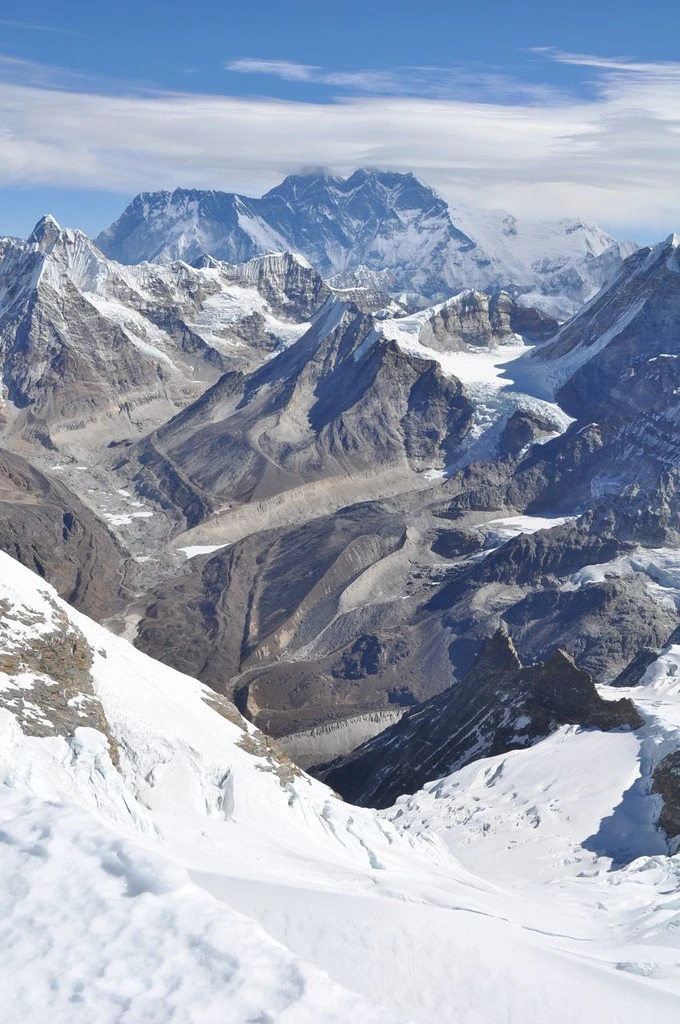
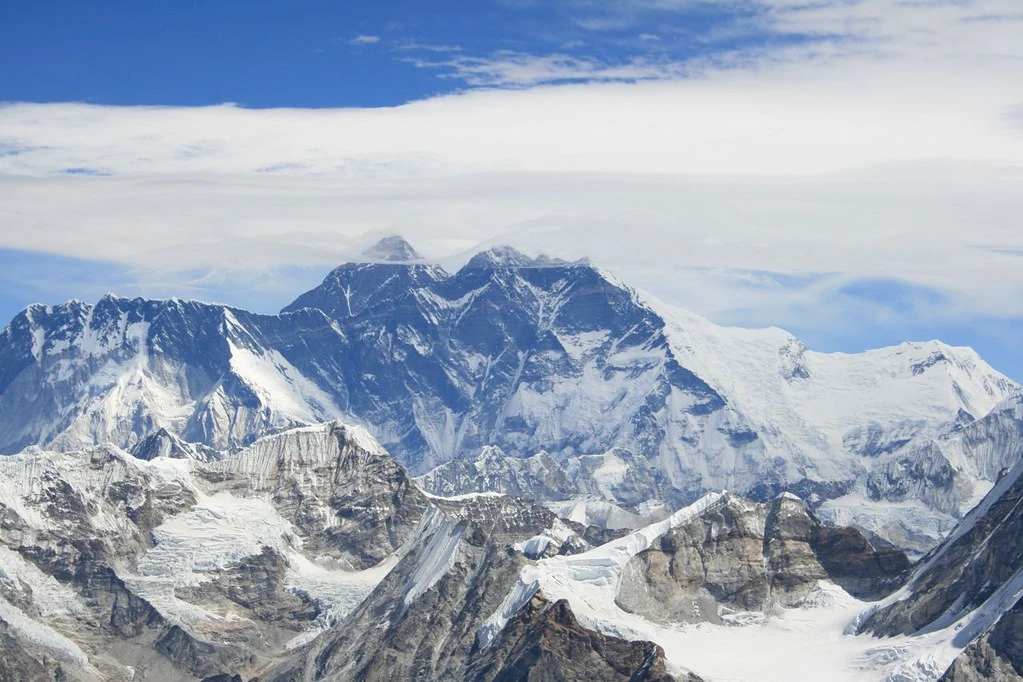
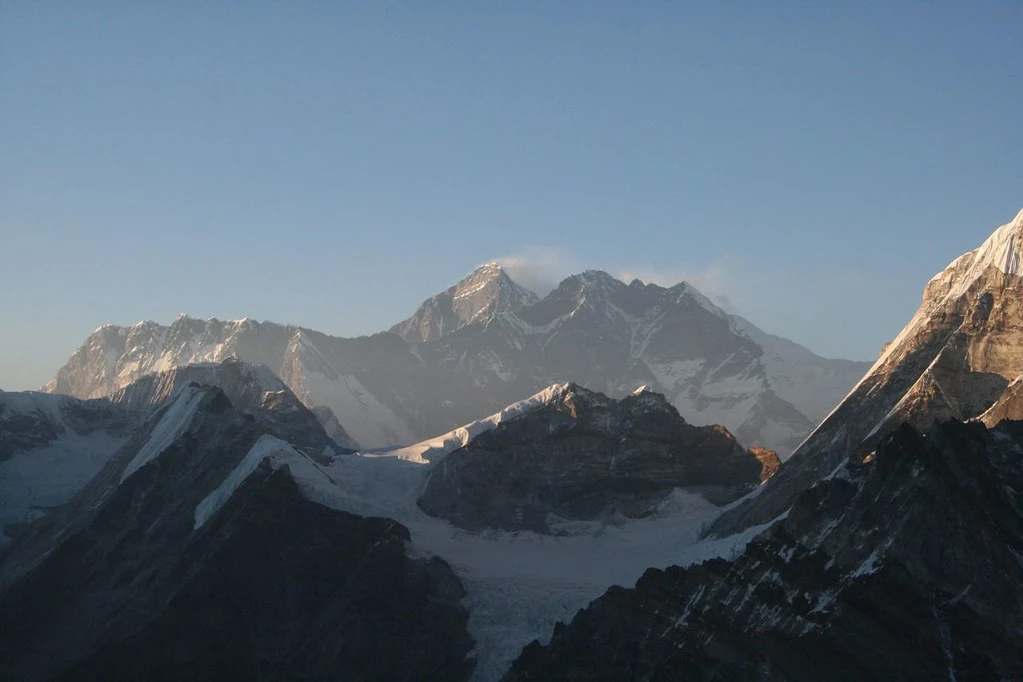
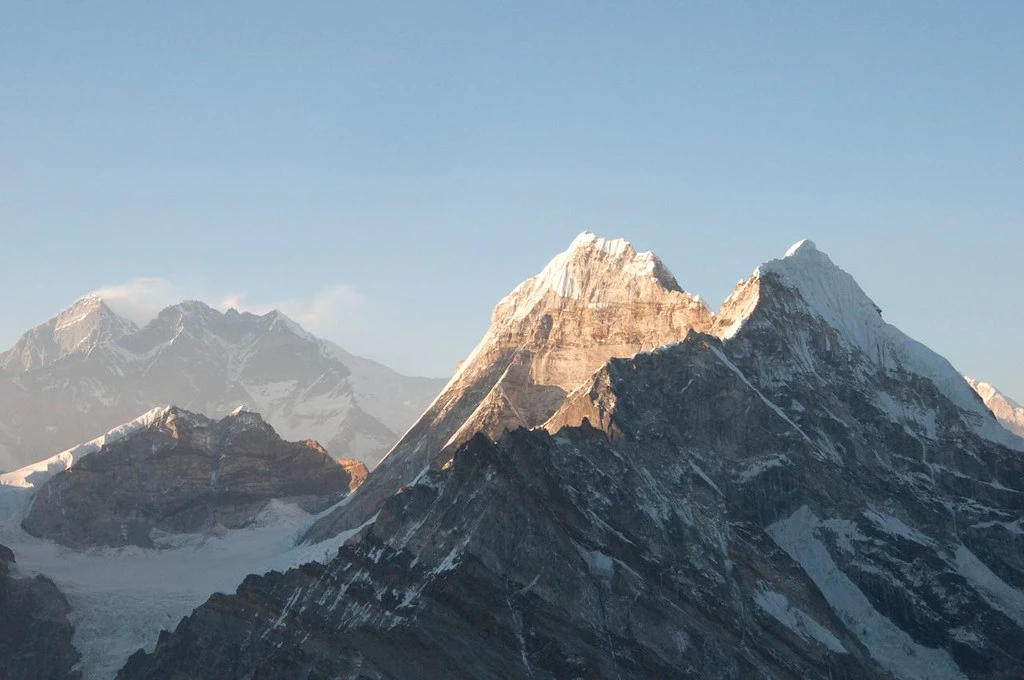
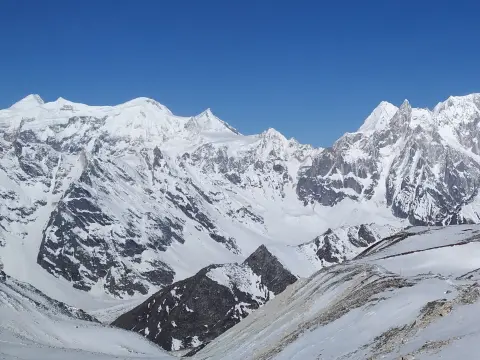
Mera Peak at 6,476m is the ultimate Himalayan adventure for those ready to push beyond their limits. The trail winds through wild, untouched valleys and ancient Sherpa villages, immersing you in the raw beauty and timeless culture of the Everest region. Then comes the moment that makes everything worthwhile the summit. Standing high above the clouds with Mount Everest, Lhotse, Makalu, and Cho Oyu filling your entire horizon is an experience no photograph can ever truly capture.
Mera Peak Climbing is one of Nepal’s most rewarding high-altitude adventures, offering an unforgettable Himalayan experience combined with cultural exploration and alpine climbing. Standing at 6,461 meters (21,199 ft), Mera Peak is the highest trekking peak in Nepal and is ideal for climbers who want to step into mountaineering without highly technical challenges. The journey begins in Kathmandu and gradually moves through remote valleys, traditional Sherpa villages, dense rhododendron forests, and high-altitude glaciers before reaching the summit.
The climbing route via Paiya, Panggom, and Khare is less crowded than the classic route, making it perfect for trekkers seeking solitude and pristine landscapes. From the summit, climbers are rewarded with spectacular panoramic views of Everest, Lhotse, Makalu, Cho Oyu, and Kanchenjunga. Glacier Nepal Treks carefully designs this itinerary with proper acclimatization days, pre-climb training, and a reserve day to maximize summit success and safety.
The best seasons for Mera Peak Climbing are spring (March to May) and autumn (September to November). During spring, the weather is stable, the skies are clear, and the trekking trails are beautifully decorated with blooming rhododendrons. This season offers warmer temperatures at lower elevations and excellent summit conditions at higher altitudes.
Autumn is another prime season due to its crystal-clear mountain views, dry trails, and stable weather patterns. After the monsoon, the landscapes are fresh and green, and visibility is at its best. Although winter climbing is possible, extreme cold and heavy snowfall make it more challenging. Monsoon season is generally not recommended due to flight delays and slippery trails.
Best Months:
Mera Peak is classified as a moderately difficult trekking peak, making it suitable for trekkers with good physical fitness and some high-altitude trekking experience. Technical climbing skills are not mandatory, but basic knowledge of crampons, ice axes, and rope techniques is required. Glacier Nepal Treks provides pre-climb training at Khare to ensure climbers are confident and prepared.
Transportation plays a vital role in the adventure. The journey includes a scenic flight from Kathmandu to Lukla, one of the most thrilling mountain airports in the world. From Lukla, the trek progresses gradually through remote regions, allowing climbers to acclimatize properly before summit day.
Difficulty Factors:
During the trek, accommodation is provided in local teahouses and lodges, offering basic but comfortable facilities. Rooms are usually twin-sharing with shared bathrooms at lower elevations. At higher camps, especially Mera High Camp, accommodation is in well-equipped tents managed by Glacier Nepal Treks’s experienced climbing crew.
Meals are nutritious and designed to maintain energy levels at high altitude. Trekkers can enjoy traditional Nepali food such as dal bhat, as well as international options like pasta, noodles, soup, potatoes, eggs, and porridge. Special hygienic care is taken during food preparation, especially at higher altitudes.
Food & Stay Features:
Mera Peak Climbing requires several official permits regulated by the Nepal Government and Nepal Mountaineering Association (NMA). Glacier Nepal Treks arranges all necessary permits, ensuring a hassle-free experience for climbers. These permits help conserve the environment and support local communities. Required permits include the Mera Peak Climbing Permit, Makalu Barun National Park Permit, and TIMS Card. Permit costs vary depending on the season, with spring being the most expensive and winter the least.
Required Permits:
Choosing Glacier Nepal Treks for your Mera Peak Climbing adventure means choosing safety, experience, and personalized service. Our team consists of highly experienced, government-licensed guides and climbing Sherpas who have successfully summited Mera Peak multiple times. We prioritize acclimatization, safety protocols, and proper logistics to ensure a successful and enjoyable climb.
Glacier Nepal Treks is committed to responsible tourism, fair treatment of staff, and customer satisfaction. From airport pickup to final departure, every detail is professionally managed, allowing you to focus entirely on your adventure and achievement.
Why Glacier Nepal Treks:
During the peak trekking seasons of Spring (March–May) and Autumn (September–November), Lukla flights are in extremely high demand. With thousands of trekkers and climbers simultaneously heading to the Everest region, the pressure on Kathmandu's Tribhuvan International Airport (TIA) becomes overwhelming.
To ease this congestion, the Civil Aviation Authority of Nepal (CAAN) limits the number of direct Kathmandu–Lukla flights and operates a significant number of departures from Ramechhap (Manthali Airport) instead, a smaller regional airport located approximately 4 –5 hours east of Kathmandu.
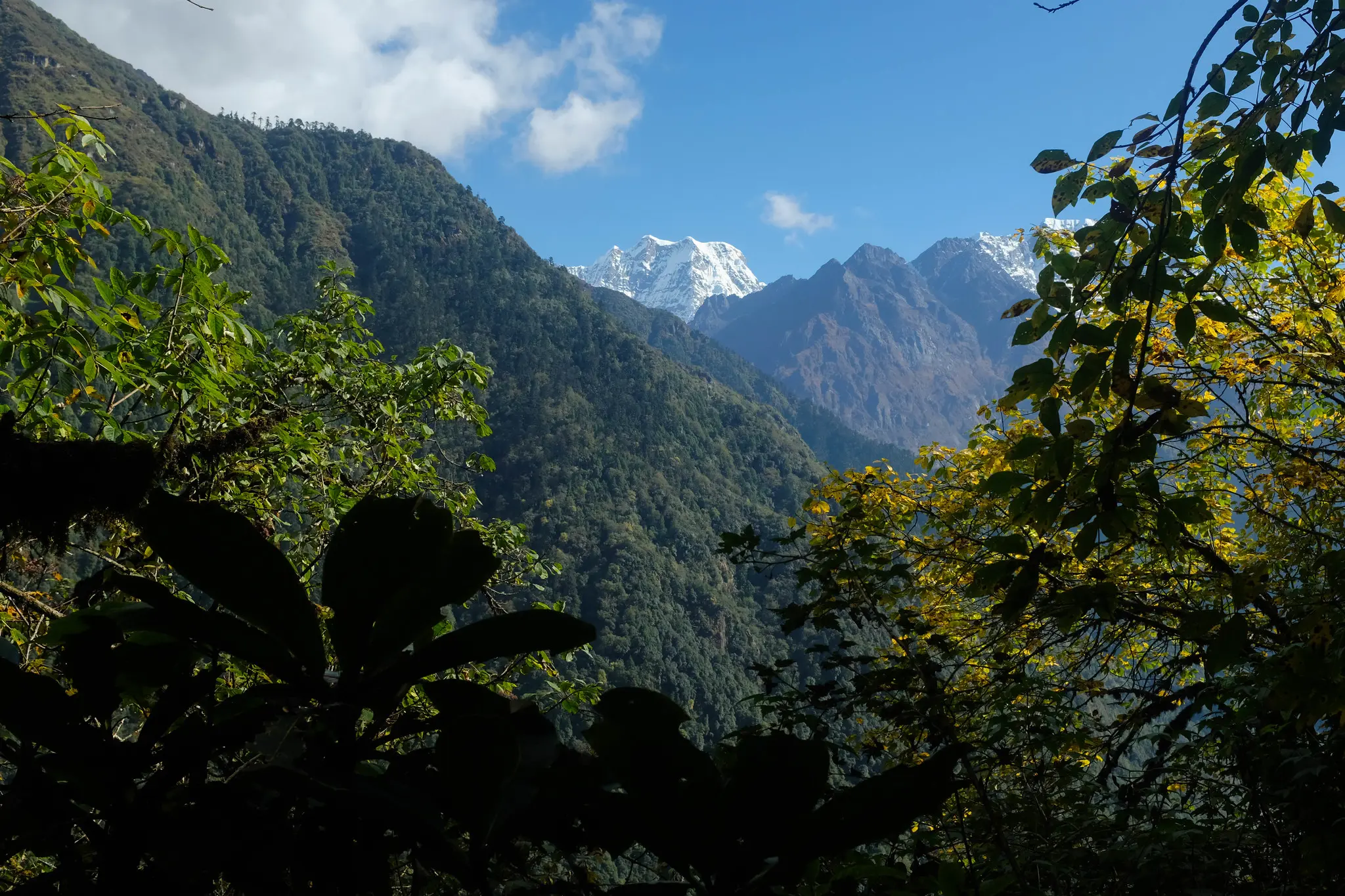
This extraordinary high-altitude adventure begins in Kathmandu, where you complete all necessary permits, gear checks, and pre-climb briefings before flying to Lukla the legendary gateway to the Everest region. From Lukla, the trail descends into the remote and breathtaking Hinku Valley, passing through pristine rhododendron forests, traditional Sherpa villages, and dramatic river gorges largely untouched by mainstream tourism. Key overnight stops include Chutanga, Thuli Kharka, and Kothe, allowing for gradual and safe acclimatisation.
Continuing deeper into the wilderness, the route climbs steadily through Thagnag before reaching Khare the base for your final summit preparations. Here you spend crucial acclimatisation days, practising essential crampon and ice axe techniques on the surrounding glaciers. Summit day begins in the early hours from Mera High Camp at approximately 5,800m. A challenging but rewarding climb through snow and ice leads to the magnificent Mera Peak summit at 6,476m, where breathtaking panoramic views of Everest, Lhotse, Makalu, Cho Oyu, and Kanchenjunga await. The descent retraces the route back to Lukla for a flight to Kathmandu, where you celebrate one of the greatest achievements of your life.
Upon arrival at Tribhuvan International Airport in Kathmandu, you will be warmly welcomed by a representative of Glacier Nepal Treks and transferred to your pre-booked hotel in the city. Kathmandu, Nepal’s vibrant capital, offers a fascinating blend of ancient traditions, bustling streets, and cultural heritage. After check-in, you can rest and recover from your journey or enjoy a short walk around the lively neighborhood. In the evening, our team will provide a brief introduction to Nepal, outline the upcoming Mera Peak adventure, and answer any immediate questions. This day is designed for relaxation, adjustment to the new environment, and preparation for the exciting journey ahead.
 Accommodation Three-star Hotel in Thamel, Kathmandu
  Meals Welcome Dinner
  Max. altitude 1,350m / 4,429ft.
 This day is dedicated to guided sightseeing and final trek preparations. After breakfast, Glacier Nepal Treks will escort you on a cultural tour of UNESCO World Heritage Sites such as Swayambhunath (Monkey Temple), Pashupatinath Temple, and Boudhanath Stupa. These iconic landmarks provide deep insight into Nepal’s spiritual traditions and history. In the afternoon, you will attend a comprehensive trek briefing covering safety protocols, altitude awareness, climbing techniques, and equipment checks. Any missing gear can be purchased or rented in Kathmandu. This day ensures both cultural immersion and logistical readiness, setting a strong foundation for a successful Mera Peak expedition.
Accommodation Three-star Hotel in Thamel, Kathmandu Meals Breakfast Max. altitude 1,350m / 4,429ft. Early in the morning, you will fly to Lukla, enjoying breathtaking aerial views of the Himalayan range. After landing at the famous Tenzing–Hillary Airport, you will meet the trekking crew and begin your trek toward Paiya. The trail descends through lush forests, crosses suspension bridges, and passes small Sherpa villages. Walking through terraced fields and rhododendron forests, you’ll experience the quieter, less-traveled route to Mera Peak. The day’s hike is moderate, allowing your body to begin adapting to altitude while enjoying scenic landscapes and local hospitality. Overnight stay will be in a teahouse at Paiya.
Accommodation Tea House / Lodge Meals Breakfast, Lunch, Dinner Max. altitude 2,800m / 9,186ft. Today’s trek leads you through a remote and culturally rich section of the Hinku Valley region. After breakfast, the trail climbs gradually through bamboo forests and small settlements before crossing a ridge with panoramic views of surrounding hills. The route includes several ascents and descents, helping to build stamina and acclimatization. You’ll pass mani walls, prayer flags, and traditional Sherpa houses that reflect the deep Buddhist culture of the area. With guidance from Glacier Nepal Treks, the pace remains steady and comfortable. Upon reaching Panggom, you’ll relax at a local teahouse and enjoy a warm meal surrounded by peaceful mountain scenery.
Accommodation Tea House / Lodge Meals Breakfast, Lunch, Dinner Max. altitude 2,846m / 9,337ft. Leaving Panggom, the trail ascends to Panggom La Pass before descending into the lush valley of Ningsow. The path winds through dense forests of pine and rhododendron, offering a tranquil trekking experience. Along the way, you may encounter yaks, mountain goats, and colorful birdlife. The relatively shorter trekking hours today allow time to rest and adjust to altitude while still making good progress. Ningsow is a small, quiet settlement where you can enjoy stunning views of rolling hills and distant peaks. Glacier Nepal Treks ensures comfortable accommodation and nutritious meals to support acclimatization and recovery.
Accommodation Tea House / Lodge Meals Breakfast, Lunch, Dinner Max. altitude 2,863m / 9,393ft. This is a longer and more adventurous trekking day as you head deeper into the Hinku Valley. The trail involves several ups and downs, passing through dense forests and crossing streams via wooden bridges. The route is remote and less crowded, providing a true wilderness trekking experience. You’ll enjoy dramatic landscapes and a sense of isolation that defines the Mera Peak approach. Despite the longer hours, the descent to Chhatra Khola helps balance altitude gain. Upon arrival, you’ll rest near the river, listening to the soothing sounds of flowing water while preparing for higher elevations ahead.
Accommodation Tea House / Lodge Meals Breakfast, Lunch, Dinner Max. altitude 2,800m / 9,186ft. The trail follows the Hinku River upstream, gradually ascending through alpine forests and open valleys. As you gain altitude, the vegetation begins to thin, revealing impressive mountain views. You may spot snow-capped peaks appearing for the first time on this trek. Passing seasonal herder settlements, you’ll experience the traditional high-altitude lifestyle of the region. Glacier Nepal Treks carefully monitors your pace and health as you approach higher elevations. Kothe is a key stop for acclimatization, offering cozy teahouses and spectacular scenery, making it an ideal place to rest and prepare for the alpine zone.
Accommodation Tea House / Lodge Meals Breakfast, Lunch, Dinner Max. altitude 3,691m / 12,110ft. Today’s trek is relatively short but crucial for acclimatization. The trail ascends gently along the lateral moraine of the Dig Glacier, offering dramatic views of surrounding peaks. You’ll notice a significant change in landscape as trees disappear and rocky, glacial terrain dominates. The steady climb allows your body to adjust while conserving energy. Thaknak is a seasonal settlement used by herders and climbers, located in a wide glacial valley. With guidance from Glacier Nepal Treks, the afternoon is spent resting, hydrating, and enjoying the spectacular high-mountain environment.
Accommodation Tea House / Lodge Meals Breakfast, Lunch, Dinner Max. altitude 4,258m / 13,970ft. The trail from Thaknak to Khare follows the Dig Glacier and gradually climbs toward the base of Mera Peak. As altitude increases, the air becomes thinner and the scenery more dramatic. Snow-covered peaks surround you, creating a true Himalayan atmosphere. Upon arrival in Khare, you’ll be greeted by stunning views of Mera Peak’s north face. The remainder of the day is dedicated to rest and acclimatization. Glacier Nepal Treks ensures proper hydration, warm meals, and health monitoring, preparing you both physically and mentally for the upcoming climb.
Accommodation Tea House / Lodge Meals Breakfast, Lunch, Dinner Max. altitude 5,045m / 16,552ft. This essential acclimatization day is spent in Khare to improve your chances of a successful summit. After breakfast, experienced climbing guides from Glacier Nepal Treks provide hands-on training with climbing gear, including crampons, ice axes, harnesses, and ropes. You’ll practice basic glacier travel and safety techniques on nearby snow slopes. The afternoon is reserved for rest and light activity to aid acclimatization. This training day builds confidence and ensures that even first-time climbers are well prepared for summit day. Proper acclimatization here significantly reduces the risk of altitude-related issues.
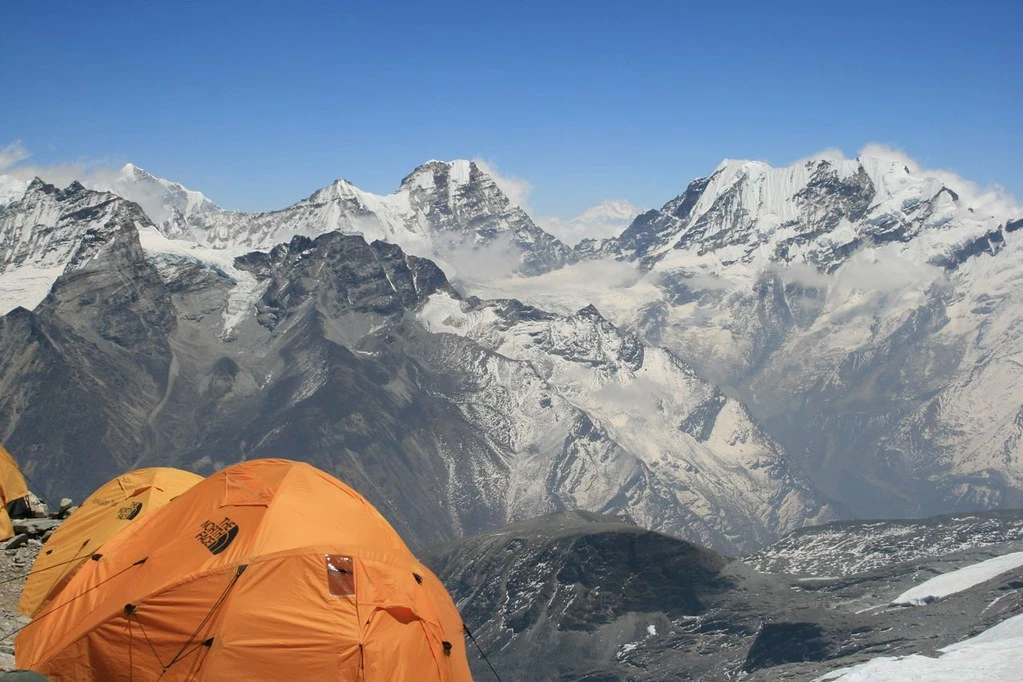
Accommodation Tea House / Lodge Meals Breakfast, Lunch, Dinner Max. altitude 5,045m / 16,552ft. Leaving Khare, the route ascends steeply over rocky terrain before reaching the Mera Glacier. Using fixed ropes where necessary, you’ll climb steadily toward High Camp. The trail offers breathtaking views of Everest, Makalu, Lhotse, and Cho Oyu on clear days. High Camp is located on a rocky outcrop, providing panoramic Himalayan vistas. After setting up camp, you’ll rest, hydrate, and enjoy a warm meal prepared by the expedition team. Glacier Nepal Treks prioritizes safety and comfort, ensuring you are well rested and ready for the summit attempt.
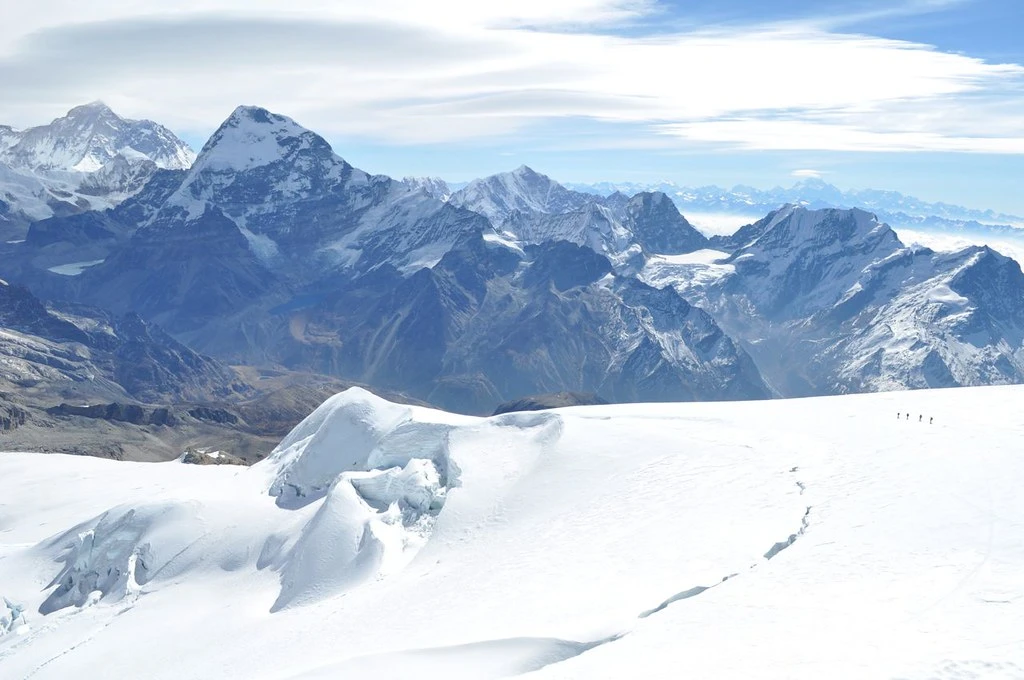
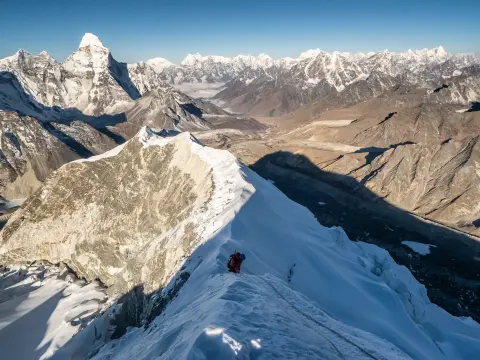
Accommodation camping Meals Breakfast, Lunch, Dinner Max. altitude 5,780m / 18,963ft. Summit day begins early, usually around midnight, under the guidance of experienced climbing Sherpas. Using headlamps, you’ll follow a gradual snow slope toward the summit of Mera Peak. The final section requires fixed ropes, but the climb is non-technical and steady. Upon reaching the summit, you are rewarded with one of the most spectacular panoramic views in the Himalayas, including five 8,000-meter peaks. After celebrating and taking photos, you’ll descend carefully back to Khare. Glacier Nepal Treks ensures a safe descent and well-earned rest after this incredible achievement.
Accommodation Tea House / Lodge Meals Breakfast, Lunch, Dinner Max. altitude 6,461m / 21,198ft. This reserve day is included to allow flexibility in case of unfavorable weather or acclimatization needs. If not required for climbing, the day can be used for rest, exploration, or recovery in Khare. Having a contingency day greatly increases summit success rates and safety. Glacier Nepal Treks carefully assesses conditions and client health to decide how best to use this day. Whether resting or adjusting the schedule, this buffer ensures a safer and more enjoyable expedition experience without unnecessary pressure.
Accommodation Tea House / Lodge Meals Breakfast, Lunch, Dinner Max. altitude 5,045m / 16,552ft. After the intense days at high altitude, today’s descent feels refreshing. The trail retraces your route along the glacier and valley back to Kothe. Descending helps your body recover quickly, and you’ll notice improved breathing and energy levels. The return journey allows you to enjoy the scenery from a new perspective. Upon arrival in Kothe, you can relax, celebrate your achievement, and enjoy a comfortable night in a teahouse. Glacier Nepal Treks ensures a relaxed pace and proper recovery after the summit.
Accommodation Tea House / Lodge Meals Breakfast, Lunch, Dinner Max. altitude 3,691m / 12,110ft. Leaving the Hinku Valley, the trail ascends gradually toward Thuli Kharka. The route offers expansive alpine landscapes and open valleys, with distant views of surrounding peaks. This section is less steep but requires steady walking at altitude. Along the way, you may encounter grazing yaks and seasonal shelters. Thuli Kharka is a beautiful high pasture, perfect for a peaceful overnight stay. Glacier Nepal Treks provides warm meals and comfortable accommodation, ensuring continued recovery as you prepare for the final pass crossing.
Accommodation Tea House / Lodge Meals Breakfast, Lunch, Dinner Max. altitude 4,300m / 14,108ft. Today is one of the most scenic days of the trek as you cross the Zatrwa La Pass. The ascent is gradual but rewarding, offering stunning panoramic views of the surrounding Himalayan range. Prayer flags mark the high point of the pass, symbolizing safe passage. After crossing, the trail descends steeply toward Lukla through alpine terrain and forests. Reaching Lukla marks the completion of your trekking journey. In the evening, you’ll celebrate with your trekking team and guides from Glacier Nepal Treks.
Accommodation Tea House / Lodge Meals Breakfast, Lunch, Dinner Max. altitude 2,800m / 9,186ft. After breakfast, you’ll board an early morning flight back to Kathmandu. Weather permitting, enjoy final aerial views of the Himalayas. Upon arrival, you’ll be transferred to your hotel. The rest of the day is free for relaxation, souvenir shopping, or exploring Kathmandu’s vibrant streets. In the evening, Glacier Nepal Treks may host a farewell dinner to celebrate the successful completion of the Mera Peak expedition and share memories from the journey.
Accommodation Three-star Hotel in Thamel, Kathmandu Meals Farewell Dinner, Breakfast Max. altitude 1,350m / 4,429ft. Today marks the end of your unforgettable Himalayan adventure. A representative from Glacier Nepal Treks will transfer you to Tribhuvan International Airport for your onward flight. As you depart Nepal, you’ll carry memories of breathtaking landscapes, cultural encounters, and the incredible achievement of summiting Mera Peak. We hope this journey inspires future adventures and look forward to welcoming you back to Nepal again.
Meals Breakfast 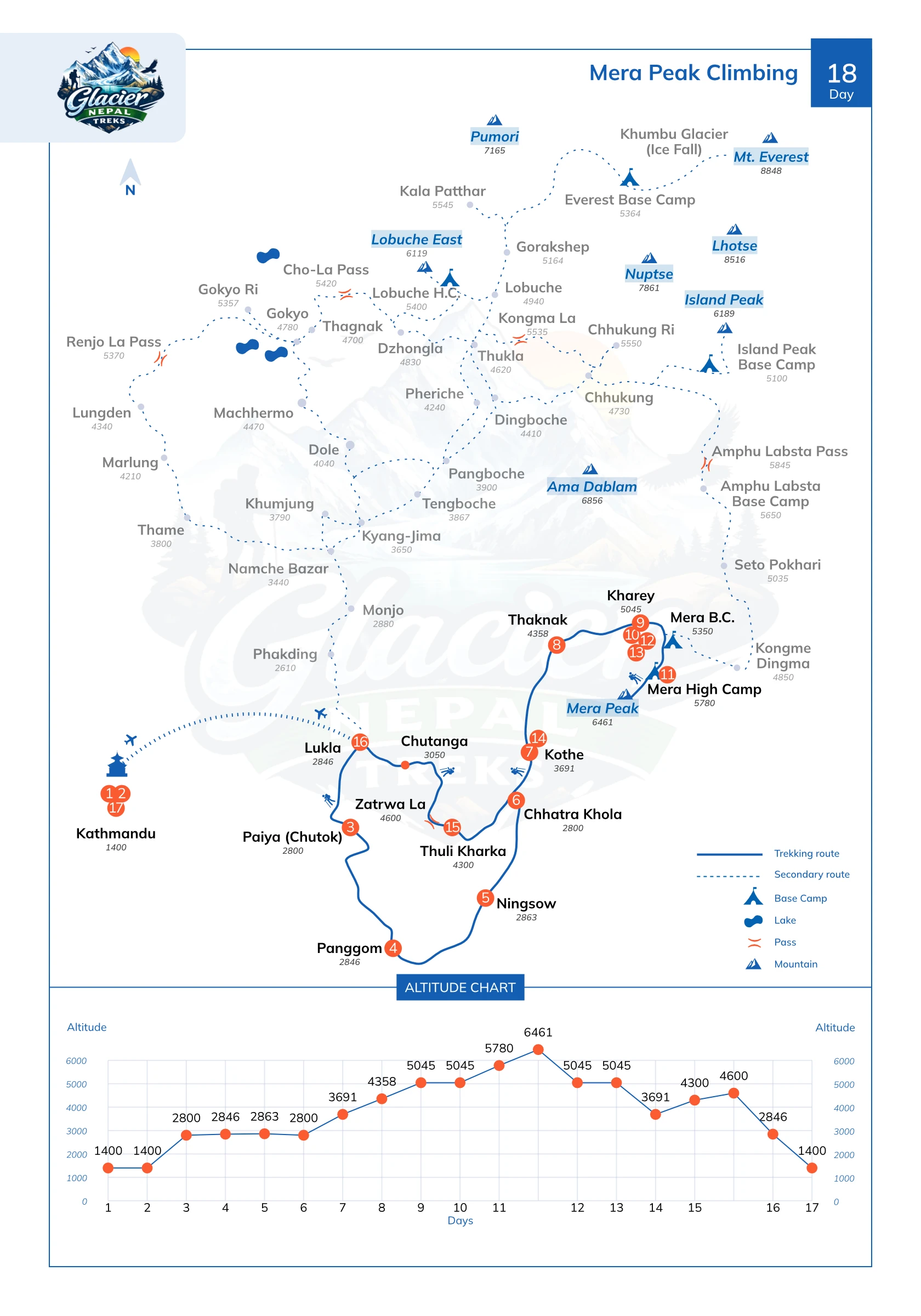
Experience the breathtaking landscapes of the Himalayas on the classic Mera Peak route, from the bustling streets of Kathmandu to the high alpine beauty of Khare and Mera High Camp. This 18 day adventure combines scenic flights, challenging treks, and summit attempts, with acclimatization days and contingency plans for safety. Whether it’s soaring above the Everest region peaks or exploring remote villages, Glacier Nepal Treks ensures a well-organized, safe, and immersive expedition.
This summary ensures you are prepared for transportation, trekking logistics, permits, and high-altitude safety while enjoying one of Nepal’s most iconic climbs.
Airport & Transportation
Round-trip domestic flight ticket (Kathmandu / Manthali – Lukla – Kathmandu / Manthali)
Accommodation
Attached bathroom facilities available at Lukla
Meals
Welcome or farewell dinner in a typical Nepali restaurant
Permits & Documentation
All government taxes, VAT and official paperwork required for trekking
Trekking Staff & Support
Trekking company service charge and field management
Trekking Equipment & Safety
Emergency coordination service (in case of rescue / evacuation)
Additional Services
Your Start Date is the day you land in Nepal, and your End Date is when you fly home.
If the set Mera Peak Climbing group dates don’t suit your schedule, we can offer alternative dates upon request.
Proper layering is important to stay warm and comfortable in changing mountain weather.
Good footwear makes trekking easier and safer.
The right gear keeps you safe, comfortable, and prepared.
Lightweight but important items keep you clean, healthy, and comfortable.
Keep important items safe and easy to reach.
I still cannot believe I actually did it. Standing on top of Mera Peak at 6,476m. my very first 6,000m summit, I broke down in tears. The view, the achievement, the exhaustion, the joy it all hit me at once. I am not a professional climber. I am just someone who dreamed big and found the right people to make it happen. Glacier Nepal Treks was that team. Our climbing guide Pasang Sherpa was simply incredible. Patient, encouraging, and deeply experienced on the hardest days when my legs were burning and my lungs were screaming, Pasang kept me going with quiet confidence and genuine warmth. The weather was on our side too clear skies, perfect visibility, and stunning summit views of Everest, Lhotse, and Makalu stretching endlessly before us. Thank you from the bottom of my heart, Glacier Nepal Treks. You turned my dream into the most real and beautiful moment of my life
My Mera Peak climbing experience with Glacier Nepal Treks was truly unforgettable. From the beginning, the team was well organized and supportive. Our climbing guide, Mingma, was highly experienced and had already climbed Mount Everest, which gave us great confidence during the ascent. Our trekking guide, Sagar, was also friendly, helpful, and attentive throughout the journey. We started the summit climb around midnight, which was challenging but exciting. The darkness, cold, and steep sections made the climb demanding, but the guidance and encouragement from our team helped us keep going. Reaching the summit was an incredible achievement, and the view from the top was spectacular. Seeing the surrounding Himalayan peaks illuminated by the early morning light was something I will never forget.
Mera Peak Climbing is one of the most popular trekking peaks in Nepal, standing at 6,461 meters (21,199 ft). It is especially favored by climbers who want to experience a true Himalayan summit without highly technical mountaineering skills. The climb offers breathtaking panoramic views of five of the world’s highest mountains, including Everest, Makalu, Lhotse, Cho Oyu, and Kangchenjunga. With Glacier Nepal Trek, climbers enjoy a well-paced itinerary that combines scenic trekking, proper acclimatization, and professional guidance, making Mera Peak an ideal choice for both beginners and experienced trekkers seeking a high-altitude adventure.
Prior mountaineering experience is not mandatory for Mera Peak Climbing, which is why it is often referred to as Nepal’s best “introductory” trekking peak. However, good physical fitness, trekking experience, and a positive attitude are essential. The climb involves walking on snow and glaciers, using crampons, ice axes, and fixed ropes near the summit. Glacier Nepal Trek provides comprehensive pre-climb training during the acclimatization days, ensuring that even first-time climbers learn essential skills and safety techniques. This preparation significantly increases confidence, safety, and summit success.
Mera Peak Climbing is considered moderately challenging rather than technically difficult. The main challenge comes from the high altitude rather than steep or complex climbing sections. The summit push is long and requires endurance, but the slopes are gradual and manageable with proper guidance. With Glacier Nepal Trek, the itinerary includes ample acclimatization days, slow ascent, and professional Sherpa support. This approach minimizes altitude-related risks and allows climbers to progress comfortably. Mental preparation, physical conditioning, and following guide instructions are key to completing the climb successfully.
Acclimatization is critical for a safe and successful Mera Peak ascent. As altitude increases, the body needs time to adjust to lower oxygen levels. Glacier Nepal Trek designs the itinerary with gradual altitude gain, rest days, and acclimatization hikes to reduce the risk of altitude sickness. Training days in Khare help climbers adapt while learning essential skills. Our guides continuously monitor symptoms such as headaches, fatigue, and nausea. Proper acclimatization not only increases summit success rates but also ensures a healthier and more enjoyable climbing experience.
The success rate for summiting Mera Peak with Glacier Nepal Trek is very high due to careful planning, experienced guides, and a client-focused approach. Our itineraries include reserve days for weather or acclimatization, which significantly improves summit chances. We prioritize safety over speed and encourage climbers to listen to their bodies. With proper preparation, teamwork, and professional support, most physically fit participants reach the summit. Even if conditions prevent a summit attempt, the journey itself remains a rewarding Himalayan experience.
The best seasons for Mera Peak Climbing are spring (March to May) and autumn (September to November). During these periods, weather conditions are more stable, skies are clearer, and mountain views are at their best. Spring offers warmer temperatures and blooming rhododendrons along the trail, while autumn provides crisp air and excellent visibility after the monsoon. Glacier Nepal Trek carefully schedules departures during these optimal seasons to maximize safety and summit success. Winter and monsoon climbs are possible but involve higher risks due to cold, snowfall, and poor visibility.
Safety is a top priority for Glacier Nepal Trek. Our expeditions are led by experienced, government-licensed guides and highly trained Sherpa climbers who have extensive high-altitude experience. We follow internationally accepted acclimatization guidelines, monitor climbers’ health daily, and carry essential safety equipment. Fixed ropes are used where necessary, especially during the summit section. Emergency oxygen, first-aid kits, and clear evacuation procedures are in place. By maintaining small group sizes and flexible schedules, we ensure that each climber receives personalized attention and maximum safety throughout the expedition.
During the trek, accommodation is primarily in local teahouses that offer basic but comfortable rooms with twin beds and shared facilities. At higher elevations and High Camp, tented camping is used. Glacier Nepal Trek ensures quality tents, sleeping mats, and dining arrangements at camp. Meals are nutritious and designed to support high-altitude activity, including rice, pasta, soups, vegetables, eggs, and local dishes. Special dietary requirements can be accommodated with advance notice. Proper nutrition and hydration are emphasized to help climbers maintain strength and adapt to altitude.
Mera Peak Climbing requires several official permits, including a Mera Peak Climbing Permit, Makalu Barun National Park Permit, and local area permits. These permits are mandatory and regulated by the Nepal government. Glacier Nepal Trek handles all permit arrangements on behalf of climbers, ensuring compliance with local regulations and saving clients time and hassle. Our team stays updated with current permit rules and fees, allowing you to focus fully on preparation and the adventure itself without administrative concerns.
Packing the right gear is essential for comfort and safety during Mera Peak Climbing. Key items include warm layered clothing, a down jacket, waterproof outerwear, trekking boots, crampon-compatible boots, gloves, and a good-quality sleeping bag. Technical equipment such as crampons, harnesses, and ice axes are also required, many of which can be rented in Kathmandu. Glacier Nepal Trek provides a detailed packing checklist and offers gear advice based on the season, ensuring climbers are well prepared without carrying unnecessary weight.
| No of people | Price per person |
|---|---|
| 1 - 1 | $2,500 |
| 2 - 4 | $2,350 |
| 5 - 8 | $2,320 |
| 9 - 15 | $2,299 |
| No of people | Price per person |
|---|---|
| 1 - 1 | $2,550 |
| 2 - 4 | $2,400 |
| 5 - 8 | $2,350 |
| 9 - 16 | $2,300 |
| No of people | Price per person |
|---|---|
| 1 - 1 | $2,500 |
| 2 - 4 | $2,350 |
| 5 - 8 | $2,320 |
| 9 - 16 | $2,299 |


 (31)
(31)  94% recommend (244)
 (12)
(12)