Need help with booking? Send us a message.
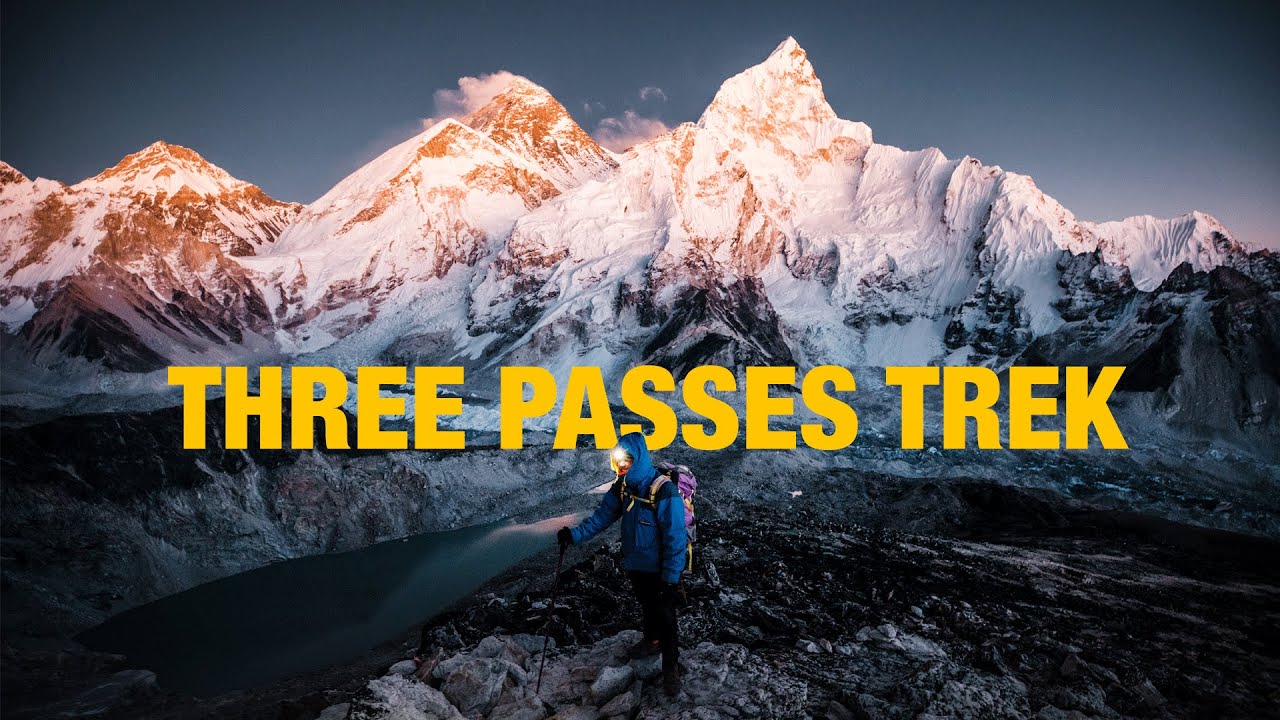
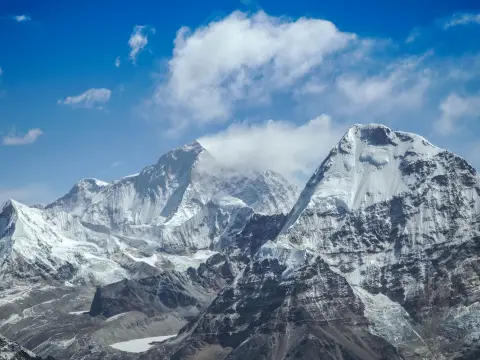
Challenge yourself on the legendary Everest Three Passes Trek, crossing the high mountain passes of Kongma La, Cho La, and Renjo La in the heart of the Himalayas. Journey through dramatic glaciers, remote valleys, and traditional Sherpa villages while standing face-to-face with Everest, Lhotse, Makalu, and Cho Oyu. This ultimate high-altitude adventure rewards you with unmatched panoramas, cultural richness, and the true spirit of Himalayan exploration.
The Everest Three High Passes Trek is regarded as one of the most complete and adventurous high-altitude trekking experiences in Nepal. Operated by Glacier Nepal Treks, this challenging journey is designed for trekkers who want more than the standard Everest Base Camp route. The trek crosses three of the highest Himalayan passes in a single expedition: Kongma La (5,535m), Cho La (5,420m), and Renjo La (5,360m) — each offering dramatic landscapes, glacial crossings, and breathtaking mountain panoramas.
This trek combines the classic Everest Base Camp trail with the remote beauty of the Gokyo Valley, making it a truly immersive Himalayan adventure. Trekkers explore the stunning Gokyo Lakes, walk alongside massive glaciers such as the Ngozumpa Glacier, and climb iconic viewpoints including Kala Patthar, Gokyo Ri, and Chhukung Ri. From these vantage points, trekkers are rewarded with jaw-dropping views of Mount Everest, Lhotse, Makalu, Cho Oyu, Ama Dablam, and many other Himalayan giants.
Cultural exploration is another highlight of the journey. The trail passes through traditional Sherpa villages such as Phakding, Namche Bazaar, Dingboche, and Lukla, offering insight into the daily life, traditions, and hospitality of the Khumbu region. Visits to sacred monasteries like Tengboche Monastery enhance the spiritual and cultural depth of the trek. Despite its remote nature, the trek is supported by comfortable teahouse accommodation, making it a well-balanced blend of adventure and comfort.
Choosing the right season is crucial for successfully completing the Everest Three High Passes Trek. Due to the extreme altitude and challenging terrain, stable weather and clear visibility are essential. The two best seasons recommended by Glacier Nepal Treks are spring (March to May) and autumn (September to November). These months provide favorable trekking conditions, moderate temperatures, and spectacular mountain views.
During spring, the trail comes alive with blooming rhododendron forests, and the weather gradually warms as the days get longer. This season is also popular with mountaineers attempting Everest, which adds a lively atmosphere to the Khumbu region. Visibility is generally excellent, and snow conditions on the high passes are more manageable, making spring an ideal time for experienced trekkers.
Autumn is considered the best overall season for this trek. Following the monsoon rains, the skies are crystal clear, offering uninterrupted views of the Himalayan range. The weather remains stable, and temperatures are comfortable during the day, although nights can be cold at higher elevations. Trails are dry, and the risk of weather-related delays is lower compared to other seasons.
Trekking during the monsoon (June to August) is not recommended due to heavy rainfall, poor visibility, slippery trails, and increased risk of flight delays to Lukla. Winter trekking (December to February) is possible but extremely demanding due to heavy snowfall and freezing temperatures, especially on the high passes.
Best Seasons Summary
The Everest Three High Passes Trek is classified as a strenuous and demanding trek, suitable for physically fit trekkers with prior high-altitude trekking experience. The journey involves long walking days, steep ascents and descents, glacier crossings, and exposure to altitudes above 5,500 meters. Proper acclimatization, mental resilience, and strong endurance are essential for safely completing the trek.
Each high pass presents unique challenges. Kongma La Pass is remote and physically taxing, Cho La Pass requires careful navigation over icy sections, and Renjo La Pass rewards trekkers with spectacular views but demands steady stamina. Glacier Nepal Treks carefully structures the itinerary with acclimatization days in Namche Bazaar and Dingboche to reduce the risk of altitude sickness.
Transportation plays a key role in the overall trekking experience. The journey begins with a scenic flight from Kathmandu to Lukla, one of the most thrilling mountain flights in the world. These short flights depend heavily on weather conditions, and occasional delays are common. Glacier Nepal Treks plans buffer days and handles all flight logistics to ensure a smooth experience.
Despite the trek’s difficulty, proper planning, professional guides, and a gradual ascent make it achievable for determined trekkers. Our experienced Sherpa guides monitor health conditions daily and assist with pace management and safety throughout the trek.
Difficulty & Transport Overview
The Everest Three High Passes Trek is a teahouse trek, meaning accommodation is provided in locally run mountain lodges throughout the route. These teahouses offer basic but comfortable rooms, usually with twin beds, blankets, and shared bathroom facilities. In lower elevations like Namche Bazaar, accommodations are more developed, while higher areas offer simpler facilities due to altitude and remoteness. Meals during the trek are freshly prepared and surprisingly varied. Trekkers can enjoy traditional Nepali meals such as dal bhat, as well as international options including pasta, noodles, fried rice, soups, pancakes, and potatoes. Glacier Nepal Treks strongly encourages trekkers to eat warm, carbohydrate-rich meals to maintain energy levels at high altitude.
As altitude increases, food choices become more limited and prices rise due to transportation costs. However, meals remain nutritious and filling. Hot drinks such as tea, ginger lemon honey, and coffee are widely available and highly recommended to stay warm and hydrated. Although luxury is limited, the warm hospitality of Sherpa hosts and cozy dining areas make evenings pleasant. Glacier Nepal Treks ensures hygienic food choices and advises trekkers on safe eating habits throughout the journey.
Food & Accommodation Highlights
To trek in the Everest region, trekkers must obtain specific government permits. Glacier Nepal Treks handles all permit arrangements, allowing trekkers to focus entirely on the adventure. The required permits ensure legal access to protected areas and support conservation and local development. The main permit required is the Sagarmatha National Park Entry Permit, which allows entry into the UNESCO World Heritage Site that covers most of the Everest region. This permit helps fund conservation efforts, wildlife protection, and trail maintenance. The second essential permit is the Khumbu Pasang Lhamu Rural Municipality Permit, which replaces the older TIMS card system for this region.
Permits are checked at several points along the trail, so carrying them at all times is mandatory. Glacier Nepal Treks ensures all documents are prepared correctly in advance, avoiding delays or complications during the trek.
These permits also help regulate trekking traffic, preserve fragile mountain ecosystems, and ensure sustainable tourism in the Khumbu region.
Required Permits
The Everest Three High Passes Trek is the ultimate choice for trekkers seeking a true Himalayan challenge. Unlike standard Everest routes, this trek offers solitude, adventure, and a deeper exploration of the Khumbu region. Crossing three high passes, visiting Everest Base Camp, and exploring Gokyo Valley in one journey makes it a once-in-a-lifetime experience.
Choosing Glacier Nepal Treks ensures a professionally organized, safe, and memorable trek. Our experienced guides, well-planned itinerary, and focus on acclimatization and safety set us apart. We provide personalized service, local expertise, and genuine care for our trekkers’ well-being.
This trek is ideal for adventurers who want to push their limits, experience diverse landscapes, and enjoy unmatched mountain scenery. The sense of achievement after completing all three passes is immense and unforgettable.
Why Trek with Glacier Nepal Treks
During the peak trekking seasons of Spring (March–May) and Autumn (September–November), Lukla flights are in extremely high demand. With thousands of trekkers and climbers simultaneously heading to the Everest region, the pressure on Kathmandu's Tribhuvan International Airport (TIA) becomes overwhelming.
To ease this congestion, the Civil Aviation Authority of Nepal (CAAN) limits the number of direct Kathmandu–Lukla flights and operates a significant number of departures from Ramechhap (Manthali Airport) instead, a smaller regional airport located approximately 4 –5 hours east of Kathmandu.
The Everest Three Pass Trek itinerary is carefully designed to offer a challenging, adventurous, and rewarding high-altitude experience. The journey begins in Kathmandu with a scenic flight to Lukla, followed by trekking through Sherpa villages like Phakding and Namche Bazaar. Proper acclimatization days are included at Namche and Dingboche, allowing trekkers to adjust while exploring local culture and viewpoints.
The route goes beyond the classic trail, crossing three high passes Kongma La (5,535 m), Cho La (5,420 m), and Renjo La (5,360 m) each offering breathtaking panoramic views of Everest, Lhotse, Makalu, and Cho Oyu. Trekkers also visit Everest Base Camp and hike up Kala Patthar (5,545 m) for stunning sunrise views of Mount Everest. The trail passes through remote valleys like Chhukung and Gokyo, including the beautiful Gokyo Lakes. The return journey descends via Namche Bazaar back to Lukla, completing a thrilling circuit. This well-paced itinerary combines adventure, acclimatization, and cultural immersion, making it ideal for experienced trekkers seeking a complete Everest region experience.
Upon your arrival at Tribhuvan International Airport in Kathmandu, a friendly representative from Glacier Nepal Treks will warmly welcome you and escort you to your hotel by private vehicle. After a long international journey, you will have time to rest, refresh, and recover from jet lag. Later in the day, you will meet your experienced trekking guide at our office for a detailed briefing about the Everest Three High Passes Trek. During this meeting, you can ask questions regarding the route, altitude, equipment, safety, and daily routine. Necessary final checks of permits and gear will be completed. Overnight stay at a comfortable hotel in Kathmandu.
 Accommodation Three-star Hotel in Thamel, Kathmandu
  Meals Welcome Dinner
  Max. altitude 1,350m / 4,429ft.
 Early in the morning, Glacier Nepal Treks will transfer you to the airport for a scenic mountain flight to Lukla, one of the most thrilling short flights in the world. After landing at Tenzing-Hillary Airport, you will meet our trekking crew and enjoy breakfast in Lukla before starting the trek. The trail gently descends through beautiful Sherpa villages and pine forests toward Thadekoshi. Along the way, you can admire stunning views of Kusum Kanguru and surrounding hills. Walking alongside the Dudh Koshi River, you will gradually reach the peaceful village of Phakding. Overnight stay at a local teahouse.
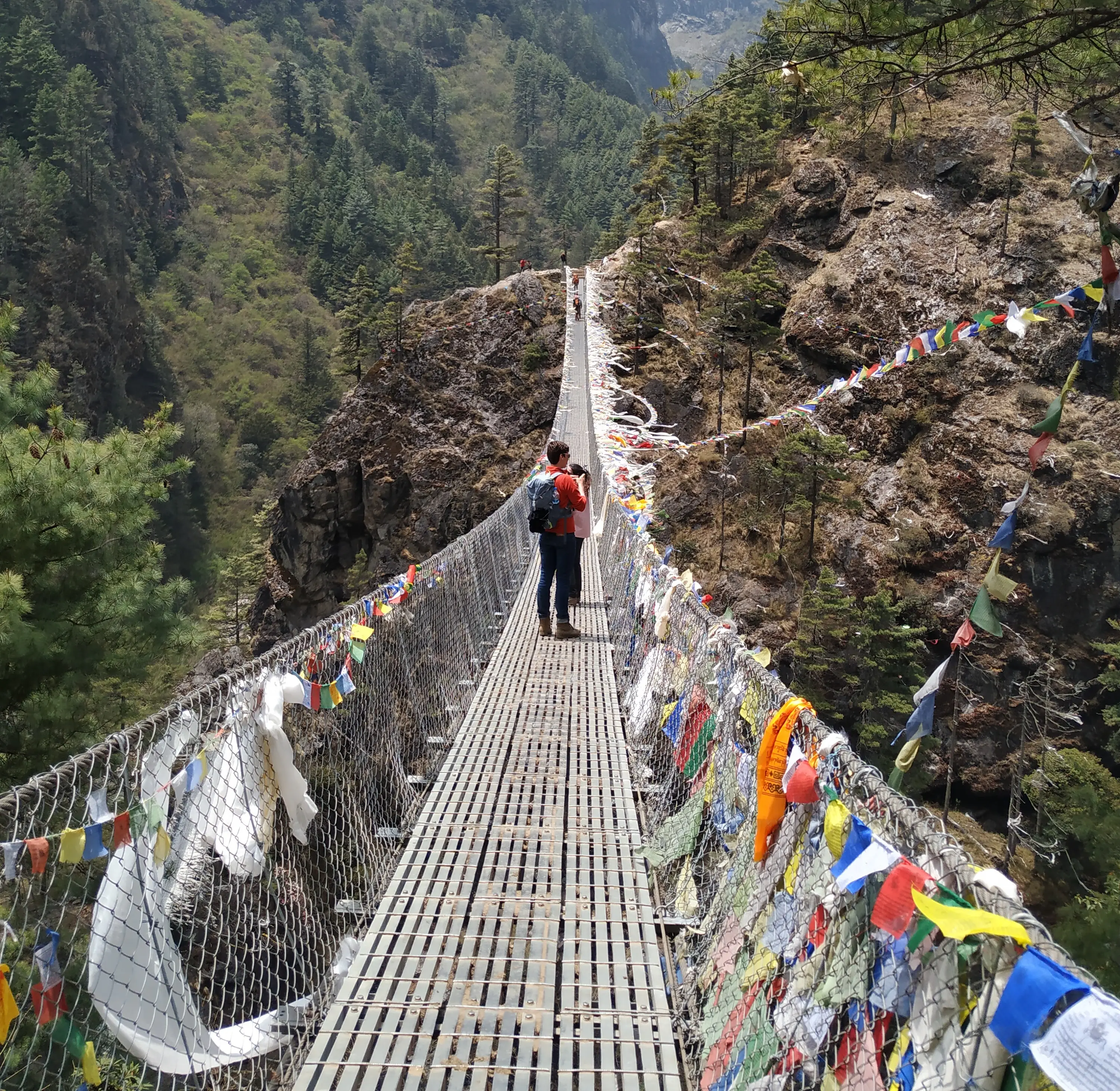
Accommodation Tea House / Lodge Meals Breakfast, Lunch, Dinner Max. altitude 2,651m / 8,698ft. After breakfast, the trek begins with a pleasant walk through forested trails and traditional settlements. Before reaching Monjo, you will enjoy views of Mount Thamserku rising dramatically above the valley. Today, you officially enter Sagarmatha National Park, a UNESCO World Heritage Site. The trail crosses several iconic suspension bridges over the Dudh Koshi River, including the famous Hillary Bridge. After a steep ascent through pine and rhododendron forest, you may catch your first glimpse of Mount Everest if the weather is clear. With luck, wildlife such as Himalayan tahr or even a red panda may be spotted. Overnight at Namche Bazaar.
Accommodation Tea House / Lodge Meals Breakfast, Lunch, Dinner Max. altitude 3,440m / 11,286ft. Namche Bazaar is the vibrant heart of the Khumbu region and an essential stop for proper acclimatization. After breakfast, you will hike to the Everest View Hotel, one of the world’s highest luxury hotels, offering breathtaking panoramic views of Everest, Lhotse, Nuptse, Ama Dablam, and other peaks. This gradual hike helps your body adapt to the increasing altitude. Returning to Namche, you can explore the Sherpa Culture Museum, Sagarmatha National Park Visitor Center, monasteries, markets, and bakeries. Some cafés screen documentaries about Everest expeditions and Sherpa life. Overnight stay in Namche Bazaar.
Accommodation Tea House / Lodge Meals Breakfast, Lunch, Dinner Max. altitude 3,440m / 11,286ft. Leaving Namche after breakfast, the trail follows a relatively flat path with magnificent views of Everest, Ama Dablam, and Thamserku. After descending to Phunki Tenga, you cross a river and begin a steady uphill climb through dense forest to Tengboche. This village is famous for Tengboche Monastery (Dawa Choling Gompa), the largest and most important monastery in the Everest region. From here, you can enjoy stunning views of Everest, Lhotse, Nuptse, Ama Dablam, Taboche, and surrounding peaks. In the afternoon, you may attend the monastery prayer ceremony. Overnight at Tengboche.
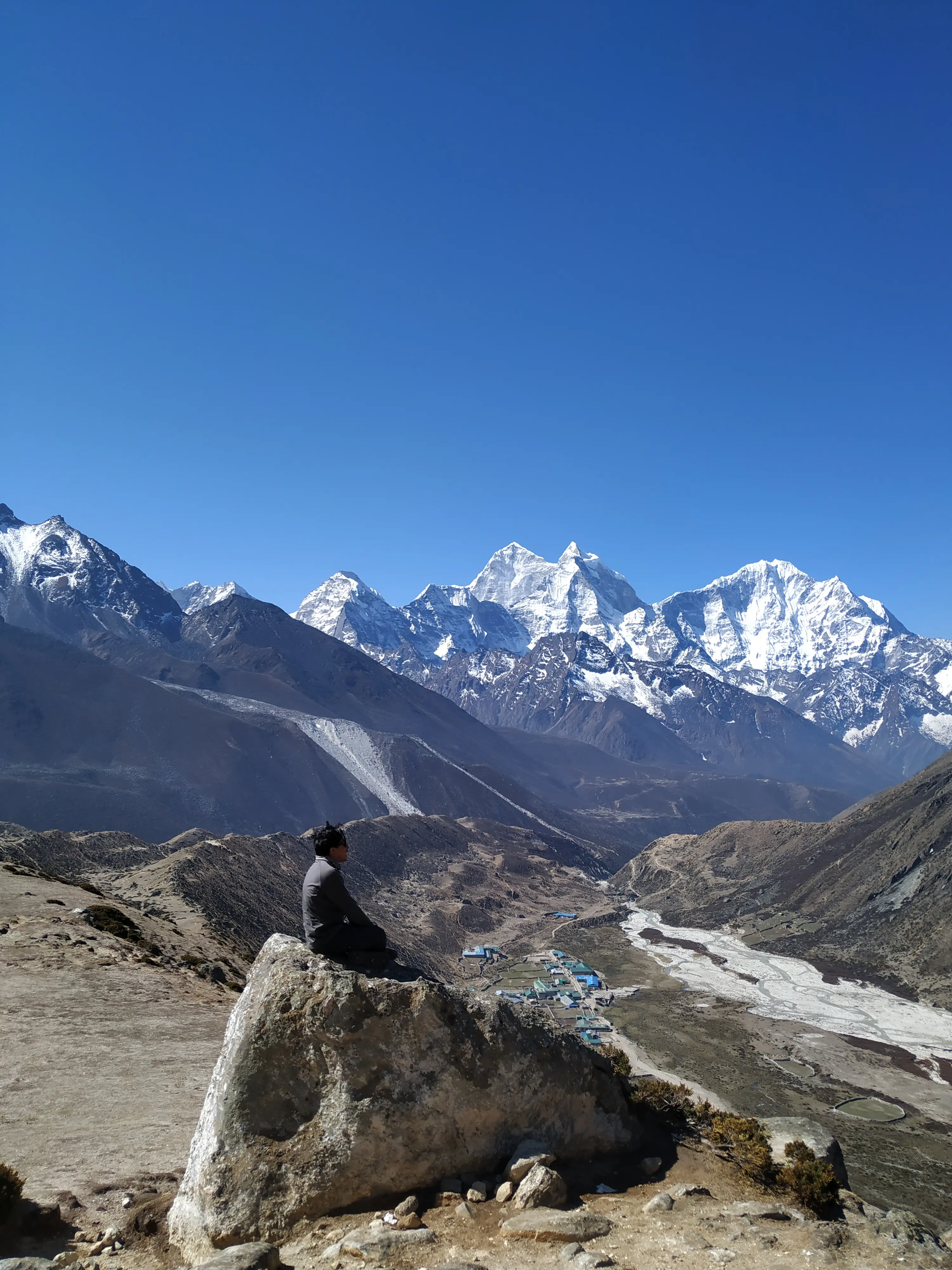
Accommodation Tea House / Lodge Meals Breakfast, Lunch, Dinner Max. altitude 3,867m / 12,687ft. The day begins with a descent through rhododendron forests to Deboche village before crossing a suspension bridge over the Imja Khola River. The trail then climbs gradually toward Pangboche, one of the oldest Sherpa settlements in the region, with spectacular close-up views of Ama Dablam. After lunch at Somare, the landscape becomes more alpine and open as you continue toward Dingboche. Stone-walled fields and yak pastures dominate the scenery, protecting crops from cold winds. Dingboche is the highest permanent village in the region and offers dramatic mountain views. Overnight stay at a teahouse in Dingboche.
Accommodation Tea House / Lodge Meals Breakfast, Lunch, Dinner Max. altitude 4,360m / 14,304ft. To aid acclimatization, you will hike to Nangkartshang Peak (5,083m / 16,675ft) after breakfast. This challenging but rewarding climb takes several hours and provides incredible views of Makalu (the world’s fifth-highest mountain), Ama Dablam, Island Peak, and vast glacier systems. The ascent helps your body adapt to thinner air before tackling higher passes. After enjoying the summit views and taking photos, you descend back to Dingboche for lunch and rest. The afternoon is free to relax, explore the village, or enjoy warm drinks while soaking in the Himalayan atmosphere. Overnight stay at Dingboche.
Accommodation Tea House / Lodge Meals Breakfast, Lunch, Dinner Max. altitude 5,083m / 16,677ft. After breakfast, you will trek gradually uphill for about three hours toward Chhukung, following the Imja Valley. Along the way, you are rewarded with dramatic views of Island Peak, Lhotse, Makalu, Baruntse, and surrounding glaciers. After lunch in Chhukung, you will hike to Chhukung Ri, a demanding but spectacular viewpoint. From the summit, panoramic views of Lhotse’s south face and surrounding peaks unfold before you, especially stunning during sunset. This hike further strengthens your acclimatization. After descending, you return to Chhukung for dinner and overnight stay.
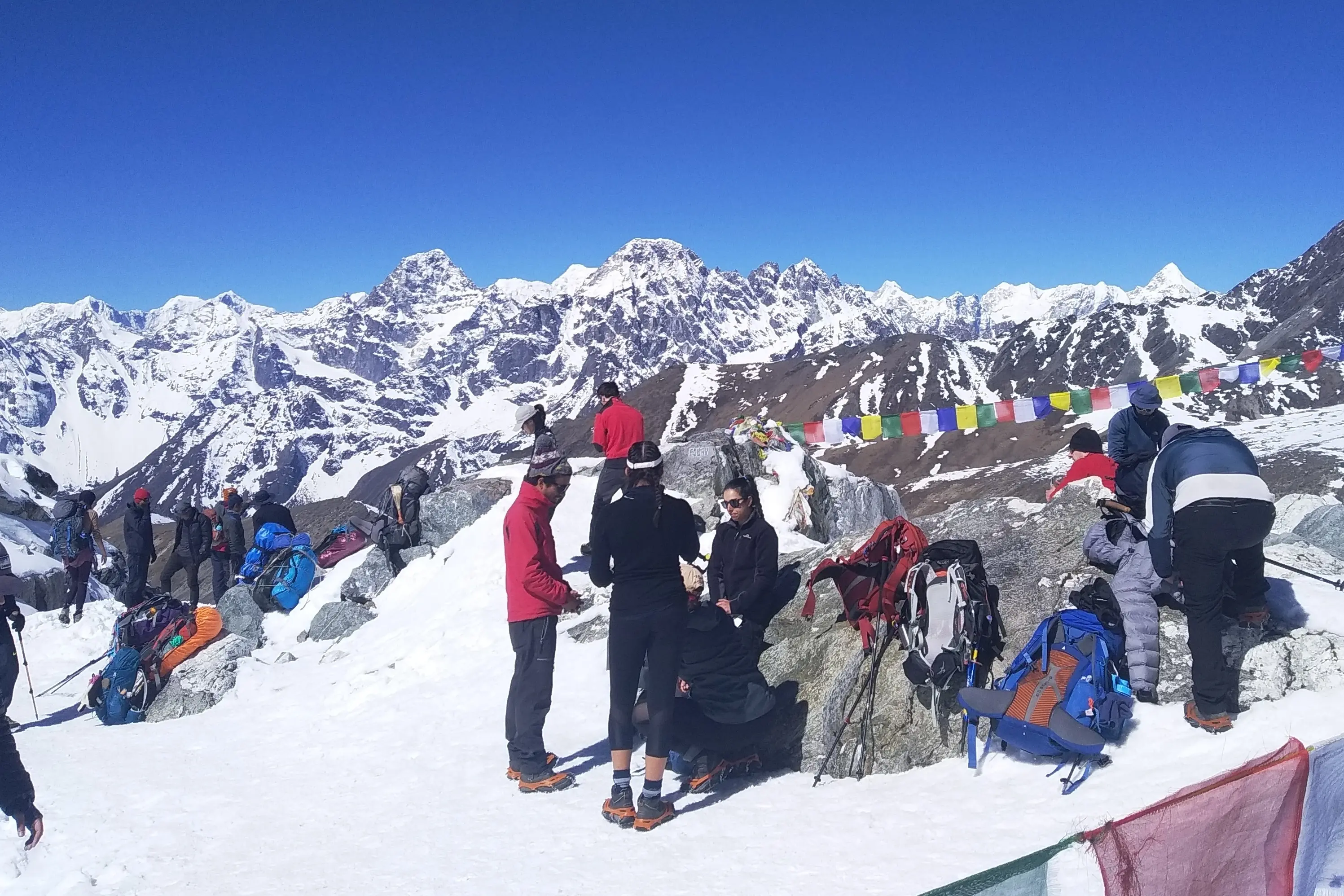
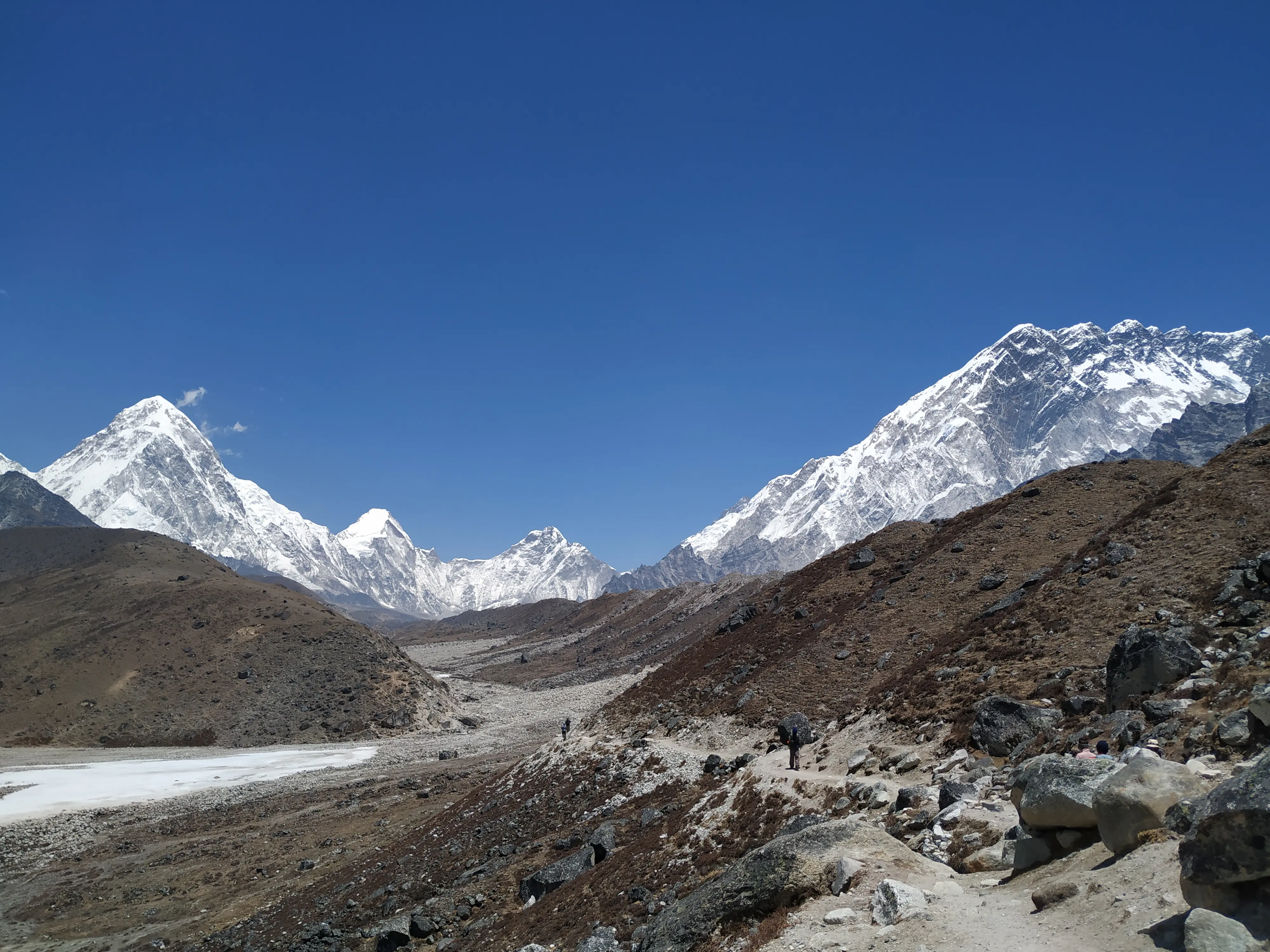
Accommodation Tea House / Lodge Meals Breakfast, Lunch, Dinner Max. altitude 5,550m / 18,209ft. Today is one of the toughest and most adventurous days of the trek. You start early, crossing moraines and traversing the Nuptse Glacier. The ascent to Kongma La Pass is steep and challenging but extremely rewarding. From the top, you can enjoy magnificent views of Ama Dablam, Makalu, Nuptse, Pumori, and Lobuche Peak. The descent is long and rocky, requiring careful footing. After crossing glacier terrain and high-altitude valleys, you finally reach Lobuche, a small settlement surrounded by towering peaks. Overnight stay at Lobuche.
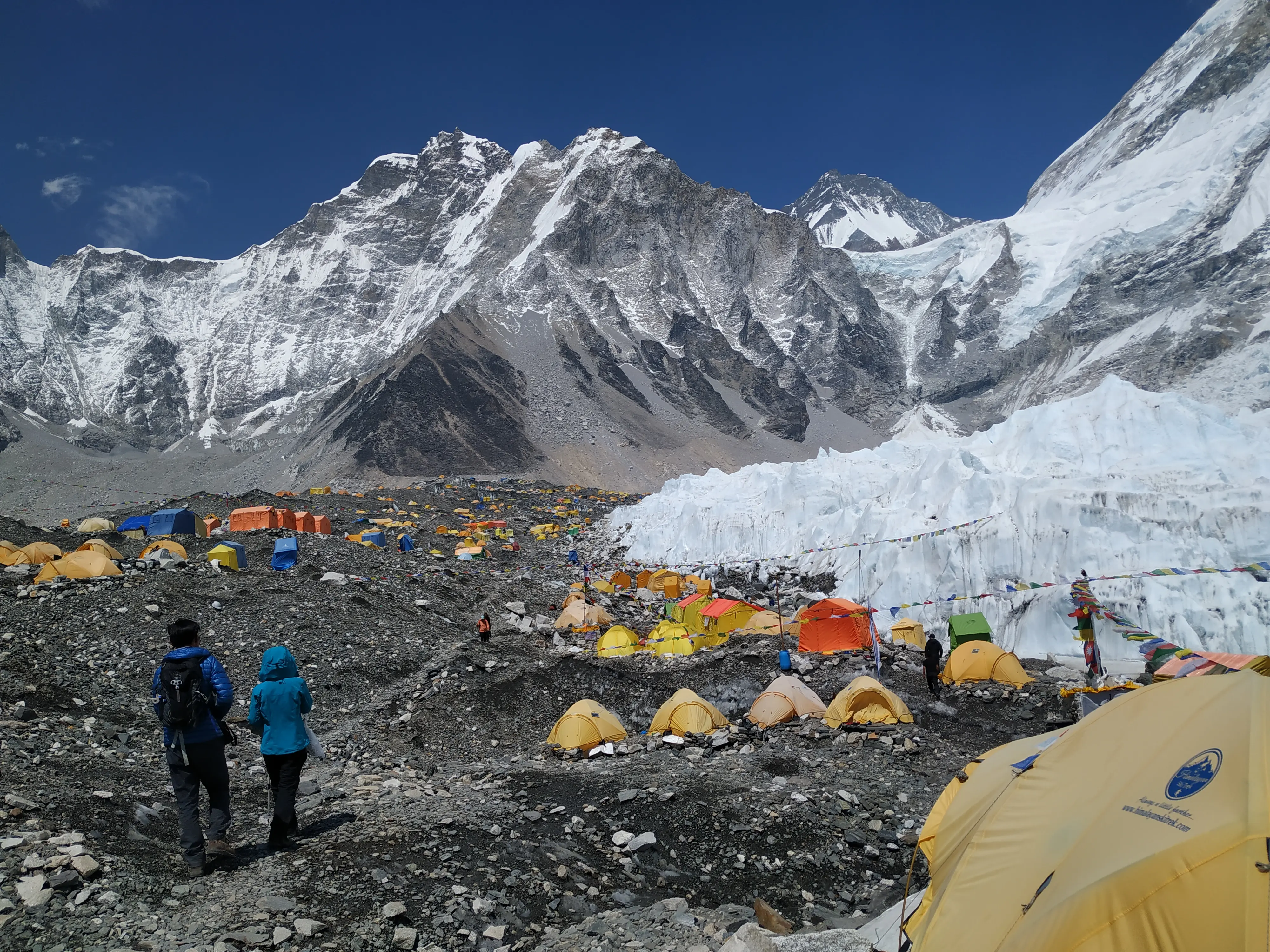
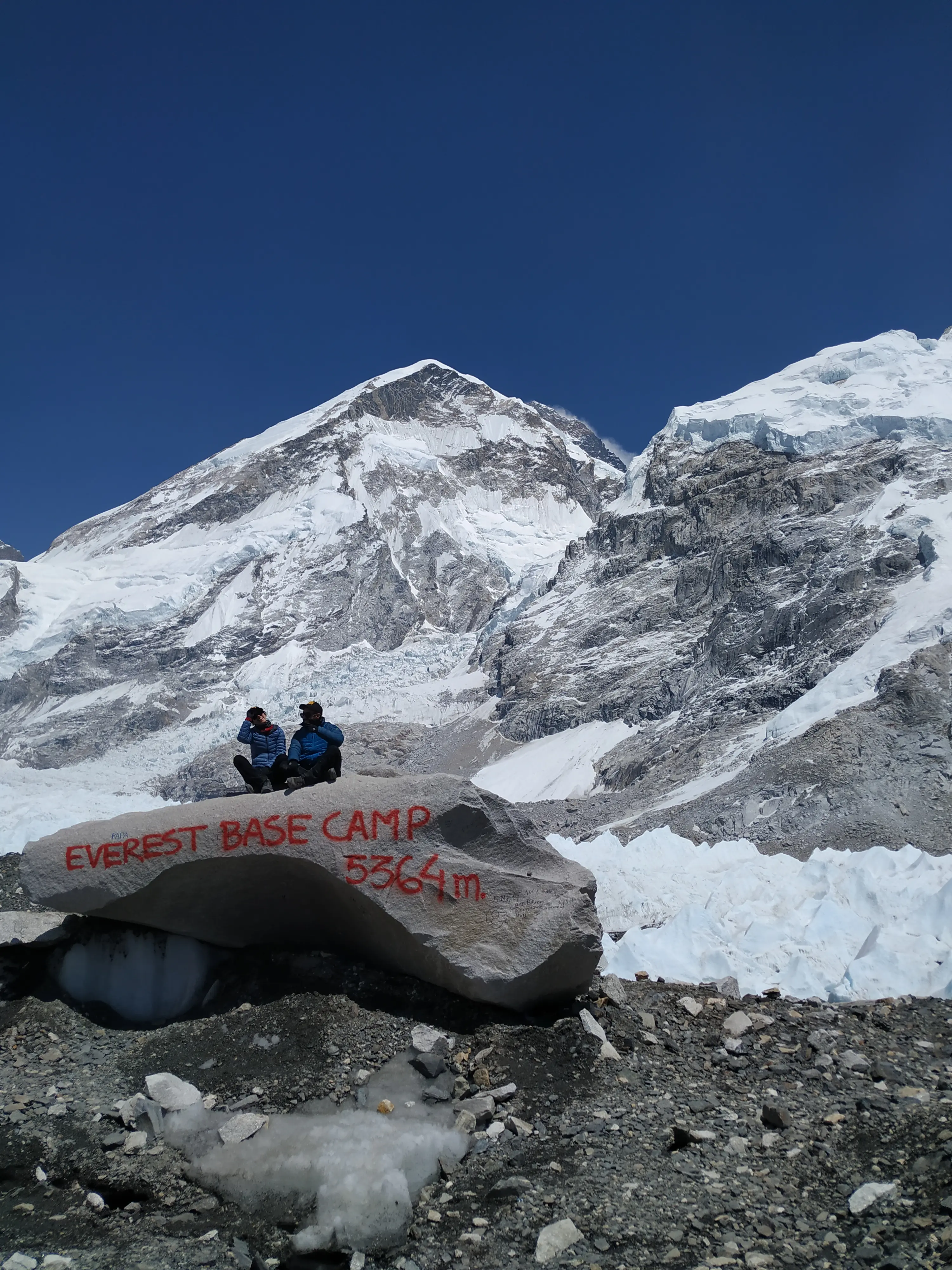
Accommodation Tea House / Lodge Meals Breakfast, Lunch, Dinner Max. altitude 5,535m / 18,159ft. After an early breakfast, you follow the trail along the Khumbu Glacier toward Gorak Shep. After checking in and having lunch, you continue to Everest Base Camp, walking on glacial moraine above 5,000 meters. The altitude makes this section physically demanding, but reaching Everest Base Camp is a once-in-a-lifetime achievement. From here, you can see the Khumbu Icefall and surrounding peaks, although Everest’s summit remains hidden. After spending time taking photos and celebrating, you return to Gorak Shep for overnight stay.
Accommodation Tea House / Lodge Meals Breakfast, Lunch, Dinner Max. altitude 5,364m / 17,598ft. Before sunrise, you hike to Kala Patthar, the most famous viewpoint in the Everest region. From the summit, you witness a breathtaking sunrise over Mount Everest, Nuptse, Pumori, Ama Dablam, and the vast Khumbu Glacier. After descending to Gorak Shep for breakfast, you retrace the trail to Lobuche before turning toward Dzongla. This quieter route offers dramatic mountain scenery and fewer trekkers. Dzongla sits beneath Cho La Pass and provides a peaceful atmosphere. Overnight stay at Dzongla.
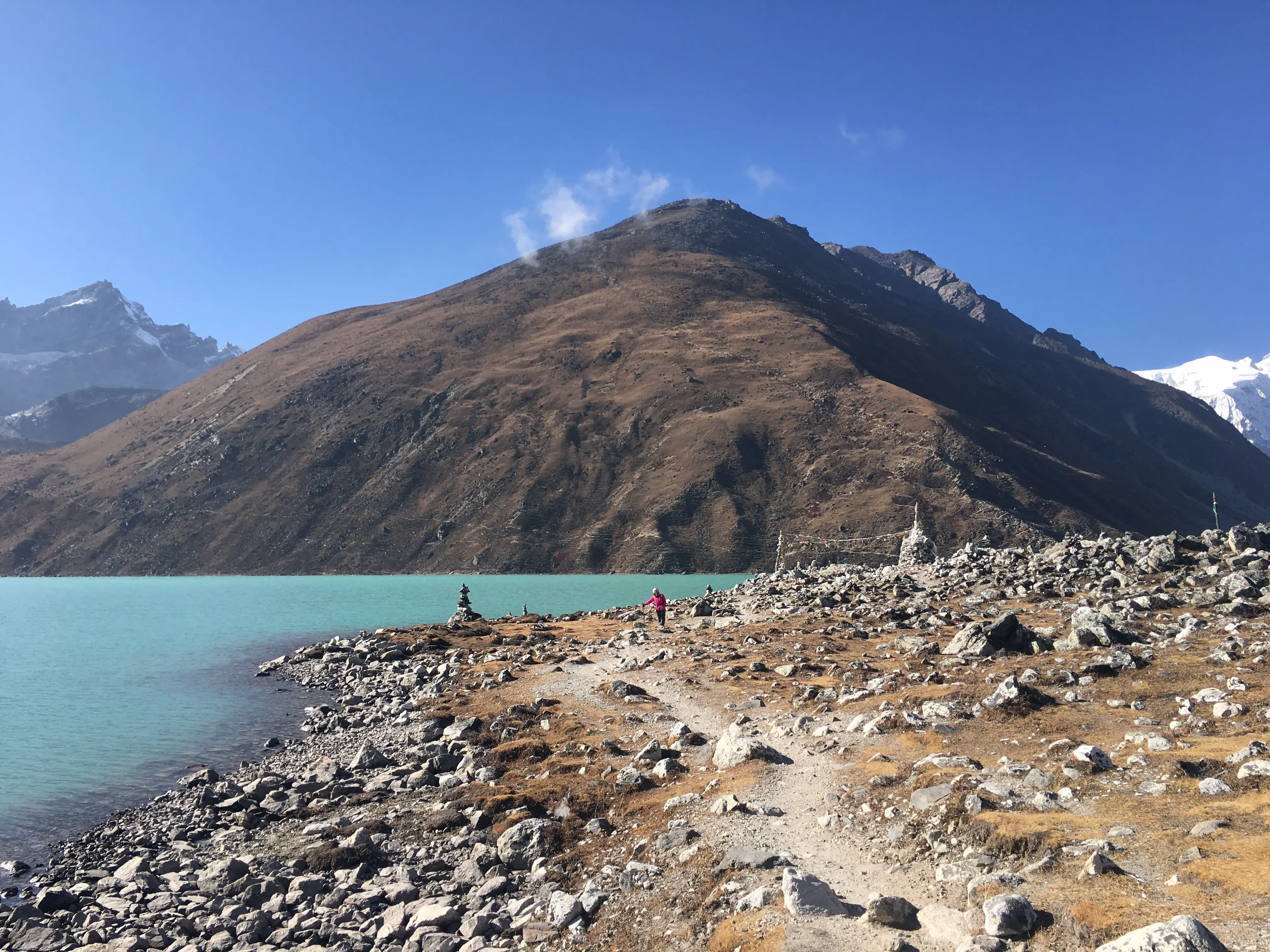
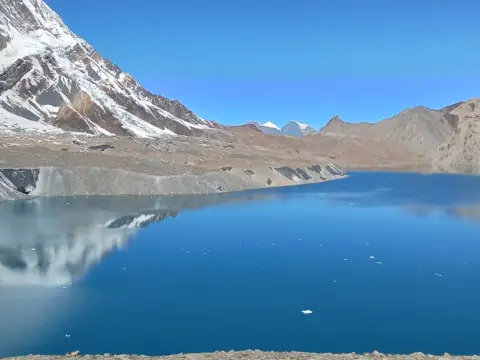
Accommodation Tea House / Lodge Meals Breakfast, Lunch, Dinner Max. altitude 5,545m / 18,192ft. You begin the day early, climbing steadily toward Cho La Pass, navigating rocky trails and icy sections depending on the season. After several hours, you reach the pass, where incredible views of surrounding peaks and glaciers await. The descent is steep and demanding as you cross glacial terrain toward Thangna. After lunch, the trail becomes easier, leading you into the stunning Gokyo Valley. Upon arrival, you are greeted by the serene turquoise waters of Gokyo Lake, also known as Dudh Kunda. Overnight stay at Gokyo.
Accommodation Tea House / Lodge Meals Breakfast, Lunch, Dinner Max. altitude 5,420m / 17,782ft. Today is dedicated to rest and exploration. Early in the morning, you hike up Gokyo Ri, one of the finest viewpoints in the Everest region. The climb takes around three to four hours and rewards you with panoramic views of Everest, Cho Oyu, Lhotse, Makalu, and the vast Ngozumpa Glacier. After descending, you have lunch and free time to explore the Gokyo Lakes, relax by the water, or enjoy the peaceful atmosphere of the valley. Overnight stay at Gokyo.
Accommodation Tea House / Lodge Meals Breakfast, Lunch, Dinner Max. altitude 5,357m / 17,575ft. Leaving Gokyo early, you walk alongside the stunning lakes before beginning the ascent to Renjo La Pass. From the top, you are rewarded with one of the most spectacular views of Everest, Gokyo Lakes, and the massive Ngozumpa Glacier. The descent toward Marlung passes Angladumba Tsho Lake and follows a less-traveled trail through remote valleys. The scenery is peaceful and dramatic, offering a true sense of Himalayan wilderness. Overnight stay at Marlung.
Accommodation Tea House / Lodge Meals Breakfast, Lunch, Dinner Max. altitude 5,360m / 17,585ft. After breakfast, you descend toward Thame village, following an ancient trade route once used by Sherpas traveling to Tibet. Thame is known for its monastery and as the hometown of legendary climbers. Continuing along the trail, you gradually return to the lively atmosphere of Namche Bazaar. After days in remote high-altitude terrain, Namche feels vibrant and comfortable, with bakeries, cafés, and shops. Overnight stay at Namche Bazaar.
Accommodation Tea House / Lodge Meals Breakfast, Lunch, Dinner Max. altitude 4,210m / 13,812ft. This is your final day of trekking. The trail descends steeply from Namche, crossing suspension bridges and passing through forests and villages. After crossing the Dudh Koshi River and exiting Sagarmatha National Park, you reach Thadekoshi, the lowest point of the trek. A final uphill section brings you back to Lukla, where the journey began. In the evening, you can celebrate the successful completion of the Everest Three High Passes Trek with your trekking crew. Overnight stay at Lukla.
Accommodation Tea House / Lodge Meals Breakfast, Lunch, Dinner Max. altitude 3,440m / 11,286ft. After breakfast, you take an early morning flight from Lukla back to Kathmandu, enjoying final views of the Himalayan peaks. Upon arrival, Glacier Nepal Treks will transfer you to your hotel. After a hot shower and rest, you can explore Thamel for shopping, souvenirs, or relaxation. In the evening, you will enjoy a farewell dinner at a traditional Nepali restaurant with cultural dance performances, celebrating your adventure in the Everest region. Overnight stay at the hotel in Kathmandu.
Accommodation Three-star Hotel in Thamel, Kathmandu Meals Breakfast Max. altitude 2,860m / 9,383ft. Today marks the end of your unforgettable Himalayan journey. Depending on your flight schedule, a representative from Glacier Nepal Treks will transfer you to Tribhuvan International Airport by private vehicle. As you depart Nepal, you take home incredible memories of the Everest Three High Passes Trek, breathtaking landscapes, and rich Sherpa culture. Home sweet home and we hope to welcome you again for another adventure in Nepal.
Accommodation NA Meals Breakfast Max. altitude 1,350m / 4,429ft. 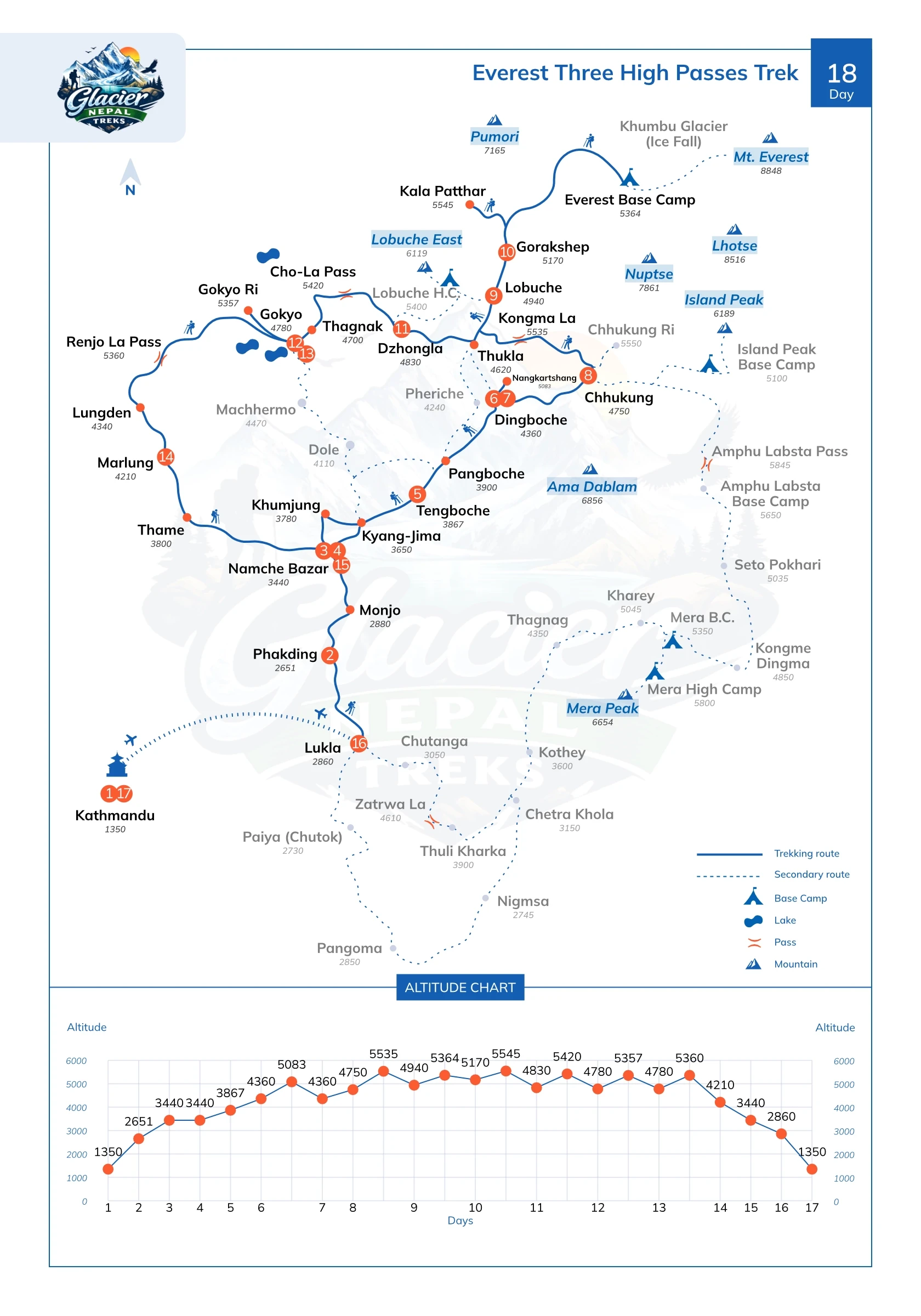
The Everest Three High Passes Trek with Glacier Nepal Treks is an extraordinary adventure that takes you through the heart of the Khumbu region, offering breathtaking views of the world’s highest peaks. Starting in Kathmandu, you’ll fly to Lukla and begin your trek through Sherpa villages, Buddhist monasteries, and high-altitude passes, including Kongma La, Cho La, and Renjo La. Along the way, you’ll explore Namche Bazaar, Tengboche, Dingboche, Chhukung, Lobuche, and Gokyo, culminating in visits to Everest Base Camp and spectacular summit views from Kala Patthar and Gokyo Ri. The trek includes acclimatization days to ensure safety and maximize enjoyment while traversing altitudes above 5,500 meters.
This 18-day journey is carefully planned for both adventure and comfort. Accommodation is mostly in teahouses, with meals provided along the trail, and transportation involves domestic flights and trekking on well-marked trails. Glacier Nepal Treks ensures experienced guides, support staff, and logistics to make your trek safe and memorable.
Transportation Terms
Accommodation / Meals Terms
Money & Payments
Travel Insurance
Travel Documents
Common Travel Phrases / Sightseeing
Off the Beaten Path
Travel Advisory
Health & Safety
Airport & Transportation
Accommodation
Meals
Permits & Documentation
Trekking Staff & Support
Trekking Equipment & Safety
Additional Services
Your Start Date is the day you land in Nepal, and your End Date is when you fly home.
If the set Everest Three High Passes Trek group dates don’t suit your schedule, we can offer alternative dates upon request.
Proper layering is important to stay warm and comfortable in changing mountain weather.
Good footwear makes trekking easier and safer.
The right gear keeps you safe, comfortable, and prepared.
Lightweight but important items keep you clean, healthy, and comfortable.
Keep important items safe and easy to reach.
We were a large group of 30+ and we went on the Everest Base Camp and Kaalapathar. It was a lifetime memory, excellent guides, we returned safe and enjoyed the wonderful views, sights and sounds! Thank you Rabin and look forward to many more!
I completed the Everest Three Passes Trek solo as a female traveler with Glacier Nepal Treks, and it was an empowering and unforgettable adventure. The entire trek was perfectly organized by Rabin KC, who managed every detail from permits to accommodations, ensuring my journey was safe, smooth, and stress-free. I was guided by Gambhir Shah, who was professional, supportive, and attentive throughout the trek. Being a solo female trekker, I felt completely safe and well looked after. The Everest Three Passes Trek was demanding but spectacular, crossing Kongma La, Cho La, and Renjo La, each offering breathtaking Himalayan panoramas. Trekking through Sherpa villages, visiting Tengboche Monastery, and witnessing peaks like Mount Everest, Lhotse, and Ama Dablam was inspiring. Standing at Everest Base Camp and viewing Kala Patthar was a proud and unforgettable moment. Thanks to Glacier Nepal Treks, Rabin, and Gambhir for making this solo female trek safe, empowering, and truly memorable.
I completed the Everest Base Camp and Three Passes Trek as a solo traveler, and it was a truly unforgettable journey. My guide, Bikas Thapa, was excellent—professional, flexible, and always attentive, adjusting the route to make the trek more enjoyable and suited to my pace. While I came to see the magnificent Himalayan peaks, the rich culture, beautiful villages, monasteries, and warm local people made the experience even more special. We faced some challenging weather, and without Bikas’s experience and support, it could have been difficult. The teahouses were a great comfort each evening, offering warmth and good meals after long days. Cold nights were manageable with a proper sleeping bag. Thanks to Glacier Nepal Treks for organizing everything.
The Everest Three Passes Trek was an unforgettable adventure, offering breathtaking views of Everest, Lhotse, and Makalu while crossing the challenging Kongma La, Cho La, and Renjo La passes. The journey through remote valleys, glaciers, and Sherpa villages made it truly special. My guide, Krisna Malla, was experienced, supportive, and ensured a safe and enjoyable trek throughout. Porter Raju was incredibly strong and always helpful. Thanks to their dedication, this trek became a smooth, rewarding, and once-in-a-lifetime Himalayan experience I highly recommend.
Following a friend’s recommendation, we contacted Rab and instantly knew he was the right choice. He arranged our Lukla flights, which had seemed impossible. Rab is kind, humorous, and extremely knowledgeable about the mountains, villages, and people of the region. The trek was amazing and flexible we even changed our route along the way without any issues. Thanks to his guidance, the entire journey was smooth, safe, and unforgettable. I wholeheartedly recommend him.
Incredible Everest Three Pass Trek with Glacier Nepal Treks, guided by Ram and supported by Md Rabin. From EBC to Cho La Pass and Gokyo Lake, the journey through breathtaking landscapes and friendly people made this adventure truly unforgettable.
I have trekked in many corners of the world but the Everest Three High Passes Trek with Glacier Nepal Treks was without question the most physically demanding, breathtakingly beautiful, and deeply rewarding adventure of my entire life. Crossing three legendary high passes Renjo La (5,360m), Cho La (5,420m), and Kongma La (5,535m) in eighteen extraordinary days through the heart of the Khumbu Valley was an experience that pushed me to my absolute limits and rewarded every single difficult step with views of such overwhelming magnificence that I genuinely ran out of words to describe them. Our guide Rabin KC was simply outstanding throughout technically expert, incredibly calm under pressure, genuinely caring, and wonderfully warm every single day on the trail
From the thrilling moment our small aircraft touched down at Lukla's legendary airstrip to the final triumphant descent back through the Khumbu Valley the Everest Three High Passes Trek with Glacier Nepal Treks was the most extraordinary, challenging, and deeply rewarding adventure of my entire life. The extraordinary turquoise waters of Gokyo Lake left me completely speechless. Crossing Renjo La, Cho La, and Kongma La pushed every single limit I thought I had. And standing on Kala Patthar watching the sunrise paint Mount Everest golden in the early morning light was a moment of such overwhelming beauty that I simply wept. Our guide Ram was absolutely outstanding throughout calm, knowledgeable, encouraging, and genuinely exceptional in every way. A heartfelt thank you to the entire Glacier Nepal Treks team for organizing this life changing journey so flawlessly from start to finish.
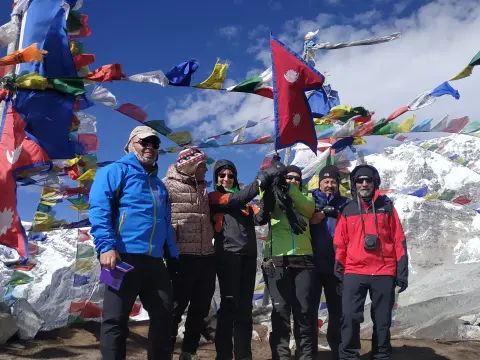
Four friends and I completed the Everest Three High Passes Trek with Glacier Nepal Treks, and it was an incredible adventure from beginning to end. Crossing Kongma La, Cho La, and Renjo La above 5,000 meters was challenging but extremely rewarding. The views of Everest, Lhotse, Makalu, Cho Oyu, Ama Dablam, and Nuptse were unforgettable. We especially enjoyed exploring the beautiful Gokyo Valley, seeing the turquoise Gokyo Lakes, and walking alongside the Ngozumpa Glacier. Reaching Everest Base Camp and hiking to Kala Patthar, Gokyo Ri, and Chhukung Ri were also major highlights. The Sherpa villages and Tengboche Monastery added a wonderful cultural experience to the journey. Our guide, Sagar, was excellent. He was experienced, friendly, patient, and always supportive during the difficult sections.
Our Everest Three High Passes Trek with Glacier Nepal Treks was an incredible Himalayan adventure and one of the most challenging and rewarding experiences we have ever had. Crossing Kongma La, Cho La, and Renjo La was unforgettable, with spectacular views of Everest, Lhotse, Makalu, Cho Oyu, and Ama Dablam along the way. The journey started with a scenic flight from Ramechhap to Lukla, and everything was very well organized from the beginning. Our guide, Krisna, was excellent throughout the trek. He was knowledgeable, friendly, patient, and always made sure we were safe and comfortable, especially during the high-altitude passes. We enjoyed exploring Namche Bazaar, Gokyo Lakes, Everest Base Camp, and the beautiful Sherpa villages and monasteries of the Khumbu region. A special thank you to Rabin for organizing the entire trek so smoothly and making sure every detail was taken care of. Thank you, Krisna and Rabin, and the whole Glacier Nepal Treks team for an unforgettable adventure. Highly recommended.
Thank you to Rabin and Glacier Nepal Treks for organizing everything so smoothly. From the flight to Lukla to the trekking arrangements, everything was well managed. Our Everest Three Passes Trek with Glacier Nepal Treks was one of the most beautiful trekking experiences I have ever had. Flying to Lukla was an exciting start, and walking through the Sherpa villages, Namche Bazaar, and the spectacular Everest region was unforgettable. The trail was challenging, especially crossing the 3 high pass, but every difficult section was worth it for the incredible mountain scenery. Our guide, Mingma Sherpa, was excellent. He was experienced, friendly, and always made sure we were comfortable and safe. His knowledge of the mountains and local Sherpa culture made the journey even more meaningful.
The Everest Three High Passes Trek is one of the most challenging and rewarding trekking routes in the Himalayas, covering the iconic passes of Kongma La, Cho La, and Renjo La. This trek combines the classic Everest Base Camp route with remote high-altitude trails and panoramic viewpoints such as Gokyo Ri and Kala Patthar. What makes it special is the diversity of landscapes, from lush forests to glaciers, and the deep cultural experience in Sherpa villages. With Glacier Nepal Trek, trekkers enjoy a carefully planned itinerary that balances adventure, safety, and acclimatization.
This trek is considered strenuous and is best suited for experienced trekkers with good physical fitness. The route involves long walking days, high altitude above 5,000 meters, steep ascents, rocky trails, and glacial crossings. Prior trekking experience at altitude is strongly recommended. However, Glacier Nepal Trek designs the itinerary with proper acclimatization days and experienced guides to minimize risks. Mental endurance is just as important as physical fitness, as weather conditions and altitude can be demanding throughout the journey.
Altitude sickness is a serious concern on the Everest Three High Passes Trek due to the extreme elevations. Glacier Nepal Trek follows a strict acclimatization schedule with rest days in Namche Bazaar, Dingboche, and Gokyo. Our guides are trained in altitude awareness and carry a basic medical kit at all times. Trekkers are encouraged to walk slowly, stay hydrated, and report symptoms immediately. The itinerary is flexible, allowing extra acclimatization if needed. Safety is always the top priority, even if it means modifying the trekking plan.
Yes, prior trekking experience is highly recommended for the Everest Three High Passes Trek. This is not a beginner’s trek due to its length, altitude, and technical challenges. Experience with multi-day treks, backpacking, and high-altitude hiking will greatly increase your comfort and safety. However, even experienced trekkers benefit from the support of professional guides. With Glacier Nepal Trek, you receive expert guidance, porter support, and a well-paced itinerary that helps you focus on enjoying the adventure rather than worrying about logistics.
Glacier Nepal Trek is a trusted local trekking company with extensive experience in the Everest region. We offer professional guides, carefully planned itineraries, strong safety standards, and personalized service. Our deep knowledge of the terrain, weather patterns, and Sherpa culture allows us to deliver an authentic and well-organized trekking experience. By choosing Glacier Nepal Trek, you support a local company while ensuring a safe, memorable, and well-supported journey through one of the most spectacular trekking routes in the world.
The best seasons for the Everest Three High Passes Trek are spring (March to May) and autumn (September to November). During these months, the weather is generally stable, skies are clear, and mountain views are at their best. Spring offers blooming rhododendrons and warmer temperatures, while autumn provides crisp air and excellent visibility. Winter trekking is possible but extremely cold with heavy snow on passes, while the monsoon season brings rain and flight delays. Glacier Nepal Trek recommends spring and autumn for the safest and most enjoyable experience.
Accommodation during the trek is in local tea houses and lodges, which provide basic but comfortable rooms with twin beds, blankets, and shared bathrooms in most places. At higher altitudes, facilities become simpler due to limited resources. Meals are freshly prepared and typically include Nepali, Tibetan, and international options such as dal bhat, noodles, soups, pasta, and rice dishes. Glacier Nepal Trek selects reliable lodges with good hygiene standards to ensure trekkers receive nutritious meals and a warm place to rest each night.
To trek in the Everest region, you need a TIMS card, Sagarmatha National Park entry permit, and a local Khumbu entry permit. All required permits are fully included in the trekking package provided by Glacier Nepal Trek. Our team handles all permit arrangements in advance, allowing you to focus on preparation and enjoyment. Carrying permits is mandatory, and they are checked at multiple points along the trail. Having permits arranged by a professional company ensures a smooth and hassle-free trekking experience.
Proper equipment is critical for the Everest Three High Passes Trek due to cold temperatures, wind, and variable terrain. Essential items include a high-quality down jacket, warm layers, waterproof trekking boots, thermal clothing, gloves, a sleeping bag rated for minus temperatures, and a good backpack. Sunglasses, trekking poles, and sunscreen are also important. Glacier Nepal Trek provides sleeping bags and duffle bags, and our team offers a detailed packing list to help you prepare properly for this demanding high-altitude adventure.
Yes, comprehensive travel insurance is mandatory for this trek. Your insurance must cover high-altitude trekking up to at least 6,000 meters, emergency helicopter evacuation, and medical expenses. Due to the remoteness and altitude of the region, evacuation costs can be extremely high. Glacier Nepal Trek requires proof of valid insurance before departure to ensure your safety. Having proper insurance provides peace of mind and ensures that emergency assistance can be arranged quickly if necessary.
| No of people | Price per person |
|---|---|
| 1 - 1 | $1,675 |
| 2 - 4 | $1,550 |
| 5 - 7 | $1,495 |
| 8 - 12 | $1,435 |
| 13 - 20 | $1,385 |
| No of people | Price per person |
|---|---|
| 1 - 1 | $1,550 |
| 2 - 4 | $1,400 |
| 5 - 7 | $1,380 |
| 8 - 15 | $1,350 |
| No of people | Price per person |
|---|---|
| 1 - 1 | $1,600 |
| 2 - 4 | $1,450 |
| 5 - 8 | $1,425 |
| 9 - 16 | $1,375 |
| No of people | Price per person |
|---|---|
| 1 - 1 | $1,900 |
| 2 - 4 | $1,699 |
| 5 - 7 | $1,650 |
| 8 - 15 | $1,600 |
| No of people | Price per person |
|---|---|
| 1 - 1 | $2,500 |
| 2 - 4 | $2,350 |
| 5 - 8 | $2,320 |
| 9 - 16 | $2,299 |
| No of people | Price per person |
|---|---|
| 1 - 1 | $2,500 |
| 2 - 4 | $2,399 |
| 5 - 8 | $2,300 |
| 9 - 15 | $2,199 |


 (31)
(31)  94% recommend (244)
 (12)
(12)