Published by Glacier Nepal Treks | Everest Region Trekking Guide
One of the first questions every aspiring trekker asks when they start planning their Everest Base Camp Trek is a simple but important one how much does it actually cost?
The honest answer is that the Everest Base Camp Trek cost in 2026 varies enormously depending on the style of trekking you choose, the agency you book with, the time of year you travel, and the level of comfort and service you expect along the way. A budget solo trekker and a luxury guided trekker can both complete the same trail and have completely different financial experiences.
This complete budget breakdown guide covers every single cost you need to know about before booking your EBC Trek in 2026 from permits and flights to accommodation, food, guides, porters, gear, and all the hidden extras that catch first time trekkers by surprise.
Whether you are planning a budget adventure or a premium experience, this guide gives you everything you need to plan your Everest Base Camp Trek with complete financial confidence.
Before diving into the detailed breakdown, here is a quick overview of what the Everest Base Camp Trek costs in 2026 across different trekking styles:
| Trekking Style | Estimated Total Cost (USD) |
|---|---|
| Budget Trek (solo, basic teahouses) | USD 1,200 — 1,500 |
| Mid Range Trek (guided, standard package) | USD 1,500 — 2,500 |
| Premium Trek (guided, comfortable lodges) | USD 2,500 — 3,500 |
| Luxury Trek (premium lodges, private service) | USD 3,500 — 5,000+ |
These figures cover approximately 14 days on the trail and include all major costs from Kathmandu. International flights to Nepal are not included in any of these estimates.
Now let us break every single cost down in detail.
Before you can trek to Everest Base Camp, you need a valid Nepal tourist visa. For most nationalities, Nepal visas are available on arrival at Tribhuvan International Airport in Kathmandu or at designated land border crossings.
Nepal Visa Fees 2026:
| Visa Duration | Cost (USD) |
|---|---|
| 15 days | USD 30 |
| 30 days | USD 50 |
| 90 days | USD 125 |
For a standard 14 day EBC Trek, a 30 day tourist visa at USD 50 is the most practical option, giving you comfortable buffer time before and after the trek.
Important: Citizens of SAARC countries (India, Bangladesh, Bhutan, Maldives, Pakistan, Sri Lanka) are exempt from Nepal visa fees or pay significantly reduced rates. Indian nationals do not require a visa for Nepal at all.
Trekking in the Everest region requires two mandatory permits. Both are essential you cannot legally trek in the Khumbu Valley without them, and checkpoints along the trail verify permits regularly.
a) Sagarmatha National Park Entry Permit
| Detail | Information |
|---|---|
| Cost | NPR 3,000 (approximately USD 20) |
| Issued by | Department of National Parks and Wildlife Conservation |
| Where to obtain | Nepal Tourism Board, Kathmandu or Monjo checkpoint |
b) Khumbu Pasang Lhamu Rural Municipality Permit
| Detail | Information |
|---|---|
| Cost | NPR 2,000 (approximately USD 15) |
| Issued by | Khumbu Pasang Lhamu Rural Municipality |
| Where to obtain | Lukla or Monjo checkpoint |
c) TIMS Card (Trekkers Information Management System)
| Detail | Information |
|---|---|
| Cost | NPR 2,000 (approximately USD 15) |
| Issued by | Nepal Tourism Board |
| Where to obtain | Nepal Tourism Board office, Kathmandu |
Total Permit Cost: approximately USD 50 per person
Glacier Nepal Treks handles all permit arrangements on your behalf as part of our guided trekking packages no queuing, no confusion, no wasted time.
The Kathmandu to Lukla flight is one of the most iconic and thrilling short flights in the world. Landing at Tenzing-Hillary Airport in Lukla perched on a mountainside at 2,860 metres with a famously short and steeply inclined runway is an experience that most trekkers remember as vividly as reaching Base Camp itself.
Flight Costs 2026:
| Route | Cost Per Person (USD) |
|---|---|
| Kathmandu to Lukla (one way) | USD 225 - 255 |
| Lukla to Kathmandu (one way) | USD 225 - 255 |
| Total Return Flight | USD 450 - 510 |
Important note about Ramechhap flights:
During peak trekking seasons (March-May and September-November), many flights to Lukla are redirected from Ramechhap (Manthali Airport) approximately 130km east of Kathmandu. Ramechhap flights are slightly cheaper (approximately USD 175 - 210 per person one way) but require a 4-5 hour private vehicle transfer from Kathmandu at an additional cost of approximately USD 90 -110 per vehicle.
Glacier Nepal Treks books all domestic flights on your behalf and arranges all necessary transfers.
Hiring an experienced and licensed trekking guide is one of the most important investments you can make on the Everest Base Camp Trek. A good guide does not simply show you the trail they share deep knowledge of the Sherpa culture, monitor your health and acclimatization, manage logistics and emergencies, and enrich your entire experience in ways that simply cannot be replicated by following a map on your phone.
Guide Cost 2026:
| Guide Type | Daily Rate (USD) |
|---|---|
| Licensed English-speaking trekking guide | USD 25 - 35 per day |
| Senior or specialist guide | USD 35 - 50 per day |
For a 14 day EBC Trek, guide costs typically range from USD 350 - 490 total plus tips.
Tipping your guide:
Tipping is an important and expected part of Nepal trekking culture. A standard tip for a guide on a 14 day trek is approximately USD 100 — 150 depending on the quality of service. Tips are a critical part of your guide's income and should always be budgeted for.
At Glacier Nepal Treks, all our guides are government licensed, professionally trained, and deeply experienced in the Everest region. We are proud to pay our guides fair wages and treat our entire team with the respect and care they deserve.
Hiring a porter on the EBC Trek is strongly recommended for most trekkers. A porter carries your main backpack (typically up to 20kg), allowing you to walk with just a light daypack and focus entirely on enjoying the incredible scenery around you rather than struggling under a heavy load.
Porter Cost 2026:
| Detail | Cost (USD) |
|---|---|
| Porter daily rate | USD 18 - 23 per day |
| 14 day trek total | USD 252 - 322 |
| Tip (recommended) | USD 90 - 110 |
Most trekkers share a porter between two people, which halves the cost.
Important: Glacier Nepal Treks is deeply committed to porter welfare. We ensure all our porters receive fair wages, proper equipment, adequate food and accommodation, and comprehensive insurance throughout the trek. Please always choose agencies that treat their porters with dignity and fairness.
Accommodation on the Everest Base Camp Trek is provided by a network of teahouses and mountain lodges spread along the trail. These range from very basic shared rooms at lower elevations to surprisingly comfortable en suite rooms with heated facilities at the more established stops like Namche Bazaar.
Teahouse Accommodation Costs 2026:
| Elevation | Room Type | Cost Per Night (USD) |
|---|---|---|
| Below 3,000m | Basic shared room | USD 5 - 10 |
| 3,000m - 4,000m | Standard double room | USD 10 - 20 |
| Above 4,000m | Basic room | USD 15 - 25 |
| Namche Bazaar | Comfortable room | USD 20 - 40 |
| Luxury lodges | Premium room | USD 80 - 200 |
Important note: Many teahouses offer heavily discounted or even free accommodation if you commit to eating all your meals at their establishment. This is a common arrangement on the Everest trail and can significantly reduce your overall accommodation costs.
Total accommodation cost estimate for 14 nights: USD 150 - 350 (standard teahouses)
Food on the Everest Base Camp Trek is available at every teahouse along the route. Menus are surprisingly varied, featuring everything from Dal Bhat and Sherpa stew to pasta, pizza, pancakes, and fried rice. Quality and variety naturally decrease as you gain altitude and the supply chain becomes more challenging.
Meal Costs 2026:
| Meal | Cost (USD) |
|---|---|
| Breakfast (eggs, toast, porridge) | USD 4 - 8 |
| Lunch (Dal Bhat, soup, noodles) | USD 6 - 10 |
| Dinner (Dal Bhat, pasta, fried rice) | USD 6 - 12 |
| Hot drinks (tea, coffee, hot chocolate) | USD 2 - 5 |
| Bottled water (above 3,500m) | USD 2 - 4 |
| Snacks and energy bars | USD 2 - 5 |
Daily food budget estimate: USD 25 - 40 per day
Total food cost estimate for 14 days: USD 350 - 560
Money saving tip: Drink purified water rather than bottled water wherever possible. Carrying a good water purification system (tablets or filter) can save you a significant amount of money over 14 days, especially at higher elevations where bottled water prices increase dramatically.
Travel and trekking insurance is absolutely non-negotiable for the Everest Base Camp Trek. This is not optional. At high altitude, the risk of altitude sickness, injury, and the need for emergency helicopter evacuation is real and helicopter evacuations from the Everest region can cost anywhere from USD 3,000 to USD 6,000 or more without insurance coverage.
What your trekking insurance must cover:
Insurance Cost Estimates 2026:
| Coverage Duration | Estimated Cost (USD) |
|---|---|
| 2 weeks (budget policy) | USD 50 - 100 |
| 2 weeks (comprehensive policy) | USD 100 - 200 |
| 1 month (comprehensive policy) | USD 150 - 300 |
Always read the fine print of your insurance policy carefully. Make sure it explicitly covers trekking above 5,000 metres and helicopter evacuation many standard travel insurance policies do not cover these specific scenarios.
Having the right gear is essential for a safe and comfortable Everest Base Camp Trek. The good news is that Kathmandu's Thamel Area offers an extraordinary range of both genuine branded gear and high quality local alternatives at very competitive prices.
Essential Gear Costs (buying in Kathmandu 2026):
| Item | Local Brand (USD) | International Brand (USD) |
|---|---|---|
| Down jacket | USD 40 - 80 | USD 200 - 400 |
| Trekking boots | USD 40 - 80 | USD 150 - 350 |
| Sleeping bag (–15°C) | USD 30 - 60 | USD 150 - 300 |
| Trekking poles | USD 15 - 30 | USD 80 - 150 |
| Waterproof jacket | USD 30 - 60 | USD 150 - 300 |
| Thermal base layers | USD 15 - 30 | USD 60 - 120 |
| Trekking pants | USD 20 - 40 | USD 80 - 150 |
| Daypack (20-30L) | USD 20 - 40 | USD 80 - 150 |
Budget gear shopping estimate in Kathmandu: USD 200 - 400
Gear rental option:
If you already own most of your gear, many Kathmandu shops offer rental options for items you may be missing. Down jackets, sleeping bags, and trekking poles are all commonly available for rent at very affordable daily rates.
Several additional costs catch first time trekkers by surprise. Budget carefully for these extras:
ATM and Banking:
Charging Electronics:
Hot Showers:
Wi Fi:
Altitude Medication:
Tips for teahouse staff:
Souvenirs and shopping:
Total miscellaneous budget estimate: USD 100 — 200
Here is a complete summary of all costs for the Everest Base Camp Trek in 2026:
| Cost Category | Budget (USD) | Mid Range (USD) | Premium (USD) |
|---|---|---|---|
| Nepal Visa | 50 | 50 | 50 |
| Trekking Permits | 65 | 65 | 65 |
| Domestic Flights | 450 | 480 | 510 |
| Guide (14 days + tip) | 400 | 450 | 550 |
| Porter (14 days + tip) | 340 | 360 | 420 |
| Accommodation (14 nights) | 150 | 250 | 500 |
| Food (14 days) | 350 | 450 | 600 |
| Travel Insurance | 80 | 120 | 200 |
| Gear and Equipment | 200 | 300 | 500 |
| Miscellaneous | 100 | 150 | 200 |
| TOTAL | USD 2,185 | USD 2,675 | USD 3,595 |
Many first time trekkers wonder whether booking a complete EBC Trek package with an agency like Glacier Nepal Treks or organizing everything independently is better value for money.
Here is an honest comparison:
Independent Trekking:
Guided Package with Glacier Nepal Treks:
Glacier Nepal Treks EBC Package Cost 2026: from USD 1,550 per person
This package includes permits, domestic flights, guide, porter, teahouse accommodation, and all ground transfers — representing exceptional value when compared to organizing everything independently.
Here are the best ways to reduce your Everest Base Camp Trek cost in 2026 without compromising safety or experience:
Travel in shoulder season. Late November and early March offer beautiful trekking conditions with fewer crowds and lower teahouse prices than peak season.
Share a porter. Two trekkers sharing one porter halves the daily porter cost one of the most effective ways to reduce your overall budget.
Drink purified water. Invest in a good water filter or purification tablets and avoid buying expensive bottled water at altitude.
Eat Dal Bhat. Nepal's national dish offers unlimited refills at most teahouses, making it consistently the best value meal on the entire trail.
Book early. Early booking with Glacier Nepal Treks secures the best rates on domestic flights and ensures availability during peak season.
Buy gear in Kathmandu. High quality local trekking gear in Thamel costs a fraction of international brand prices.
Standing at the foot of the world's highest mountain, surrounded by the greatest concentration of high peaks on earth, knowing you walked every single step to get there this is an experience that simply cannot be measured in dollars.
The Everest Base Camp Trek cost in 2026 is an investment. It is an investment in an experience that will stay with you for the rest of your life an adventure that will challenge you, change you, and reward you with memories that no price tag can adequately reflect.
At Glacier Nepal Treks we believe that every trekker deserves to experience the Himalayas safely, comfortably, and with complete confidence. Our expert guides, professional service, competitive pricing, and genuine care for every client make us the ideal partner for your Everest Base Camp Trek in 2026.
Contact Glacier Nepal Treks today:
Your Everest adventure starts with one conversation. Let us make it happen.
Q: What is the minimum budget for Everest Base Camp Trek in 2026?
A: The absolute minimum budget for an independent trekker is approximately USD 1,200 - 1,500 for 14 days including permits, flights, accommodation, and food but excluding gear and international flights.
Q: Is tipping mandatory on the EBC Trek?
A: Tipping is not legally mandatory but is strongly expected and forms an important part of your guide and porter's income. Budget USD 100 - 150 for your guide and USD 70 - 110 for your porter.
Q: Can I pay in USD on the EBC Trek?
A: Some teahouses at higher elevations accept USD but most prefer Nepali Rupees. Withdraw sufficient NPR in Kathmandu or Namche Bazaar to cover your entire trek.
Q: Does Glacier Nepal Treks offer group discounts?
A: Yes. Groups of 2 or more trekkers receive progressive discounts on our EBC Trek packages. Contact us for specific group pricing.
Q: What is the best month to do EBC Trek in 2026 for best value?
A: March and November offer the best combination of good weather and slightly lower prices than the peak months of April, May, and October.
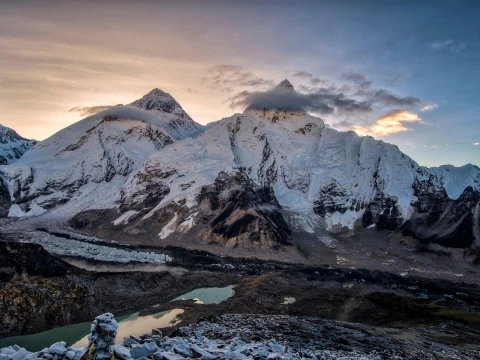
Trekking to Everest Base Camp is more than a hike it’s a journey through legendary landscapes, ancient Sherpa culture, and the heart of the Himalayas, all leading to the foot of the world’s highest mountain.
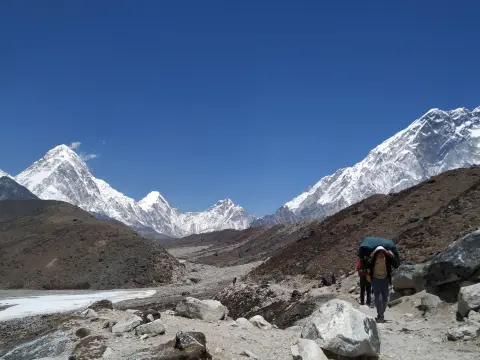
Nepal is one of the most iconic trekking destinations in the world, attracting adventurers of all ages and experience levels. The combination of the majestic Himalayas, rich cultural heritage, and warm local hospitality creates a unique trekking experience that goes beyond just hiking. In 2026, Nepal promises an even more exciting experience
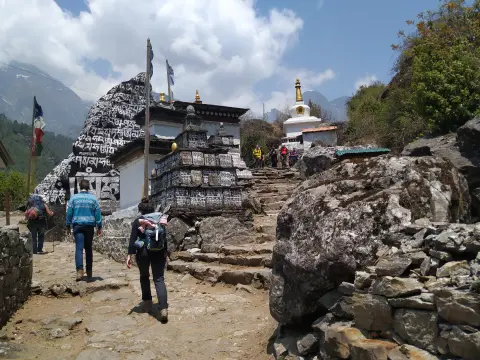
The Everest Base Camp Trek is one of the world’s most famous Himalayan adventures, offering breathtaking views of Mount Everest, Sherpa culture, ancient monasteries, and stunning mountain landscapes. The trek takes travelers through traditional villages, suspension bridges, forests, and high alpine valleys inside Sagarmatha National Park. Best completed during spring or autumn, the journey is moderately challenging and requires good physical fitness and proper acclimatization. For a safe and memorable experience, Glacier Nepal Treks provides experienced guides, personalized service, and professionally organized trekking adventures in Nepal’s Everest region.


 (31)
(31)  94% recommend (244)
 (12)
(12)